Hire Pre-Vetted Reconciliation Engineers in 3–5 Days
Bring senior reconciliation engineers into your team.
95%
developer retention rate
40+
product teams scaled across the U.S. & LATAM
5–10
days from request to kickoff
Trusted by FinTech innovators across the U.S. and LATAM
Our Talent
Hire by Expertise
Services
Hire by Location
Settlement and Bank Reconciliation Pipelines
- Ingesting processor settlement files (Stripe, Adyen, Braintree, card network reports) and matching each record against internal payment data across different formats, timing cycles, and fee structures.
- Matching internal ledger entries against bank statements in BAI2, SWIFT MT940, and camt.053 formats, with outstanding-item and timing-difference detection built in.
- Daily and intraday position reporting that reflects what’s been recorded internally, as well as what’s actually settled.
Ledger Integrity and Real-Time Reconciliation
- Double-entry integrity checks that catch drift between journal entries and derived balances before it compounds.
- Real-time reconciliation layers for FedNow, RTP, and stablecoin rails, where instant settlement means sub-second consistency requirements instead of an overnight batch window.
- Kafka-based event streaming architectures for reconciliation that run continuously rather than once a day.
Multi-Entity and Card Scheme Reconciliation
- Intercompany reconciliation across legal entities for multi-subsidiary fintechs and BaaS platforms, including FX translation and netting for consolidated group positions.
- Full card transaction lifecycle matching, authorization through capture, settlement, and dispute or chargeback, across multiple acquiring banks and card networks.
- Exception management workflows built for the specific case types each of the above actually produces.
Case Studies
Results that Drive Growth for Fintech
FinTech founders and CTOs work with Trio’s engineers for one reason: confidence.
Seamless Scaling
Trio matched Cosomos with skilled engineers who seamlessly integrated into the project.
Expanding Talent Pool
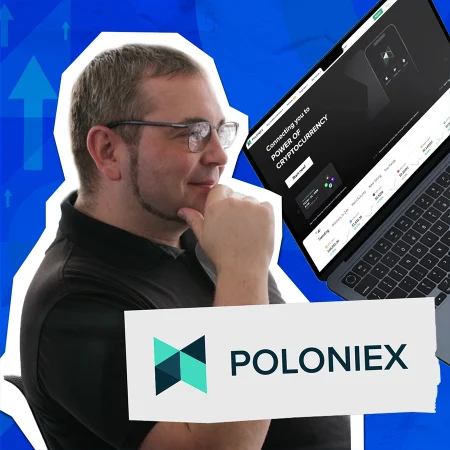
Our access to the global talent pool ensured that Poloniex’s development needs were met.
Why Trio
Senior Engineers Only
Low churn, high continuity
Timezone-aligned collaboration
FinTech-Native Experience
- Time to find a developer
- Recruiting Fee
- Quality Guarantee
- Failure Rate
- Pre-Screened Candidates
- Deep Technical Validation
- Termination Costs
Internal Hiring
- 4–16 weeks
- 15%–40%
- Low
- Very high
Marketplace
- 4–16 weeks
- None
- High
- High
Trio engineers are highly skilled at their jobs, and fully vetted by the Trio team BEFORE their resumes got to my desk. Being able to see a video of a Trio engineer walking me, in English, through the sample project he developed for Trio was a real game-changer.
Mike Sachleben
VP, Engineering – Shift Media
When I started my new job last year, I specifically requested Trio and we have built up two teams of Trio developers. They are intelligent, ethical, hard-working, efficient, produce quality work and so kind and fun to work with. I can’t say enough good things about them… You can’t go wrong with Trio!
Marcie Fortun
Senior Project Manager, Studylog Systems
Trio was incredibly effective in determining our project’s needs and solving them with the right team. The engineering team had the exact expertise we needed, and provided proactive communication during development. The overall experience was clear and reliable.
Jashan Puniya
Founder & CEO, Spoilerproof
How we work together
Step 1
Step 2
Step 3
Step 4
Step 5
Talk to a specialist
Contents
Share this article
Curated by
Expertise
- JavaScript
- NGX
- HTML
- Node.js
- Vue.js
Hire Reconciliation Engineers Who Keep the Numbers Honest
Money moves through processors, banks, and internal ledgers, and each of those systems keeps its own record. Reconciliation is the discipline of checking those records against each other.
Most teams run into issues because they don’t invest in reconciliation properly until something’s already gone wrong, and, because reconciliation sits quietly in the background until it’s needed, issues can compound for months before anyone notices.
Some teams might only figure out they have an issue during a live incident.
This happened to Synapse Financial, at a scale that froze over 100,000 accounts.
Trio places engineers who already understand what it takes to build and maintain a functioning reconciliation system, including real double-entry knowledge, DECIMAL-precise arithmetic, settlement file formats, and matching logic.
If you are ready to hire pre-vetted developers through Trio, request talent!
What Broke at Synapse, and Why It’s an Engineering Story
When Synapse Financial Technologies filed for bankruptcy in April 2024, roughly 100 fintech partners and more than 100,000 end users found their accounts frozen with no clear answer for who owed what.
The court-appointed trustee later identified a shortfall of $65 million to $95 million between what partner banks actually held and what fintech customers were owed.
This issue came from an FBO sub-ledger reconciliation that had stopped working.
An FBO, “for benefit of,” account is a single pooled bank account where a middleware provider like Synapse holds funds on behalf of many end users at once.
While the balance is easily accessible, the sub-ledger is supposed to be the record of exactly whose money makes up that balance, and reconciliation is the process that keeps the sub-ledger and the bank’s own balance in agreement.
When Synapse’s ledgers stopped reconciling cleanly against its partner banks’ records, and the company’s own engineers who understood those ledgers had already left, nobody knew who the money actually belonged to.
That’s the case for treating reconciliation as safety-critical engineering.
The Domain Knowledge That Actually Matters Here
Reconciliation engineering sits at an intersection of real backend engineering skill and financial domain knowledge deep enough to know what the numbers are actually supposed to mean.
Here are some of the things you need to look out for when vetting:
- Double-entry bookkeeping: An engineer who doesn’t understand that every transaction requires a debit and a credit that net to zero will build a reconciliation system that can’t tell the difference between a genuinely missing transaction and one that’s simply been recorded on the wrong side of the ledger.
- DECIMAL precision: In reconciliation specifically, FLOAT arithmetic produces false positives, transactions that are actually correct getting flagged as mismatched because floating-point rounding created a 0.000001 difference that means nothing.
- Matching algorithm design: Handles exact matches, fuzzy matches where the amount and counterparty agree but the timestamp differs because of a settlement cutoff, and genuine unmatched items.
- Settlement file format proficiency: BAI2 bank statements, SWIFT MT940/942 reports, camt.053 ISO 20022 messages, and each processor’s own settlement format (Stripe, Adyen, Braintree) all have their own encoding quirks, cutoff conventions, and malformed-record edge cases.
- Concurrent write safety and temporal alignment: A single payment can be initiated on Monday, authorized on Tuesday, captured on Wednesday, and settled on Thursday, each event logged by a different system in a different time zone. A reconciliation query also has to stay correct while new transactions are still being written to the ledger it’s reading from.
Reconciliation Engineer Rates Through Trio
LATAM nearshore reconciliation engineers through Trio run 40–55% below US domestic rates for comparable domain expertise.
| Seniority | US domestic (typical) | Trio LATAM rate |
| Mid-level (2–5 yrs, settlement pipeline experience) | $110,000–$150,000/yr | ~$40–$60/hr |
| Senior (5+ yrs, full reconciliation systems) | $150,000–$185,000/yr | ~$60–$80/hr |
| Lead/architect (10+ yrs, platform design) | $185,000–$220,000+/yr | ~$75–$90/hr |
| Engagement, monthly | – | $7,000–$14,000/month |
From what we have observed, direct-hire timelines for senior reconciliation engineers commonly run 60–120 days, since the pool of engineers with both the backend depth and the financial domain knowledge is genuinely small.
Trio’s 3–5 day placement compresses that without skipping the domain vetting.
Reconciliation engineering also connects directly to a fintech engineering team more broadly, and to payment engineers and payment ledger architecture specifically, since reconciliation is really the ledger’s correctness being checked against the outside world.
Teams building out broader, scalable payment systems or DevSecOps for fintech practices tend to need this same domain depth in more than one place.
To see if we have the right developer for you, book a discovery call.

Frequently Asked Questions
No, reconciliation engineers don’t always need experience with real-time payment rails, but it matters increasingly. FedNow and RTP both settle in real time, which turns reconciliation from an overnight batch job into a continuous, streaming problem that needs a different architecture.

Yes, remediating a broken reconciliation system is a common starting point for fixing an existing system producing errors, usually beginning with an audit of the matching logic and the ledger’s debit/credit integrity before anything gets rebuilt.
An FBO account pools many end users’ funds in one bank account, and the sub-ledger is supposed to track who owns what share. When Synapse’s sub-ledger stopped reconciling against partner banks’ records, a $65–95M shortfall and 100,000+ frozen accounts followed.
Direct hiring for a senior reconciliation engineer typically takes 60–120 days, since backend skills and financial domain depth rarely show up in the same candidate. Trio’s pre-vetted pool compresses that to 3–5 days.
Reconciliation engineering is harder than general backend work because it demands real financial domain knowledge, including double-entry bookkeeping, DECIMAL-precise arithmetic, and correctly aligning timestamps across systems and time zones. Miss any of the three, and the system produces false discrepancies, missed real ones, or both.
A reconciliation engineer builds the automated systems that match financial records at scale. A reconciliation analyst is the finance professional who investigates the exceptions that those systems surface.
Schedule a Call
Let’s Build Tomorrow’s FinTech, Today.
Whether you’re scaling your platform or launching something new, we’ll help you move fast, and build right.