


Fintech Software Outsourcing

95%
developer retention rate
40+
product teams scaled across the U.S. & LATAM
5–10
days from request to kickoff
Trusted by FinTech innovators across the U.S. and LATAM






Hire by Expertise
Services
Hire by Location
Predictable Delivery. Not Just Extra Hands
Clear milestones, defined ownership, and a team accountable for outcomes rather than hours logged characterize how outsourced software development works at Trio. You get a structured process, realistic timelines, and engineers who surface risks early because they know that they will be held responsible later.
Engineers Fluent in FinTech
With engineers who have production experience and who have seen what happens when things go wrong, you save the cycles you’d spend explaining KYC retry states, idempotency requirements, or PCI scope to engineers who’ve never encountered them.
Effective Communication
If you work with the right partner, like Trio, you facilitate direct access to the people building your product. This means you get regular check-ins, shared tools, and consistent communication patterns.
Cost-Effective. U.S.-Aligned.
We work with senior engineers primarily from Brazil and across Latin America, where the US time zone overlap means you can communicate for most of the working day in real-time. The regional fintech ecosystem has also produced engineers with genuine production experience in regulated financial systems.


Why Trio
Senior Engineers Only
Low churn, high continuity

Timezone-aligned collaboration
FinTech-Native Experience
- Time to find a developer
- Recruiting Fee
- Quality Guarantee
- Failure Rate
- Pre-Screened Candidates
- Deep Technical Validation
- Termination Costs

Internal Hiring
- 4–16 weeks
- 15%–40%
- Low
- Very high
Marketplace
- 4–16 weeks
- None
- High
- High



What Trio Engineers Deliver
- Stripe, Marqeta, Plaid, Unit, Lithic
- Payment gateway integrations, processor switching, and multi-rail architecture
- Money movement, payouts, refunds, and reconciliation
- Transaction handling, idempotency, and failure recovery
- Webhook reliability, retry logic, and asynchronous processing
- Real-time ledgers and audit-ready systems
- AML/KYC pipelines with provider integrations (Persona, Alloy, Onfido)
- Transaction monitoring
- Rules engines and behavioral anomaly detection
- Scoring and risk modeling
- Event-driven architectures
- Wallets and card programs
- Onboarding and identity verification flows
- Biometric authentication and device-trust patterns
- Banking, lending, and investment interfaces
- Secure session handling and permission-based access
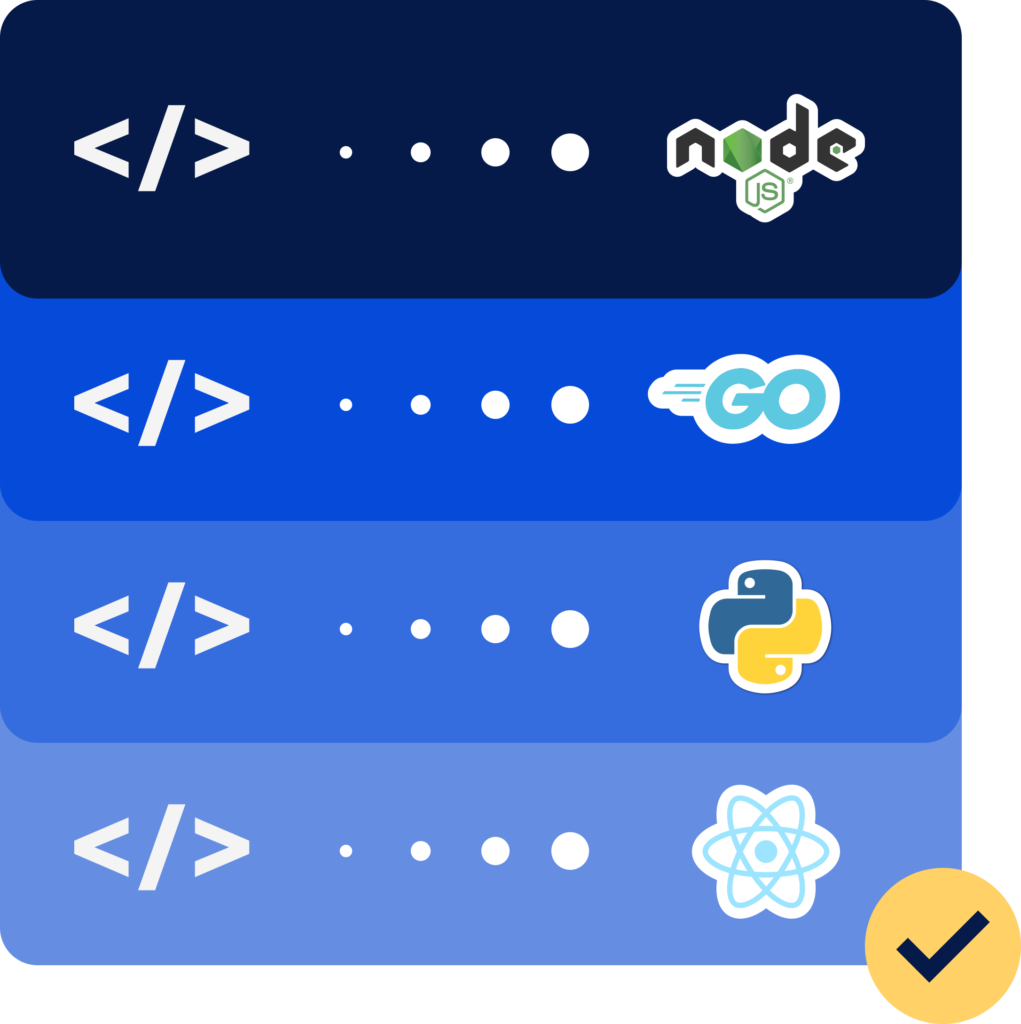
- Node.js, Go, Python
- React, React Native
- Kafka, Postgres, Redis
- AWS, GCP, Terraform
What Trio Engineers Deliver
- Stripe, Marqeta, Plaid, Unit, Lithic
- Payment gateway integrations, processor switching, and multi-rail architecture
- Money movement, payouts, refunds, and reconciliation
- Transaction handling, idempotency, and failure recovery
- Webhook reliability, retry logic, and asynchronous processing
- Real-time ledgers and audit-ready systems
- AML/KYC pipelines with provider integrations (Persona, Alloy, Onfido)
- Transaction monitoring
- Rules engines and behavioral anomaly detection
- Scoring and risk modeling
- Event-driven architectures
- Wallets and card programs
- Onboarding and identity verification flows
- Biometric authentication and device-trust patterns
- Banking, lending, and investment interfaces
- Secure session handling and permission-based access
- Node.js, Go, Python
- React, React Native
- Kafka, Postgres, Redis
- AWS, GCP, Terraform

Impact,
not Promises
Ready to scale your FinTech engineering team?

Case Studies
Results that Drive Growth for Fintech
FinTech founders and CTOs work with Trio’s engineers for one reason: confidence.

Seamless Scaling
Trio matched Cosomos with skilled engineers who seamlessly integrated into the project.

Expanding Talent Pool
Our access to the global talent pool ensured that Poloniex’s development needs were met.


How we work together
Step 1


Step 2


Step 3


Step 4


Step 5



Talk to a specialist




Trio engineers are highly skilled at their jobs, and fully vetted by the Trio team BEFORE their resumes got to my desk. Being able to see a video of a Trio engineer walking me, in English, through the sample project he developed for Trio was a real game-changer.
Mike Sachleben
VP, Engineering – Shift Media
When I started my new job last year, I specifically requested Trio and we have built up two teams of Trio developers. They are intelligent, ethical, hard-working, efficient, produce quality work and so kind and fun to work with. I can’t say enough good things about them… You can’t go wrong with Trio!
Marcie Fortun
Senior Project Manager, Studylog Systems
Trio was incredibly effective in determining our project’s needs and solving them with the right team. The engineering team had the exact expertise we needed, and provided proactive communication during development. The overall experience was clear and reliable.
Jashan Puniya
Founder & CEO, Spoilerproof
Contents
Share this article
Curated by

Expertise
- JavaScript
- NGX
- HTML
- Node.js
- Vue.js
Fintech Software Outsourcing: What It Really Looks Like
Fintech software outsourcing has become a viable option for many fintech teams that need to increase their engineering capacity.
For many of the teams that we work with here at Trio, fintech software outsourcing usually becomes a practical decision after trying to scale delivery internally and finding that hiring alone can’t keep pace with delivery pressure.
However, it is critical that you are aware of some different challenges you may encounter.
Some teams have had poor experiences with generalist outsourcing companies that don’t understand financial software specifically. Others worry about quality, communication, or losing control of a product they’ve spent years building.
Those concerns are worth taking seriously before choosing a partner. If you are ready to get started with fintech software outsourcing for your team, we can assist.
What Fintech Software Outsourcing Actually Means
Fintech software outsourcing involves hiring an external development company to take responsibility for execution on financial software specifically. That can mean building an entire fintech product, handling a defined portion of your project with a fixed scope, or owning a long-running stream of development work for an existing platform.
Outsourcing execution usually refers to any instance where the actual building, testing, and delivery is taken care of by someone else, while you keep product ownership and prioritization internal.
For fintech teams specifically, outsourcing is a great way to cover things like payment integrations, backend systems, compliance tooling, API layers connecting internal systems to third-party providers, or rebuilding parts of an existing platform that have accumulated technical debt.
These are areas where bringing in experienced engineers faster than internal hiring allows can have a direct effect on delivery timelines and compliance readiness. A generalist outsourcing firm can build software. A fintech-specialized one already knows why a payment retry needs an idempotency key before it knows anything else about your product.
When Outsourcing Fintech Software Development Solves a Real Problem
As we have already mentioned, most teams reach out when internal pressure has started to show in delivery outcomes.
The in-house team carries real capability, but often they have to spend too much time on things like maintenance and compliance work.
When your senior engineers stretch across more than they can handle well, you might not have the ability or resources to hire additional talent on your own in the timelines that you require.
This is where fintech software outsourcing tends to make sense, since it carries less risk than pushing internal teams even further.
Why Fintech Software Outsourcing Fails: The Patterns Worth Knowing Before You Start
The most common reason why we have seen outsourcing fail is due to unclear requirements, with no internal owner making decisions.
An outsourced development team can’t resolve conflicting priorities on its own. When the person responsible for the product can’t be reached, or if you don’t have someone in place, estimates drift, scope expands, and confidence erodes.
Another common issue is expecting outsourcing companies to act as product owners.
A good outsourcing partner can flag risks, propose trade-offs, and push back on unrealistic timelines. What they can’t do is decide what the product should prioritize.
The third mistake we see often involves treating outsourcing as a cost optimization rather than a delivery strategy.
Choosing the lowest-rate provider in a regulated environment tends to produce rework, compliance gaps, and delays that cost more than the savings justified.
Predictability matters considerably more than just simple pricing in fintech specifically, where a generalist outsourcing shop’s unfamiliarity with things like PCI scope or KYC state handling shows up as rework.
Outsourcing vs In-House Development: How Most Fintech Teams Use Both
Compared to in-house development, fintech software outsourcing shifts how work gets organized rather than removing the need for internal responsibility.
In-house development is great for many because it offers deep context and continuity, but scaling takes time, and the costs compound quickly.
Outsourced development, on the other hand, is great because it gives teams faster access to a full engineering group with established practices, without the recruiting timeline, benefits overhead, and organizational overhead that permanent headcount brings.
Most fintech teams we work with end up combining both rather than choosing one or the other.
For your core platform systems, architecture decisions, and compliance ownership, you can keep things in-house. Product streams with time pressure, specialized integration work, or capacity gaps get outsourced.
This lets your internal teams stay focused, instead of being stretched thin, which usually results in corners being cut or mistakes being made.
The Main Outsourcing Models for Fintech Software Development and When Each Fits
No single outsourcing model fits every situation, and understanding the differences is important to help you make the right decision.
Project-based fintech software outsourcing works well when you know your requirements are stable, and the risks are reasonably understood upfront. It works less well when requirements shift mid-project or when the product depends on accumulated context.
Dedicated or managed development teams tend to suit longer-running product work where continuity and shared ownership matter.
Over time, these teams often start to feel like extensions of the internal organization, especially when collaboration runs well, and engineers develop genuine familiarity with the product’s history and constraints.
The reality is that, in most cases, a hybrid approach is the best option.
Some fintech companies maintain a core internal team for the most critical systems while outsourcing specific product streams or integration work to external teams on a project basis.
The combination can give you the flexibility you need, when you need it, without sacrificing continuity on the parts of the product where institutional knowledge matters most.
How the Fintech Software Outsourcing Process Works at Trio: From Discovery to Delivery
At Trio, our outsourcing engagement starts with discovery and planning. Goals, technical context, compliance requirements, and integration dependencies get discussed openly.
Architecture decisions get made early because revisiting them mid-project is expensive, particularly when third-party payment processors or KYC providers are involved, and changing the integration approach means rebuilding test coverage from scratch.
Development moves in agile sprints for most engagements, with working software reviewed regularly, honest feedback incorporated quickly, and risks raised before they become blockers rather than after.
Testing runs alongside development throughout the engagement.
Launch and post-launch stabilization get planned upfront. Monitoring, bug fixes during the stabilization window, and performance tuning under real load are part of the delivery scope.
Project Visibility, Management, and What Day-to-Day Communication Should Look Like
Project management gives you a good idea of how well the outsourcing agreement is going to work out. Technical skill matters, but teams with excellent engineers and poor delivery management tend to produce chaotic outcomes.
A clear delivery lead or project manager who gives you an honest picture of progress, risks, and trade-offs makes a significant difference.
Progress should be visible in your existing tools. Common options we have seen include Jira, Linear, and even GitHub, or whatever you use.
This reduces the need for check-ins and makes the relationship feel more like an extended team.
How Code Quality and Development Practices Hold Up Over Time in Outsourced Teams
Quality issues in outsourced software development often come from weak development practices, such as no consistent code review process, documentation that describes ideal states rather than actual decisions, and testing that gets compressed when timelines tighten.
In fintech, a system that lacks documentation of past decisions becomes a liability during compliance audits, security reviews, or when a new engineer inherits a payment integration and needs to understand why a specific idempotency pattern was chosen.
CI/CD pipelines, automated test coverage appropriate for the risk profile of each component, and clear deployment processes reduce the operational risk that comes with regular releases in regulated environments.
Security, Compliance, and IP Ownership in Fintech Software Outsourcing
Security concerns are some of the most common objections fintech teams raise about outsourcing.
NDAs, access controls, environment separation between development and production systems, and careful handling of credentials should come standard, not as negotiated additions.
For fintech environments operating under PCI DSS, SOC 2, or GDPR requirements, those constraints need to be communicated at the start of the engagement and folded into the engineering workflow rather than layered on afterward.
At Trio, we also ensure, contractually, that all code and intellectual property belong to the client, unconditionally and from day one.
Access revocation at the end of an engagement gets planned in advance rather than handled reactively, because poorly managed offboarding can create audit exposure around system access that shows up months later.
How to Choose a Fintech Software Outsourcing Partner
The right outsourcing partner for fintech work asks difficult questions early, explains trade-offs clearly, and pushes back when requirements are unrealistic.
In our experience, domain experience matters more than general technical capability in fintech.
Engineers who’ve worked in production payment systems, compliance-adjacent workflows, and regulated data environments make different architectural decisions from generalists.
References and case studies are a good place to start when confirming their past experience.
A pilot engagement can help reduce uncertainty before committing to a longer-term relationship. Starting with a well-scoped piece of work, a specific integration, or a defined module rather than the entire platform lets both sides evaluate the collaboration model before the stakes are high.
Getting Started with Fintech Software Outsourcing at Trio
The most useful information for an initial conversation usually includes a short description of the product, the systems involved, where execution pressure sits highest, and any compliance or timing constraints that shape the search.
That’s why we start with a complementary consultation, which aims to help us propose a realistic approach and outline the next steps forward.
If you are considering outsourcing and want an industry-experienced partner who can set you up for financial application development success, book a discovery call.
Frequently Asked Questions
Software development outsourcing is often more cost-effective than in-house development for variable or time-sensitive needs.
Onboarding for software development outsourcing typically takes a few weeks, depending on project scope and team setup.
Software development outsourcing models include project-based delivery, dedicated teams, and managed software development engagements.
Software development outsourcing can align with compliance needs such as SOC 2, PCI, or GDPR when planned correctly.
Security in software outsourcing is handled through NDAs, access control, environment separation, and aligned security practices.
In software outsourcing, the client owns all code, intellectual property, and resulting software products.
When scope changes in a software outsourcing project, the impact on the timeline and cost is discussed openly before work continues.
Quality in software development outsourcing is ensured through testing, code reviews, documentation, and consistent development practices.
Project management in outsourced software development is handled through a dedicated delivery lead, shared tools, and regular progress check-ins.
When you outsource software development, the outsourcing partner manages execution while your team owns priorities and final decisions.
Software development outsourcing works well for MVPs, system rebuilds, integrations, and scaling existing fintech platforms.
Outsourcing software development is risky when project requirements are unclear or when no internal owner can make product decisions.
Outsourcing software development makes sense when execution speed, capacity, or specialized expertise is limiting progress and hiring cannot keep up.
Software outsourcing shifts delivery responsibility to an outsourcing partner, while staff augmentation adds individual engineers to your in-house team.
Software development outsourcing is the practice of hiring an external development company to build part or all of a software product while you retain product ownership and direction.


Schedule a Call
Let’s Build Tomorrow’s FinTech, Today.
Whether you’re scaling your platform or launching something new, we’ll help you move fast, and build right.