


 Read Client Stories


Discovery Call
Share your goals, your stack, and your challenges.



Move your product forward with senior Argentinian developers who join your team, learn your system, and take responsibility for real outcomes. Trio helps companies hire software engineers in Argentina who contribute early, communicate clearly, and stay accountable from planning through production.
Your inquiry has been saved. Our team will review your project details and follow up using the email you provided.
Back to TrioTrusted by FinTech innovators across the U.S. and LATAM



Argentina
Argentina has become a dependable nearshore option for teams that need experienced engineers, not just additional hands.
The market produces a steady supply of senior developers, many of whom have already worked inside U.S. and European product teams, with Argentina’s IT sector exports exceeding $9.6 billion in knowledge-based services in 2025. Overall, the country has built a self-sustained tech ecosystem.
Senior engineers with real product experience
Strong overlap with U.S. time zones
Long-term retention and team stability
High English proficiency and cultural alignment

Our Talent
When you hire Argentinian developers through Trio, we place engineers who have already shipped software, maintained live systems, and joined existing codebases more than once.
 8-12+ years of professional experience
 Frontend, backend, and full-stack engineers with deep experience in React, Node.js, Python, Java, and TypeScript
 Experience with APIs, cloud platforms, and modern frameworks, including AWS, GCP, and Azure
 Strong habits around code reviews, testing, and documentation, and comfortable speaking up in standups and planning
 Mobile developers using React Native and Flutter, QA engineers, data engineers, and AI/ML specialists
Fintech Ready
Argentinian engineers at Trio help fintech companies ship and scale critical systems, including:
Cost usually opens the conversation, but teams tend to stay for different reasons. Hiring in Argentina often works because it balances speed, collaboration, and predictability in a way few markets manage.
Shared hours with North America make daily standups, pairing, and quick check-ins part of the normal flow. Argentina operates on UTC-3 year-round (no daylight saving time), which means the overlap with US East Coast teams stays consistent. Fewer delays mean fewer assumptions and less rework.
Start Hiring NowMost developers in our Argentina network have joined midstream projects before. That familiarity with existing systems often shortens the path to meaningful contribution.
Start Hiring NowEnglish proficiency runs high, especially at senior levels. Argentina ranks first in Latin America for English proficiency among software engineers, and expectations around deadlines, feedback, and accountability usually align well with U.S. product teams.
Start Hiring NowYou can add or reduce capacity as priorities shift, without restarting the hiring process or carrying unnecessary headcount.
Start Hiring Now

Trio engineers are highly skilled at their jobs, and fully vetted by the Trio team BEFORE their resumes got to my desk. Being able to see a video of a Trio engineer walking me, in English, through the sample project he developed for Trio was a real game-changer.
When I started my new job last year, I specifically requested Trio and we have built up two teams of Trio developers. They are intelligent, ethical, hard-working, efficient, produce quality work and so kind and fun to work with. I can’t say enough good things about them… You can’t go wrong with Trio!
Trio was incredibly effective in determining our project’s needs and solving them with the right team. The engineering team had the exact expertise we needed, and provided proactive communication during development. The overall experience was clear and reliable.
Share your goals, your stack, and your challenges.
Get an industry-experienced shortlist in 48-72 hours.


Meet the engineers, assess team fit, and choose who joins.


Engineers integrate into your tools, ceremonies, and codebase.


Trio stays involved through regular check-ins.

About Trio
You retain full ownership of your code and IP. NDAs, IP agreements, and secure access protocols come standard. Trio also sets expectations around engineering hygiene. Code reviews, testing practices, and documentation stay part of the day-to-day. Our vetting process evaluates domain knowledge in regulated financial systems (payments, KYC, AML, and compliance architecture). If a developer turns out not to be the right fit, replacement happens quickly and without dragging the team down.
That’s Nearhoring, without the risk.
| Criteria | Trio | Internal Hiring | Marketplace |
|---|---|---|---|
| Time to find a developer | 0–3 weeks | 4–16 weeks | 4–16 weeks |
| Recruiting Fee | None | 15%–40% | None |
| Quality Guarantee | Yes | No | No |
| Failure Rate | Very Low | Low | High |
| Pre-Screened Candidates | Yes | No | No |
| Deep Technical Validation | Yes | No | No |
| Termination Costs | None | Very high | High |
| Start Now |
Case Studies
FinTech founders and CTOs work with Trio’s engineers for one reason: confidence.

Trio matched Cosomos with skilled engineers who seamlessly integrated into the project.
Learn More
Our access to the global talent pool ensured that Poloniex’s development needs were met.
Learn More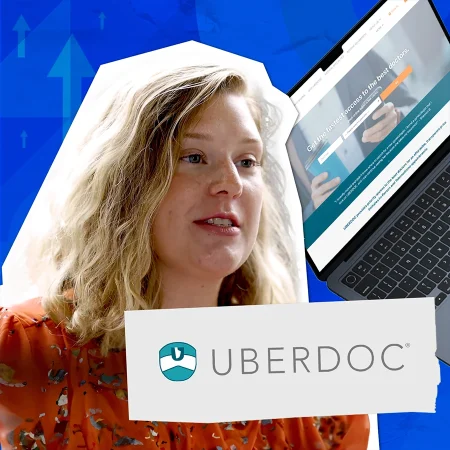
We provided UBERDOC with engineers who already had the expertise needed.
Learn More
Trio introduced an integrated ecosystem for centralized and automated data gathering.
Learn MoreTalk to a specialist
Share the roles you need, the seniority level you have in mind, and when you want to start. We will walk through options and suggest a setup that fits your team and roadmap, placing developers in a matter of days.
Your inquiry has been saved. Our team will review your project details and follow up using the email you provided.
Back to TrioCurated by

10 Years of Experience
Fintech leaders work with Alex to build engineering teams that scale securely and move fast. With over a decade in software outsourcing, he helps companies hire high-performing developers suited for regulated environments and complex financial systems. After co-founding Trio with his partner Daniel, Alex now focuses on helping fintech teams hire top software talent from Latin America and shares practical insights drawn from real hiring and delivery experience.
September 18, 2026
When teams come to Trio looking to hire Argentinian developers, they usually need developers who can take ownership and who are able to fit in a broader team of existing software engineers.
If you want nearshore collaboration that works in real time, Argentina’s time zone overlap, along with the high quality of its STEM and English education systems, makes it a strong option.
Over the years, we have seen Argentina work especially well for teams that value judgment as much as output.
Hiring developers in Argentina tends to succeed when you need people who can step into an existing codebase, ask the right questions early, and stay accountable once features reach production.
That outcome depends less on geography and more on how Argentina’s tech ecosystem has evolved and how hiring gets handled in practice.
If you want help connecting with skilled developers from Argentina, with unique expertise in industries like fintech, and who are hand-picked for your project, request regional talent.
Argentina offers a mix of talent depth and professional maturity that makes it a strong option for hiring from Latin America.
The country has 115,000 IT professionals and over 3,800 technology companies, including 1,200+ active startups.
Knowledge-based service exports exceeded $9.6 billion in 2025, and the IT market carries a projected CAGR of 8.81% through 2028.
We have seen a particular surge in AI and Python development, but there is generally a good variety of talent across hotspots like Buenos Aires, Córdoba, Mendoza, and Rosario.
Argentina has produced 11 tech unicorns, including MercadoLibre, Globant, Auth0, Uala, and Despegar.
Engineers who have come through those companies arrive with experience building systems at a genuine scale, which shows up in how they approach architecture decisions and production reliability.
Even companies like Google, Microsoft, IBM, and Oracle have established engineering operations in Argentina.
One reason lies in the country’s strong science and engineering tradition, supported by institutions like the University of Buenos Aires. In our experience, that foundation shows up in how developers think through problems.
The Argentinian developers that we have worked with often explain their reasoning clearly, challenge vague requirements, and surface edge cases early.
Many developers have also worked with startups and scale-ups across the U.S. and Europe. That exposure shapes expectations around delivery, feedback, and collaboration, which reduces friction when joining distributed teams.
Argentina also ranks third in Latin America for AI policy implementation in 2026 and operates a fast-growing AI engineering community.
For fintech teams specifically, that means an increasingly deep pool of engineers who have built production ML systems for fraud detection, credit scoring, and AML transaction monitoring.
This communication is made even more efficient when you consider that Argentina’s time zone overlaps well with North America.
The country operates on UTC-3 year-round and has abolished daylight saving time, which means the time difference with the US East Coast stays consistently at one to two hours regardless of season.
Real-time standups, immediate unblocking, and same-day decision-making are practical, not aspirational.
The talent pool in Argentina supports a wide range of software development roles. Teams we work with most often hire:
Senior developers tend to deliver the highest quality code, which is why our talent pool draws from senior talent almost exclusively.
When teams hire senior Argentinian developers, they usually look for people who can own features end to end, review code, and contribute to architectural decisions without needing close supervision.
Many developers from Argentina have maintained production systems over time, not only shipped initial versions, which makes hiring these developers through Trio ideal if you want access to engineers for continued ownership rather than one-time delivery.
Argentina operates on UTC-3 year-round. Unlike most countries in the region, Argentina abolished daylight saving time and no longer adjusts its clocks, which means the overlap with US East Coast teams stays at one to two hours regardless of the US season.
Central and Mountain time zones get even more overlap.
From what we see, this changes how teams operate. Standups happen live. Pairing sessions fit naturally into the schedule. Questions get answered before they turn into blockers. Code review happens the same day.
English proficiency also plays a key role.
Argentina ranks first in Latin America for English proficiency among tech professionals, which means discussions around scope, tradeoffs, issues, and delivery happen clearly rather than through approximation.
Latin America offers several nearshore markets. Argentina works well, but it is not always the obvious default, and understanding the tradeoffs helps you make the right call.
Argentina tends to work best when teams care about seniority, communication quality, and consistency.
Compared to developers in other LATAM countries, Argentinian developers often bring more experience working directly inside distributed product teams rather than operating at arm’s length.
That difference becomes noticeable once projects require sustained ownership rather than short bursts of execution.
For very niche specializations or sheer talent volume, Brazil, with over 759,000 software developers, offers a larger pool.
If you need a perfect time zone overlap and close proximity for regular travel, Mexico’s proximity to the US border suits those requirements well.
Argentina sits between those two extremes: a smaller absolute pool than Brazil, but deeper seniority concentration and stronger English fluency than most markets.
Hiring developers in Argentina works well when quality stays consistent. We have seen teams struggle when they rely solely on freelance platforms, where vetting varies and churn disrupts momentum.
At Trio, we vet a variety of factors, including technical skill, how developers communicate, how they approach ambiguous problems, and how they describe past production work.
For fintech roles specifically, vetting covers domain knowledge in regulated environments, whether the engineer has worked with payment systems, KYC pipelines, compliance architecture, or audit-ready documentation practices.
Pre-vetted Argentinian developers through Trio also tend to carry real-world experience working in or alongside North American product teams, which reduces the friction of distributed collaboration from week one.
If a developer turns out not to be the right fit, we handle replacement quickly. That continuity helps teams avoid losing context or slowing delivery mid-project.
Based on 2026 market data, salary expectations for software engineers in Argentina range from approximately $21,000-$28,000 annually for junior developers, $35,000-$55,000 for mid-level engineers, and $55,000-$96,000 for senior engineers and specialists.
Senior AI/ML engineers and architects can reach above $100,000 in compensation. Many experienced developers working with US companies expect USD-denominated compensation, which has become standard for international remote roles, given Argentina’s inflation history.
At Trio, senior fintech specialists from Argentina run between $40 and $90 per hour, depending on your exact requirements.
That puts the engagement roughly 40-60% below equivalent fully-loaded US costs, which typically exceed $200,000 annually once employer burden, benefits, and recruitment are included.
We have placed and onboarded developers in as little as 3-5 days, eliminating the extended vacancies and repeated hiring cycles that drive hidden costs in traditional US recruitment.
When you outsource or hire remote developers, questions around IP and data protection need to surface early. Clear contracts, NDAs, and secure access protocols help manage any risks, especially in heavily regulated environments like fintech.
Argentina maintains legal frameworks that protect intellectual property and allow contracts to be governed under US law, which removes much of the ambiguity that teams encounter with more distant offshore markets.
At Trio, we set expectations around code reviews, testing, and documentation from the start.
For regulated fintech environments, that includes access control protocols consistent with PCI DSS and SOC 2 requirements, IP assignment documentation that runs from engineer to Trio to client, and NDAs that cover both the code and the compliance reasoning embedded in architectural decisions.
That structure helps ensure developers carry habits that support maintainability and auditability.
Argentina works well for teams that want skilled developers who integrate smoothly and contribute with minimal oversight.
The combination of talent depth, time zone alignment, and communication quality makes Argentina a practical nearshore option for startups and growth-stage companies.
The best way to hire depends on your goals. Some teams need one developer to stabilize a roadmap. Others want to build a dedicated Argentina development team over time. In both cases, experience matters.
If you want to hire Argentinian developers without compromising on quality or continuity, working with a partner like Trio can help you move faster while avoiding common pitfalls.
Frequently Asked Questions
Argentina hosts 40% of Latin America’s fintech startups and has produced fintech unicorns, including Uala and Brubank, giving its engineering community genuine production experience in regulated financial systems, payments infrastructure, and compliance-aware development. This makes Argentine developers a natural fit for fintech teams building KYC, AML, and payment engineering.
The most reliable path to find and hire top Argentinian developers runs through a partner that pre-vets both technical skill and communication quality. Self-sourcing through freelance platforms introduces inconsistent vetting and higher churn, while a structured partner like Trio delivers a shortlist in 48-72 hours with domain-specific screening already done.
Argentinian developers often perform well on long-term projects because many have experience maintaining production systems and working continuously inside distributed teams, which translates directly to sustained ownership rather than episodic delivery.
Argentina offers advantages for software outsourcing, like UTC-3 time zone alignment with the US East Coast year-round (no daylight saving), the highest English proficiency in LATAM among tech professionals, 115,000 IT professionals across 3,800 tech companies, and salary costs 40-60% below equivalent US roles, all while producing engineers from a mature ecosystem that includes 11 tech unicorns.
Argentina ranks first in Latin America for English proficiency among software engineers, which is why communication friction is consistently lower with Argentinian teams than with developers from other LATAM markets, particularly for the technical discussions, code reviews, and compliance conversations that fintech work requires.
Through Trio’s pre-vetted network, shortlists typically appear within 48-72 hours, and onboarding completes in 3-5 days, compared to 3-6 months for a comparable senior engineering hire through traditional US recruitment channels.
Argentina supports frontend, backend, full-stack, mobile (React Native, Flutter, iOS, Android), QA, DevOps, cloud, data engineering, and AI/ML roles, with particular depth in React, Node.js, Python, Java, and TypeScript, and a fast-growing pool of production AI engineers building systems for fintech, healthtech, and SaaS applications.
Companies hire developers in Argentina because it delivers experienced, senior engineers at 40-60% of the fully-loaded US cost, with real-time timezone collaboration that offshore markets can’t match and English proficiency that removes the communication friction common in purely cost-driven outsourcing.
Outsourcing software development to Argentina is safe when contracts, NDAs, and access controls are properly structured. Argentina’s legal framework supports IP protection and US-governed contracts, and working through a partner like Trio eliminates the compliance complexity of engaging international developers directly.
Argentina operates on UTC-3 year-round with no daylight saving adjustments, giving US East Coast teams a consistent one-to-two-hour time difference and four or more hours of workday overlap that supports live standups, same-day code review, and real-time problem-solving.
Senior Argentinian developers typically run $55,000-$96,000 annually in the current 2026 market, with Trio’s engagement rates for senior fintech specialists ranging from $40 to $90 per hour, fully loaded with no separate recruitment fee, compared to $200,000+ fully-loaded annually for equivalent US in-house hires.
Hiring Argentinian developers means bringing on software engineers based in Argentina through a nearshore model where they work with your team full-time, communicate in English daily, and contribute during US business hours, combining the collaboration experience of a local hire with the cost profile of a global market.

Schedule a Call
Whether you’re scaling your platform or launching something new, we’ll help you move fast, and build right.