Staff augmentation for fintech teams
Staff augmentation is one of the best hiring models to consider when your delivery demands start to outpace your ability to hire. It lets you add experienced engineers without restructuring your organization or committing to a headcount you might not need in six months.
For fintech teams in particular, staff augmentation is a great solution when speed, control, and risk all matter at the same time.
When you partner with the right firm, you keep ownership of the product and the roadmap while extending your team with developers who can contribute without a long adjustment period, and without the compliance exposure that comes from a poorly structured outsourcing arrangement.
It is not a one-size-fits-all approach, though. Some teams are going to benefit more from full outsourcing arrangements, and others need permanent hires.
If you think this might be the right fit for you, book a call.
What is staff augmentation, and when does it make sense?
Staff augmentation describes a team extension model where external engineers work directly inside your existing team.
While they are technically hired by another firm that you contract, these developers follow your processes, use your tools, and contribute to your codebase as if they were internal, without becoming permanent employees or requiring the overhead of a full-time hire.
This model tends to make sense when you already have technical leadership in place but need additional execution capacity.
In many of the cases that we have worked with, our developers are brought on to help a company launch a feature, integrate with a payments provider like Stripe or Plaid, or deal with a backlog and extensive tech debt.
It may also fit when you are facing a lot of uncertainty. This could be when you are relatively early in your project and think that your requirements might taper off after a launch or audit cycle.
Why fintech teams choose staff augmentation over full-time hiring
Full-time hiring makes sense in many contexts, but it can take a long time to find, vet, and sign on a suitable candidate. If you have made the wrong hiring choice, you need to restart that entire process from scratch.
However, you do get a developer’s full attention, and you have full control, which makes it ideal for a changing scope in ways that outsourcing just doesn’t hold up.
Staff augmentation changes the trade-off. Instead of optimizing for a long-term employment relationship, you optimize for near-term delivery. Senior engineers can join quickly, contribute within days, and help stabilize workloads during critical periods.
You might not have access to those people long-term, or you may have to deal with the fintech staff augmentation firm contracting them out to multiple clients at once, but sometimes that is worthwhile when in-house hiring won’t be provided on time.
In fintech, particularly, delays can compound very quickly.
Compliance deadlines, partner integrations, and customer commitments rarely wait for a perfect hire to clear a three-stage interview process. Staff augmentation gives teams a way to keep moving without lowering the technical bar.
Types of staff augmentation roles fintech teams scale
Most fintech teams starting with staff augmentation generally consider the hiring model for their software development roles.
Frontend developers may come in to support onboarding flows, dashboards, or customer-facing applications where UX and security intersect in ways that require real fintech experience.
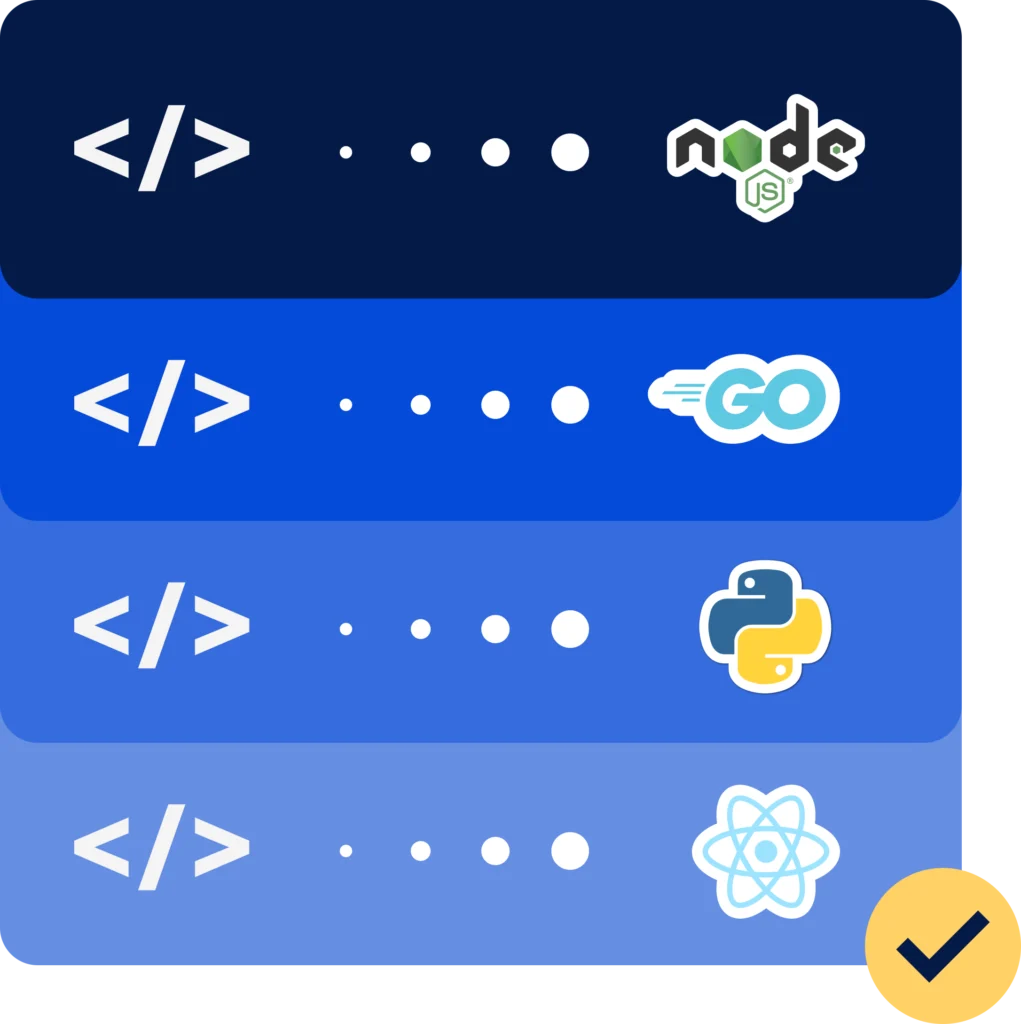
Backend engineers often take on APIs, financial data validation, ledger logic, or payment workflow integrations.
Python specifically comes up often here, and not just as a line item in a tech stack list.
Fintech teams tend to reach for it on the data and decisioning side: fraud scoring pipelines, credit and risk models, transaction data engineering, and the glue code connecting bureau APIs or ML models to the rest of the platform.
Augmenting a Python-heavy team works the same way as any other stack, but the vetting bar is different; a Python engineer who’s only worked on general web APIs is a different hire than one who’s built decisioning logic that needs to survive a compliance review.
As products mature, the emphasis typically shifts toward more senior profiles.
These developers tend to focus on your major architectural decisions, reliability patterns, and long-term maintainability to make sure that your product holds up in regulated systems.
Some teams also use staff augmentation to bring very targeted talent onto their teams.
Dedicated engineers may be assigned to a specific stream, such as KYC/AML pipeline development or risk scoring infrastructure, while internal teams stay focused on the core platform.
Staff augmentation vs dedicated teams and contractors
Staff augmentation is sometimes confused with hiring a dedicated team or working with independent contractors, but there are a couple of key differences here that directly affect delivery and risk.
Dedicated teams often act like a separate unit. They have their own processes and generally manage themselves.
That can work well for isolated, long-running projects, but it may reduce alignment if priorities shift or if the work requires deep integration with your existing codebase and people.
Independent contractors, on the other hand, offer incredible flexibility, but they also introduce continuity risk.
Your contractors might not be available in the future, or may leave suddenly, taking any institutional knowledge and the context around decisions with them.
This leads to major complications during regulatory audits.
Staff augmentation almost allows you to balance these trade-offs. Engineers integrate into your team, stay aligned with your roadmap, and can scale up or down as needs change.
Since your team manages day-to-day direction, you’re not dependent on a vendor’s prioritization decisions. If you work with a partner like Trio, you also increase the chances of having access to these developers again later.
Integration, onboarding, and ownership in staff augmentation
Integration is critical for ensuring that you can take advantage of the speed of hiring that staff augmentation provides.
They need to operate exactly the way your internal team does. They join your standups, follow your sprint cadence, use your tools, and adhere to your coding standards.
To do this effectively, you need to have onboarding processes in place so you can guarantee that they get introduced to your codebase, compliance constraints, and key stakeholders before they write a line of production code.
At Trio, we assist with this onboarding process, which, in combination with our focus on industry expertise, means developers can start being productive in days rather than weeks.
Ownership of everything stays with you throughout. Your team controls priorities and architecture decisions. Code and intellectual property remain yours.
Access controls also get defined upfront, and the principle of least privilege applies from day one.
Remote, nearshore, and offshore staff augmentation
Remote staff augmentation works best when the collaboration structure is in place to compensate for any potential issues that distance could create.
That means you need to decide on things like shared tooling and meaningful working hours overlap.
Nearshore staff augmentation, particularly from Brazil and across Latin America, where we source our developers, has become the default model for US fintech teams because the time zone overlap approaches real-time and the communication friction that plagues offshore arrangements largely disappears.
Offshore staff augmentation, where you might be dealing with vastly different time zones, can work for teams with mature async processes, but it tends to require a lot more coordination overhead.
Pricing, commitments, and engagement structure
Staff augmentation pricing at Trio works on a monthly basis.
All of our engineers have production experience that would put them at the senior level for fintech development. Depending on your specific requirements, their pricing could range between $ 45 and $ 90.
This is the only cost you incur.
When working with other partners, what matters most is transparency: a clear understanding of what the rate covers, how adjustments get handled, and what the exit process looks like.
Compared to US-based hiring, engineers from Brazil and across LATAM typically cost 30-50% less in total, without the asynchronous communication overhead that offshore models introduce.
Related Reading: Fintech Outsourcing Cost Guide
Getting started with staff augmentation at Trio
We don’t provide a one-size-fits-all solution, so every partnership starts with a complementary consultation where we find out more about your project and figure out what the best way forward is for you.
Once we have a better understanding of the hiring model and developers you require, we hand-pick them for you, getting you a handful of developers’ portfolios within as little as 48 hours. You just need to do the final interview.
If you think staff augmentation is the way forward for you, or you want to find out more about the fintech specialists we have on our team, schedule a consultation.



 Read Client Stories







 Mobile Developer


 Java Developer


 DevOps Developer




 Data Engineer


 Back-End Developer




 QA Engineer


 Front-End Developer






 Mobile Developer






 Front-End Developer


 Back-End Developer