


 Read Client Stories



Seamless Scaling
Trio matched Cosomos with skilled engineers who seamlessly integrated into the project.
Learn More
From high-performance APIs to infrastructure-heavy platform services, hire senior Golang developers from LATAM through Trio at 40-60% lower cost than US equivalents, in your time zone, pre-vetted on production Go, gRPC, Kafka, Kubernetes, and cloud-native tooling.

Your inquiry has been saved. Our team will review your project details and follow up using the email you provided.
Back to TrioTrusted by FinTech innovators across the U.S. and LATAM



Our Talent
Work with senior Golang developers who have spent years building and maintaining backend services that operate under load, not just passing tests locally. Engineers have production Go-specific experience, and are vetted before you ever see their profile, with assessments covering concurrency correctness, system design, and idiomatic Go patterns.

 8-12+ years of backend engineering experience in production Go environments
 Deep hands-on work with Golang in production environments, including goroutines, channels, context propagation, and race condition prevention
 Practical experience with concurrency, performance tuning, and service design using Gin, Echo, or Chi for HTTP and gRPC with Protocol Buffers for service-to-service communication
 Familiarity with gRPC development, cloud-native services, and distributed systems like Docker, Kubernetes, Helm, and Terraform for infrastructure as code.
 Comfort owning production systems end to end, including observability with Prometheus, OpenTelemetry, and structured logging that holds up during incident response.
A Go codebase maintained by the same engineers for twelve months tends to be more cohesive architecturally. When you hire through staff augmentation, you hire our full-time employees, so you are able to get access to them again later.

Case Studies
FinTech founders and CTOs work with Trio’s engineers for one reason: confidence.
Trio matched Cosomos with skilled engineers who seamlessly integrated into the project.
Learn More
Our access to the global talent pool ensured that Poloniex’s development needs were met.
Learn More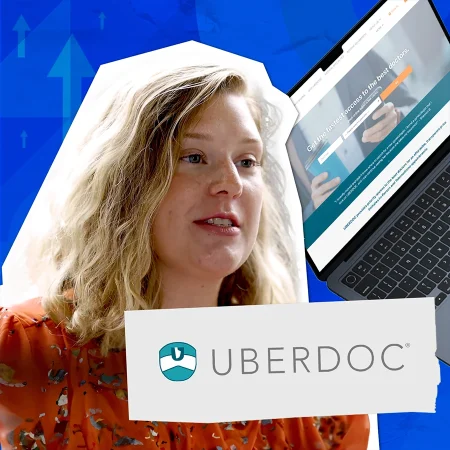
We provided UBERDOC with engineers who already had the expertise needed.
Learn More
Trio introduced an integrated ecosystem for centralized and automated data gathering.
Learn MoreWhy Trio
We support companies with LATAM-based Golang developers at 40-60% lower cost than US-based equivalents. These developers work in your time zone, so you can communicate in real-time, rather than waiting a full business day between communications.

| Criteria | Trio | Internal Hiring | Marketplace |
|---|---|---|---|
| Time to find a developer | 0–3 weeks | 4–16 weeks | 4–16 weeks |
| Recruiting Fee | None | 15%–40% | None |
| Quality Guarantee | Yes | No | No |
| Failure Rate | Very Low | Low | High |
| Pre-Screened Candidates | Yes | No | No |
| Deep Technical Validation | Yes | No | No |
| Termination Costs | None | Very high | High |
| Start Now |

Trio engineers are highly skilled at their jobs, and fully vetted by the Trio team BEFORE their resumes got to my desk. Being able to see a video of a Trio engineer walking me, in English, through the sample project he developed for Trio was a real game-changer.
When I started my new job last year, I specifically requested Trio and we have built up two teams of Trio developers. They are intelligent, ethical, hard-working, efficient, produce quality work and so kind and fun to work with. I can’t say enough good things about them… You can’t go wrong with Trio!
Trio was incredibly effective in determining our project’s needs and solving them with the right team. The engineering team had the exact expertise we needed, and provided proactive communication during development. The overall experience was clear and reliable.
Share your goals, tech stack, timelines, and team structure.


Receive a shortlist of vetted engineers who fit both your technical and domain needs.


You interview the engineers and choose who fits your team best.


Developers plug into your sprint, tools, and workflows fast.


Ongoing alignment, performance tracking, and support from Trio.

Talk to a specialist
Add experienced Golang developers exactly when you need them, placed in 3-5 days, with guaranteed production Go experience. You keep control of your roadmap and protect code quality. We take care of all the hiring.
Your inquiry has been saved. Our team will review your project details and follow up using the email you provided.
Back to TrioCurated by

10 Years of Experience
Fintech leaders work with Alex to build engineering teams that scale securely and move fast. With over a decade in software outsourcing, he helps companies hire high-performing developers suited for regulated environments and complex financial systems. After co-founding Trio with his partner Daniel, Alex now focuses on helping fintech teams hire top software talent from Latin America and shares practical insights drawn from real hiring and delivery experience.
September 18, 2026
When teams look to hire Golang developers, it usually follows a specific pressure point like slow APIs, background jobs back up, or even high infrastructure costs.
The problem is that even large companies understand the value of Go developers, so you are competing with them for talent. That’s where a hiring partner becomes invaluable, whether you think of it as staff augmentation, outsourcing, or just adding a specialist you don’t have in-house.
From our side, teams hire Golang developers when they want fewer surprises at the infrastructure layer.
Go is a great choice for fintech specifically, because it values clear behavior over abstraction, which tends to help teams reason about systems as they grow.
Kubernetes, Docker, Terraform, Prometheus, and most of the tools that define modern cloud-native infrastructure were written in Go.
This is largely because Go compiles to a single static binary, manages concurrency through goroutines and channels without manual thread management, and delivers predictable performance with a tiny memory footprint.
All of these features make it the ideal choice for systems that need to start fast, run reliably under load, and remain readable across engineering team changes.
Go 1.26, released earlier this year, made the case even stronger.
The Green Tea garbage collector became the default, and the Go team’s own benchmarks put the reduction in GC overhead somewhere between 10 and 40 percent for real-world workloads, with no code changes required to get it, making a massive difference for services already running close to the memory bone.
Companies like Google, Uber, Cloudflare, Stripe, and Nubank run their most performance-critical services in Go.
However, you need to be very careful when hiring. Our developers have noted that Go is very easy to learn at a basic level, which creates a misleading hiring dynamic since there are lots of Go developers on the market, but not all of them have the skillset you actually need.
A Golang developer focuses on backend behavior.
Day-to-day work usually covers designing APIs, managing service-to-service communication, making deliberate database choices based on access patterns, and maintaining the kind of observability that makes production incidents tractable.
In practice, we’ve found that senior Go developers spend a significant amount of time reading existing code before changing it to try to reduce regressions.
Go’s explicit error handling encourages a discipline that shows up across a codebase over time.
Golang development shows up most often in systems where reliability is critical.
This includes high-throughput microservices communicating over gRPC with Protocol Buffers, event-driven systems consuming Kafka topics at scale, cloud-native backend services running on Kubernetes, and CLI tooling distributed as single static binaries.
Fintech platforms depend on Go backends.
Payment processing services handling thousands of transactions per second, real-time ledger services where correctness under concurrent writes matters, transaction monitoring pipelines with latency requirements, and internal compliance tooling that needs to run reliably without operational overhead all appear regularly in Go engineering engagements.
If your product touches Stripe, Plaid, or any modern payment infrastructure, there’s a reasonable chance that Go already runs somewhere in that stack.
When teams ask what to look for, the most useful criteria tend to be experience with real concurrent systems under load.
Specifically, think about things like whether the candidate understands how goroutines get scheduled, what makes a channel-based pattern correct versus racy, how context cancellation propagates through a service call chain, and how to use pprof to find the actual performance bottleneck rather than the suspected one.
A developer who can explain a goroutine leak they’ve actually debugged carries more practical value than one who can recite the Go specification.
Framework knowledge helps too.
Familiarity with gin, Echo, or Chi for HTTP services and gRPC with Protocol Buffers for internal service communication is a baseline nowadays.
But idiomatic Go, clean package structure, thoughtful interface design, and Go modules management arguably matter more.
Related Reading: Fintech Recruitment Reshape: Strategies to Win Talent
Remote Go developers succeed when communication stays frequent, structured, and async-capable.
A developer who documents their reasoning in pull requests, raises blockers before standups, and responds within the working day to architecture questions tends to integrate well regardless of physical location.
Trio’s engineers work from LATAM in US time zones, which has the added benefit of allowing same-day communication for production issues and real-time participation in planning sessions.
Dedicated, in-house developers tend to make more sense for systems that require ongoing ownership, where accumulated knowledge of why decisions were made compounds over time into fewer wrong turns.
Teams evaluating this purely as an outsourcing decision tend to land on the same answer once the project moves past a fixed, defined scope: the more central Go is to the product, the more it looks like staff augmentation instead.
When companies ask how to hire Go developers with confidence, the answer starts with what gets assessed. At Trio, our Go-specific vetting covers three areas.
Once placed, we make sure to include regular check-ins during the early weeks to reduce onboarding risk. If something isn’t working, we start the replacement process quickly, without you needing to restart the hiring process from scratch.
Senior Golang developers in the US now average $104,000-$161,000, with an average of $130,000 in base compensation, according to 2026 data from Glassdoor.
LATAM-based senior Go developers typically cost 40-60% less than US equivalents, working from Brazil, Argentina, Colombia, and Mexico in US time zones.
Through Trio, you can get a senior Go developer based in LATAM with production experience in Fintech, for rates between $40-$90.
The more important calculation involves speed to productivity and rework cost.
A Go developer who understands production concurrency problems and fintech domain constraints contributes meaningfully within the first sprint.
On the other hand, one who needs several months to become productive in a regulated environment costs more in delayed delivery and risk than the lower rate saves.
To start with, please provide a simple description of your current Go services.
We then set up a call with all potential clients to discuss the scale and concurrency characteristics of the system, where reliability or performance pressure sits highest, and any fintech or compliance constraints that shape the engineering environment.
Usually, with a Golang professional present in that call, we have enough context to provide you with a shortlist.
All the developers provided have extensive production experience, so you just need to do the final interview and make the final hiring decision before onboarding.
In terms of timelines, you can expect your shortlist within 48-72 hours of the consultation, and full placements between 3-5 days, depending on your own decision-making timeline.
Frequently Asked Questions
Golang works well for long-term backend systems because it favors simplicity, readability, and performance over complex frameworks that age poorly.
Most Golang developers have experience deploying and maintaining services on cloud platforms like AWS, GCP, or Azure.
Golang developers can often start within a few weeks, depending on availability, interview process, and how quickly project requirements are clarified.
Golang developers often use Go to build microservices because it supports clear service boundaries, efficient communication, and simple deployment workflows.
The cost to hire Golang developers depends on seniority, system complexity, and engagement model, with senior and dedicated developers typically commanding higher rates.
You can hire remote Golang developers effectively when communication, ownership, and onboarding expectations are clearly defined from the start.
When hiring a Golang developer, look for production experience, strong concurrency knowledge, system design skills, and comfort owning backend services end to end.
Golang developers regularly build scalable APIs using Go’s concurrency model and standard libraries to handle high traffic with predictable performance.
Experienced Golang developers typically write tests, follow Go formatting and linting standards, and design services around clarity rather than overly complex patterns.
Golang developers often support platforms, infrastructure products, startups scaling quickly, and systems that depend on reliable backend performance rather than UI-heavy workflows.
Golang developers commonly ramp into existing Go services by understanding current architecture, concurrency patterns, and performance constraints before making changes.
Hiring experienced Golang developers often takes longer than other backend roles due to demand and a smaller talent pool, especially at senior levels.
Golang developers work especially well for backend development that involves APIs, microservices, and infrastructure services that need to stay fast and stable at scale.
You usually hire Golang developers when low latency, predictable performance, and simple, maintainable services matter more than rapid prototyping or heavy abstraction.
A Golang developer builds and maintains backend services, APIs, and systems where performance, concurrency, and reliability matter, often supporting scalable infrastructure and data-heavy applications.

Schedule a Call
Whether you’re scaling your platform or launching something new, we’ll help you move fast, and build right.