Enterprise Software Development Company for Financial Institutions

Modernize legacy financial systems without a multi-year transformation contract. Get senior nearshore engineers from LATAM who can work incrementally alongside your existing core, building the API layers, integrations, and services that move you forward, while the systems that process your transactions keep running.
Our partners say we’re   4.6 out of 5
Confident engineer in a Trio t-shirt with arms crossed, flanked by gear and billing icons — enterprise software development company services

95%

developer retention rate

40+

product teams scaled across the U.S. & LATAM

5–10

days from request to kickoff

Trusted by FinTech innovators across the U.S. and LATAM

plaid
ramp
visa
chime
sofi
dailypay
Why Choose Trio for Enterprise Development?
Trio provides fintech engineering services for teams that need to move quickly without compromising uptime, security, reliability, or compliance. Our engineers bring hands-on experience building financial software in production environments without disrupting existing services.
Capacity

We provide engineers who can execute the roadmap you already have and integrate into existing teams without a program-management layer priced into every hour.

A legacy core is full of code that looks wrong and is load-bearing. Our engineers have worked in regulated systems where the strange-looking function exists because a regulator required it. They can often recognize the code, and if they don’t, then they ask before they simplify.

Engineers implement strangler-fig migration, API layers over existing cores, and ensure the coexistence between old and new software so their work can continue to deliver value as it is modernized going forward.

Modernization outlasts most vendor relationships. 95% developer retention means the engineer who learned your batch schedule can be accessed later.

Four icons representing fintech staff augmentation capabilities: currency exchange, fraud prevention, digital wallet, and full-stack development
mosaic shape

Why Trio

What Trio Engineers Deliver
We help teams ship enterprise apps that behave predictably in production. Our fintech developers stay because they grow, and that experience shows up in cleaner releases, better handoffs, and fewer late-stage surprises.

Senior Engineers Only

Low churn, high continuity

Person holding laptop

Timezone-aligned collaboration

FinTech-Native Experience

 
trio blue logo

Internal Hiring

Marketplace

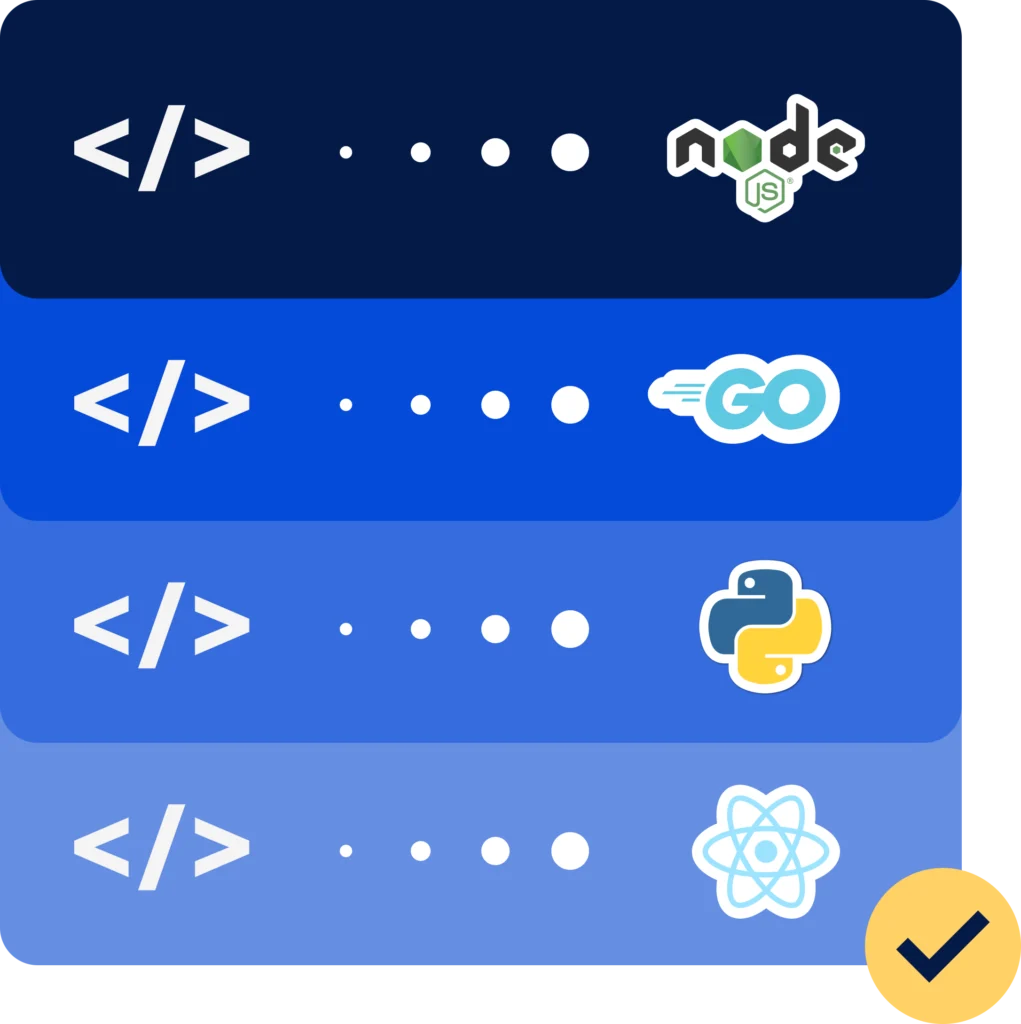
Core technical stack icons for Node.js, Go, Python, and React development
Three stacked credit cards with Trio branding representing customer-facing fintech products
Icon stack representing risk, fraud prevention, and compliance with lock and shield graphics
Mobile phone displaying a Trio-branded payment card representing payments and financial infrastructure

What Trio Engineers Deliver

timer 24p
Core System Integration and API Layers
  • REST and event-driven API layers over existing core banking platforms.
  • Integration with core providers and third-party financial services, replacing point-to-point connections with managed interfaces.
  • Middleware and orchestration between legacy systems and modern services.
  • Real-time data access over batch-oriented systems, including change-data-capture and event streaming.
award 24p
Incremental Modernization
  • Strangler-fig migration: new functionality built as services around the monolith, with traffic routed progressively.
  • Coexistence architecture that keeps legacy and modern systems running in parallel during transition.
  • Decomposition of intertwined logic, where interest calculation, statement generation, and identity checks live in the same code path.
  • Data migration and reconciliation between legacy and modern stores, with verification at every stage.
trending down 24p
Digital Channels and Customer-Facing Systems
  • Web and mobile banking experiences built against the new API layer rather than the core.
  • Onboarding, servicing, and account management flows for institutions competing with digital-native providers.
  • Real-time payment capability, including the rails and messaging institutions are actively adding now.
  • Internal tooling for operations, servicing, and compliance teams.
file search 24p
Reliability, Compliance, and Operations
  • Batch window optimization and the migration of overnight processing toward real-time.
  • Audit trails, access controls, and evidence that satisfies examiners and internal audit.
  • Test coverage for systems that have historically had little, including characterization tests that pin existing behavior before it changes.
  • Observability and incident response for systems where downtime is a regulatory event.

What Trio Engineers Deliver

timer 24p
Core System Integration and API Layers
  • REST and event-driven API layers over existing core banking platforms.
  • Integration with core providers and third-party financial services, replacing point-to-point connections with managed interfaces.
  • Middleware and orchestration between legacy systems and modern services.
  • Real-time data access over batch-oriented systems, including change-data-capture and event streaming.
award 24p
Incremental Modernization
  • Strangler-fig migration: new functionality built as services around the monolith, with traffic routed progressively.
  • Coexistence architecture that keeps legacy and modern systems running in parallel during transition.
  • Decomposition of intertwined logic, where interest calculation, statement generation, and identity checks live in the same code path.
  • Data migration and reconciliation between legacy and modern stores, with verification at every stage.
trending down 24p
Digital Channels and Customer-Facing Systems
  • Web and mobile banking experiences built against the new API layer rather than the core.
  • Onboarding, servicing, and account management flows for institutions competing with digital-native providers.
  • Real-time payment capability, including the rails and messaging institutions are actively adding now.
  • Internal tooling for operations, servicing, and compliance teams.
file search 24p
Reliability, Compliance, and Operations
  • Batch window optimization and the migration of overnight processing toward real-time.
  • Audit trails, access controls, and evidence that satisfies examiners and internal audit.
  • Test coverage for systems that have historically had little, including characterization tests that pin existing behavior before it changes.
  • Observability and incident response for systems where downtime is a regulatory event.
left1 1

Impact,

not Promises

Ready to scale your FinTech engineering team?

shape

Case Studies

Results that Drive Growth for Fintech

FinTech founders and CTOs work with Trio’s engineers for one reason: confidence.

Cosmos_section1_900x900px-1

Seamless Scaling

Trio matched Cosomos with skilled engineers who seamlessly integrated into the project.

Poloniex_section1_900x900px-1

Expanding Talent Pool

Our access to the global talent pool ensured that Poloniex’s development needs were met.

Uberdoc_section1_900x900px_2x-1

Streamlining Healthcare

We provided UBERDOC with engineers who already had the expertise needed.

TT_section1_900x900px-1

Transforming Travel

Trio introduced an integrated ecosystem for centralized and automated data gathering.

How we work together

Step 1

Discovery
 Call
Discuss your core platform, integration estate, modernization sequence, and constraints.
illustration1 stateselected
illustration1 staterest

Step 2

Curated
 Shortlist
Review engineers matched to your stack, your core provider, and the pace you need to work at.
illustration2 stateselected
illustration2 staterest

Step 3

Interview 
+ Select
You interview the engineers and choose who fits your team best.
illustration3 stateselected
illustration3 staterest

Step 4

Onboarding 
in 3–5 Days
Engineers join your program without a mobilization phase.
illustration4 stateselected
illustration4 staterest

Step 5

Governance & Check-Ins
Ongoing alignment, performance tracking, and support from Trio.
illustration5 stateselected
illustration5 staterest
Triangle top right

Talk to a specialist

BUILD WITH CONFIDENCE. SHIP WITHOUT SURPRISES.
Work with fintech engineers who understand regulated environments, complex integrations, and the cost of downtime. Scale securely while keeping full ownership and control. You own all code and IP, and if an engagement ends, transitions get documented so institutional knowledge stays on your side.
Mike headshot
Marcie headshot
Jashan headshot
bottom right corner

Contents

Share this article

Curated by

September 1, 2026

Enterprise Software Development for Institutions Running Legacy Cores

Arguably, forming a strategy for something like banking core modernization is the easiest part of the process. Executing that plan, without negatively affecting your customers or creating unnecessary downtime, is the difficult part.

Let’s look at what actually needs to get built once the strategy is already decided, and who can safely build it next to a core system that’s been processing real transactions since before most of the engineering team was born.

To get skilled fintech developers on your team who can help you execute your enterprise modernization successfully, request talent.

Key Takeaways

  • The real constraint at most institutions running a legacy core is capacity.
  • Full core replacement has a documented high failure rate, which is why the industry has shifted decisively toward incremental, strangler-fig style migration.
  • An API wrapper over a legacy core is a genuinely good first move.
  • Working safely next to a forty-year-old core requires asking why something looks wrong before assuming it is wrong, since the answer is sometimes a regulatory requirement.
  • Most modernization work doesn’t actually require COBOL specialists. It requires modern-stack engineers who can build the APIs and services that work safely around a core they don’t need to rewrite.

Talent Requirements

For a bank, credit union, or insurer running a legacy core, the consensus on approach has never been stronger: incremental modernization, API layers, progressive migration off the monolith.

What’s actually missing is people who can execute it without burning out the one or two engineers who already understand how the existing system actually behaves.

The numbers back this up. Roughly 90% of US banking core software is considered legacy, according to industry analysis from TechMagic.

AWS’s own published guidance on core banking modernization reports that 71% of mainframe teams describe themselves as understaffed, with the pool of COBOL-proficient engineers continuing to shrink as practitioners retire faster than new ones enter the field.

A transformation contract gives an institution a roadmap and a program manager, but the actual constraint is that a shrinking handful of people understand the core well enough to touch it safely.

Why Big-Bang Replacement Lost

Large legacy modernization rewrites fail often. This can be attributed to the fact that rewriting decades of undocumented, accumulated business logic all at once carries incredible risk.

Several major European banks have abandoned full replacement projects after years of development and hundreds of millions in sunk cost, a pattern that’s become common enough to be its own cautionary genre in the industry press.

The alternative is building new functionality as services around the existing core and routing traffic to them progressively rather than attempting a cutover.

Just keep in mind that attempting to re-architect the core before the underlying data architecture is stabilized reliably produces longer timelines and more risk, so make sure that you carry the process out in the right order.

The API Wrapper Buys Time. It Doesn’t Buy a Core.

Wrapping a legacy core in an API layer is fast, comparatively cheap, and makes an institution look modern from the outside almost immediately.

It’s often the right first move, since it unblocks mobile and digital channels without waiting on the core itself to change.

But underneath the wrapper, the core is still batch-oriented and still expensive to maintain, and the technical debt underneath keeps accruing regardless of how modern the layer on top looks.

This means it’s just the first step in an extended sequence, and if you treat it as the end state you will probably end up dealing with the same constraint again in a few years, with less runway and fewer COBOL-proficient engineers left to call on than they had the first time around.

Working Safely Next to a Forty-Year-Old Core

The actual coding requires having actually worked inside one of these systems rather than around them.

  • Load-bearing weirdness: In a legacy core, interest calculation, statement generation, and identity verification may be physically intertwined in a single code path that was never designed to be separated. Code that looks separable frequently isn’t.
  • Undocumented intent: Documentation is commonly incomplete or missing entirely for large parts of these systems. The reason a function behaves oddly may be a regulatory requirement recorded nowhere in the actual repository.
  • Batch windows: Overnight processing that takes hours constrains everything scheduled around it, and even a small increase in time can cascade into a missed window and a reportable incident.
  • Point-to-point sprawl: Decades of direct, one-off connections to external systems mean the actual blast radius of a change is rarely obvious.

A strong generalist engineer looks at a legacy core and sees a refactoring opportunity, which might be the right decision in a normal app. However, you need someone who knows to ask why something is the way it is before changing it, and who already knows that in a regulated institution.

What Modernization Actually Delivers

The ultimate goal of modernization is to meet user expectations and keep up with whatever competitors are doing.

Think of things like real-time balances instead of overnight settlement, feature cycles measured in weeks rather than waiting for a quarterly release window, real-time payment capability, and self-service capability that measurably reduces call center volume.

Engagement Models for Modernization Work

Staff augmentation puts engineers on your program under your own direction. It’s usually the right fit when engineering leadership and a defined sequence already exist internally.

A dedicated team is the way to go if your workstream needs real continuity across years, like for a genuinely multi-year modernization effort.

Project outsourcing suits a defined build with a defined scope.

Whatever model you end up choosing, remember that continuity matters more than the specific contract structure, since the expensive knowledge here is what engineers learn about your specific systems over time.

What This Costs Compared to a Consultancy

Trio’s LATAM engineers run $40-90 an hour, typically 30-50% below US equivalents for comparable seniority.

On the other hand, consultancy blended rates bundle in program management, delivery oversight, and account infrastructure on top of the engineering itself.

If you don’t have any of those functions internally, that bundling is a genuine product worth paying for. If those functions already exist in-house, that same institution is paying twice for management it doesn’t need.

COBOL and mainframe specialists command a real scarcity premium, commonly cited somewhere in the $125,000 to $150,000-plus range depending on seniority and region, and that premium keeps climbing as the pool shrinks.

But most modernization work doesn’t actually require COBOL engineers at all. It requires engineers who can build the APIs, services, and integrations that interact with a core they don’t need to rewrite.

Choosing a Partner for Modernization Work

We recommend that you ask for engagements of genuinely comparable complexity. Find out what actually happened the last time something broke in production on their watch, and ask specifically how they’ve handled a change that touched a batch window before.

One question does more work than the rest combined: ask a prospective partner what they’d actually do if they found a function in your core that looks redundant and has no documentation attached to it.

The answer tells you directly whether they’ve worked inside a regulated institution before.

To be connected with developers that have guaranteed experience, book a discovery call.

mosaic shape

Frequently Asked Questions

blue triangle

Schedule a Call

Let’s Build Tomorrow’s FinTech, Today.

Whether you’re scaling your platform or launching something new, we’ll help you move fast, and build right.