
Breaking into an emerging market as a fintech startup can feel exciting at first, then slightly intimidating once you see how many pieces need to line up.
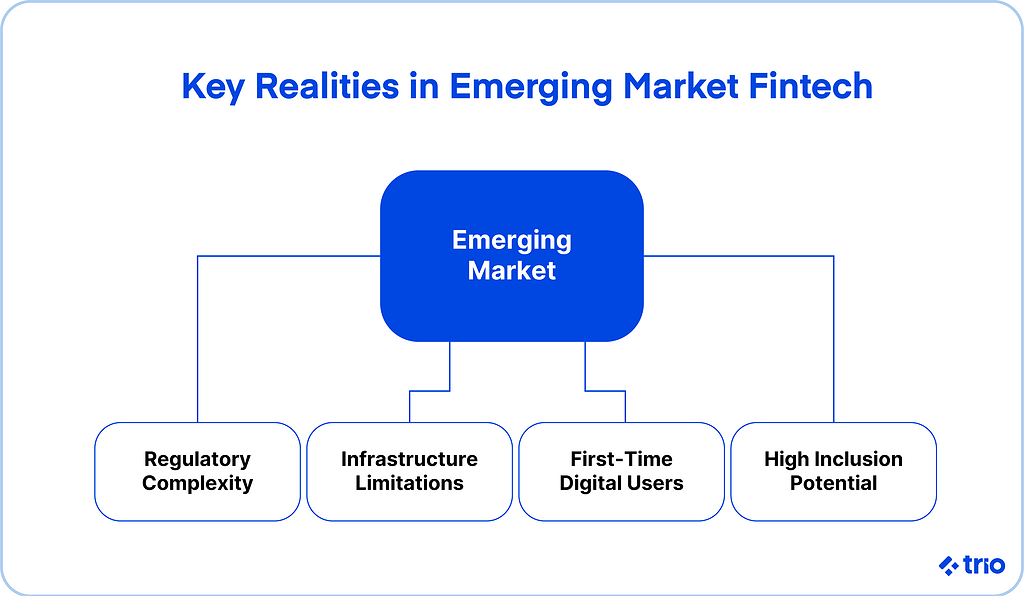
You have huge opportunities for financial inclusion and new access to financial services, but you also face regulatory complexity, inconsistent banking infrastructure, and users who might be experiencing digital financial services for the very first time.
Some entrepreneurs that we have worked with say they only realized how tricky things were when early traction stalled or when onboarding dropped sharply because users struggled with something they thought was simple.
Others ran into difficult conversations with regulators or underestimated how local behaviors shape adoption. Problems like these may suggest a product has deeper gaps, even when the idea itself is promising.
There is a way through it.
When you approach product development with a clear understanding of the region, thoughtful user-centric design, and guidance from experienced engineering teams such as those at Trio, you can build fintech solutions that work for real people and scale across emerging economies.
The Fintech Landscape in Emerging Markets
Understanding how people use financial services in an emerging market gives you the foundation you need before you design or code anything.
These regions are growing fast, but they rarely behave like traditional banking markets.
What Fintech Is and Why It Matters
Fintech describes financial technology that supports digital payments, lending, banking services, insurtech, wealth tools, micro-lending, and more.
In many emerging economies, fintechs have stepped in where traditional banking systems never gained traction.
Characteristics of Emerging Markets
Many emerging markets tend to be mobile-first. People rely heavily on smartphones, even when other infrastructure is limited.
Cash still plays a big role, and some areas have gaps in physical infrastructure that make banking services inconsistent.
Identity systems can be fragmented, which affects KYC and AML processes. It also influences how digital wallets or mobile money platforms should be designed to improve trust.
The Opportunity
The opportunity is significant.
You see it in countries like Kenya, where mobile money services changed daily life, or in Latin America, where adoption of mobile payments accelerated after the COVID-19 pandemic.
New fintech solutions can support small businesses, improve access to financial services, and give people better control over their financial lives.
Opportunities and Challenges Unique to Emerging Markets
Emerging economies offer a mix of high-potential opportunities and stubborn challenges that require patience and a practical mindset.
High-Potential Use Cases
Digital wallets, lending tools for small and medium enterprises, micro-loans, blockchain-based remittance tools, and mobile money services often resonate strongly.
They are tailored to the unique needs of people who have never had access to formal banking.
Major Barriers to Address
Regulatory complexity varies widely between countries. Fraud pressure appears to be rising across many emerging markets, partly due to cheap identity spoofing tools.
There is also the constant issue of limited infrastructure, both digital and physical.
Understanding these realities early on helps you avoid product decisions that look efficient on paper but collapse under real-world conditions.
How to Build a Fintech Product for Emerging Markets
As you move into building fintech systems, the goal is to create something flexible and grounded in the local environment.
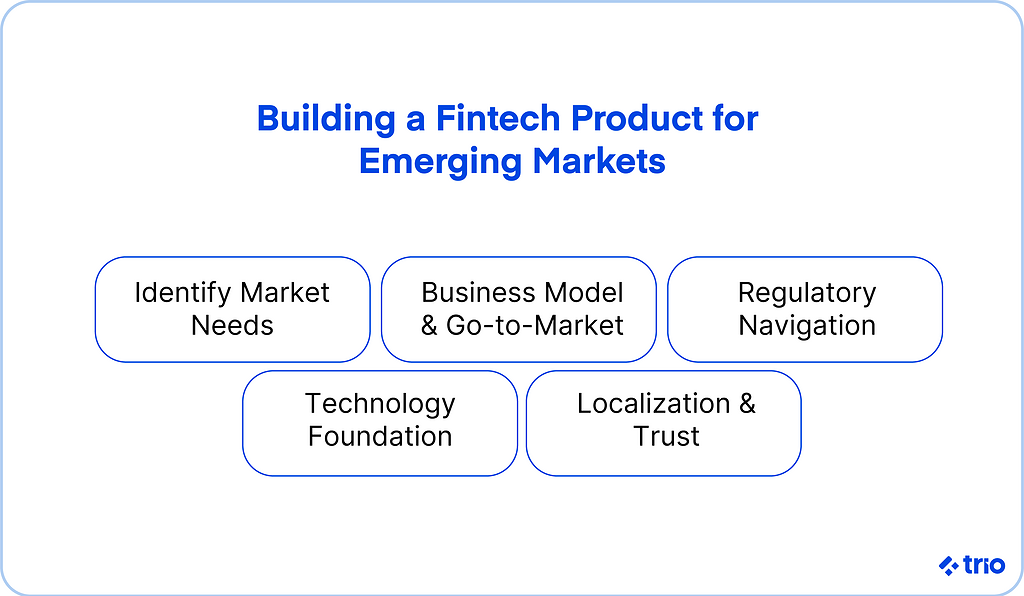
Identify Genuine Market Needs
Start with conversations, not assumptions.
Visit small businesses that rely on cash. Talk to people who use informal lenders. Watch how individuals top up mobile wallets or pay utility bill payments.
These observations may reveal deeper insights than a market report ever could.
Create a Strong Business Plan
A realistic business plan helps you define clear revenue models and go-to-market strategies.
Investors want proof that you understand local competition and how people already access financial services.
Some teams choose to operate in smaller regions first before expanding, which may be a safer approach in many emerging markets.
Navigate Legal and Regulatory Requirements
Regulation can change slowly in some countries and very quickly in others. Licensing structures vary widely, and laws like GDPR influence how you manage user data.
If you plan to operate across borders, expect to spend time understanding multiple frameworks and compliance expectations.
Regulatory sandboxes now exist in several markets and may offer a good path for controlled early testing.
Choose the Right Technology Foundation
Your tech stack should be secure and resilient, while still flexible enough to integrate with banking systems, payment rails, and mobile money platforms.
Security-by-design principles matter a lot when users already have low trust in digital financial systems.
Some teams lean on machine learning for credit scoring or transaction monitoring. Others prefer simpler, more transparent methods at first.
Both approaches can work, depending on your product and region.
Address Infrastructure Realities
Low bandwidth, intermittent connectivity, and lower-cost devices are normal in many emerging markets. These limitations affect everything from transaction volumes to the way people complete onboarding.
You may need offline-friendly features or lightweight client-side interactions.
Identity verification is another challenge. Biometric ID systems exist in some places, such as in countries like Kenya, but others rely heavily on alternative verification methods or community-based trust.
Build for Localization and Trust
Localization is not only about language. It also means designing user-centric flows for people who might be new to digital financial services.
Clear fees, predictable steps, and visual trust signals make a big difference.
Many fintech startups overlook embedded financial education. Yet onboarding tends to work better when users understand why you need certain information or how wallet balances operate.
Build a Risk and Fraud Strategy
Fraud tends to be a daily concern. You may need to combine know your customer checks with behavioral analytics, biometric patterns, or consortium fraud data.
Some teams rely heavily on AI-driven models, while others prefer simpler rules during early growth.
A layered approach usually works best.
Building, Launching, and Scaling Your Product
Launching a fintech startup is rarely a straight line. You adapt constantly as you learn what real users need.
MVP Development for Emerging Markets
An MVP should focus on essential financial services but still reflect local realities.
A wallet might need offline balance snapshots. A lending product might need repayment reminders that work without push notifications.
Build a Strong Team and Ecosystem
Local talent helps you understand cultural expectations around money.
Partnerships with banks, telcos, or mobile money operators open doors faster than going alone.
Some fintechs choose to partner with specialist staff augmentation firms like Trio because the combination of global engineering support and local insight can shorten development cycles.
Test, Pilot, and Iterate
Pilots help you understand user behavior in small, manageable environments.
A market like Nairobi or Lagos often becomes a testbed for early adoption.
Sandboxes or small community partnerships may reveal problems long before a major launch.
Funding Your Fintech Startup
Funding can be uneven across emerging markets, but it is not impossible.
It only requires a clear story and a realistic plan.
Funding Challenges in Emerging Markets
Capital can be unevenly distributed. Some regions have strong investor networks, while others rely more heavily on grants or strategic partnerships.
Compliance requirements may also raise early costs.
Strategies to Attract Investors
Investors look for traction tied to transaction volumes, retention, or successful onboarding.
They also check your economic foundation and your path to regulatory compliance.
A predictable plan often matters more than flashy technology.
Alternative Funding Models
Revenue-based financing, cross-sector partnerships, and grants can be useful stepping stones.
Some founders partner with financial institutions to test fintech solutions before raising a larger round.
Partnerships and Ecosystem Development
Partnerships help you move faster than trying to build everything alone.
Collaborating with Banks, Telcos, and Payment Providers
Banks provide the regulatory structure you need, and telcos often own the mobile money platforms that dominate local payments.
These relationships give your fintech startup access to real networks and local trust.
Building Trust with Local and Regional Regulators
Relationship-building is a long game.
It may not feel urgent at first, but regulators tend to support companies that show transparency and willingness to follow the rules.
Leveraging Accelerators and Fintech Hubs
Accelerators across Nairobi, Cairo, Lagos, and parts of Latin America may give you market insights, local introductions, and early pilot opportunities.
They can speed up your understanding of what people actually need.
Case Studies: What Success and Failure Teach You
Real examples often explain things better than theory.
- M-Pesa changed daily life in Kenya.
- Paytm reshaped digital payments in India.
- Mercado Pago helped small businesses across Latin America accept mobile payments.
- Nubank showed how to rethink traditional credit with a cleaner design and simple fees.
Future Trends Shaping Fintech in Emerging Markets
The future of finance in these regions is moving fast, though never in a perfectly predictable line.
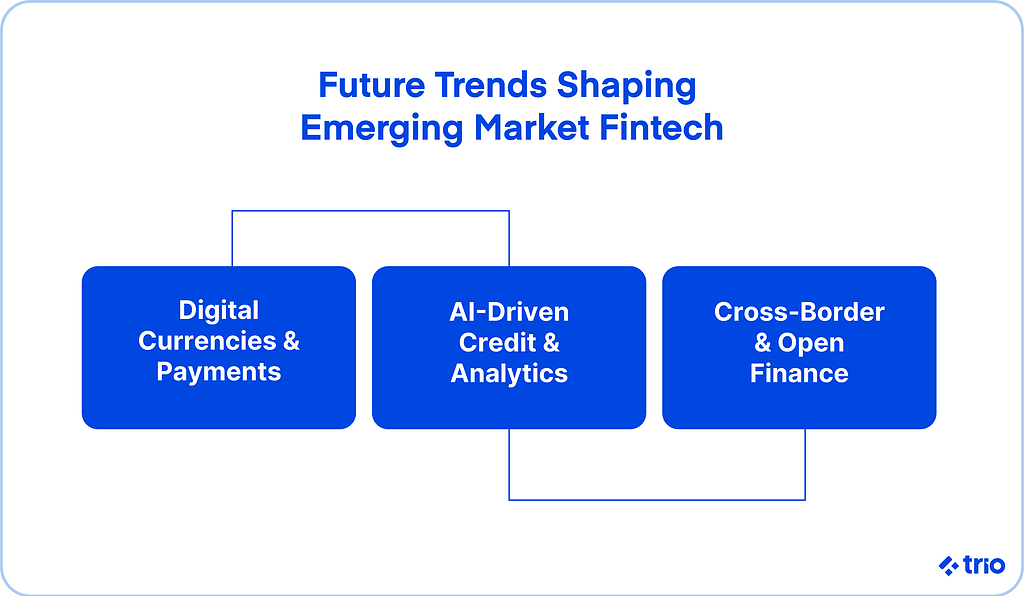
The Next Wave of Digital Finance
With the stablecoin craze underway, we expect growth in digital currencies, AI-driven credit scoring, unified QR ecosystems, and greater interest in blockchain-based cross-border payments.
These shifts may reshape digital technology and open new opportunities for entrepreneurs.
Predictions Across Africa, LATAM, and Asia
Africa is widening its use of mobile money services. Latin America is leaning harder into open banking and cleaner regulatory frameworks.
Southeast Asia is experimenting with new digital wallet and cross-border remittance models.
Preparing for the Next Decade of Fintech Innovation
If you want long-term scalability, you will need adaptable systems that evolve as new regulations arrive.
Teams at Trio often encourage fintech founders to think about building and maintaining flexible infrastructure rather than betting on a single architecture.
Conclusion
Fintech in emerging markets offers tremendous opportunities for entrepreneurs, but it also asks for patience, local understanding, and thoughtful product choices.
With the right research, partnerships, and technology, you can create cutting-edge solutions that improve financial inclusion and support a more inclusive financial system.
Building fintech is never simple, but it becomes far more manageable when you have experts on your team. Get in touch to hire fintech developers from Trio.
FAQs
What is a fintech startup in an emerging market?
A fintech startup in an emerging market is a financial technology company operating where traditional banking is limited. These startups aim to improve access to financial services through digital tools.
How do you start building fintech products for new markets?
Building fintech products for new markets begins with researching real user needs and designing around local behavior. You then validate your assumptions through small pilots.
What challenges do fintech startups face in emerging economies?
Fintech startups in emerging economies deal with infrastructure gaps, regulatory complexity, and fraud risks. These obstacles shape how products are designed and delivered.
How does regulation affect a fintech startup?
Regulation affects a fintech startup by controlling licensing, data rules, and compliance demands. Understanding frameworks early prevents delays and unexpected costs.
Why is onboarding so important in fintech solutions?
Onboarding matters in fintech solutions because users often try digital finance for the first time. A clear, simple flow helps build trust and reduces drop-offs.
How do small businesses benefit from fintech in emerging markets?
Small businesses benefit from fintech in emerging markets because they get access to credit, payments, and digital wallets. These tools help them manage cash flow more easily.