

 Read Client Stories


11 Fintech Solutions Reshaping Banking and Payments in 2026
Digital wallets, neobanks, embedded finance and regtech: the 11 fintech solutions reshaping banking and payments, and what each one takes to build well.
Category
Dive into tech finance, like financial technologies, investment strategies, and the economic impact of tech innovations. Stay ahead with our expert insights.

Digital wallets, neobanks, embedded finance and regtech: the 11 fintech solutions reshaping banking and payments, and what each one takes to build well.
Compare 12 embedded finance providers for B2B SaaS across payments, banking, lending and cards, with real pricing models, build timelines and counterparty risk.
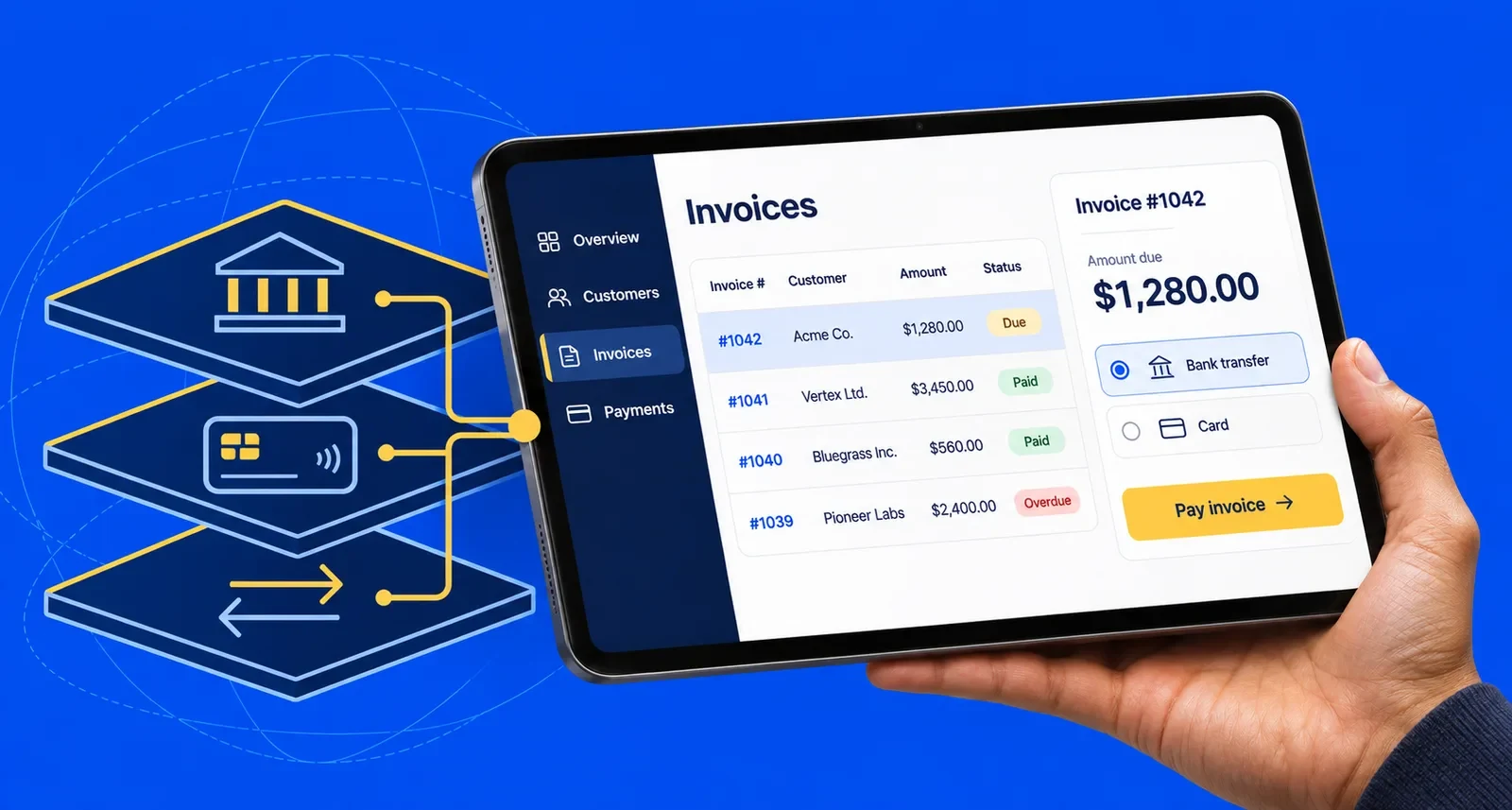
Ten PayFac-as-a-Service providers compared on published rates, liability, go-live time, and geography, plus which one fits your volume and your vertical.
Why AI fraud detection became urgent in fintech, how transaction monitoring and real-time scoring work, and the 12 companies doing it.
Twelve things Python actually gets used for, from data science and machine learning to fintech, IoT and web scraping, with the libraries each one runs on.
What actually makes a mobile app user-friendly: the design specifications, how navigation should work, and designing for different screens.
Thirteen payment orchestration companies compared: what each does best, what to watch for, and the routing, pricing, and reconciliation gaps vendors leave out.
The 12 companies moving real volume on stablecoin rails, from issuers to payment processors, and what the volume numbers actually show.
The eight companies building agentic checkout, from Stripe's protocol layer to Shopify and Klarna, and what each one handles in the payment flow.
Visa reported a 1,200% year-over-year increase in retail site traffic from AI agents. Adobe Analytics tracked 4,700% growth in AI-driven visits to retail
Real-time fraud detection, from the latency budget a decision must fit to the models, false-decline costs and who carries liability when a payment goes wrong.
Banks operate on product rollout cycles of four to six months. That creates an incredible gap. API-first banking solves this problem directly.