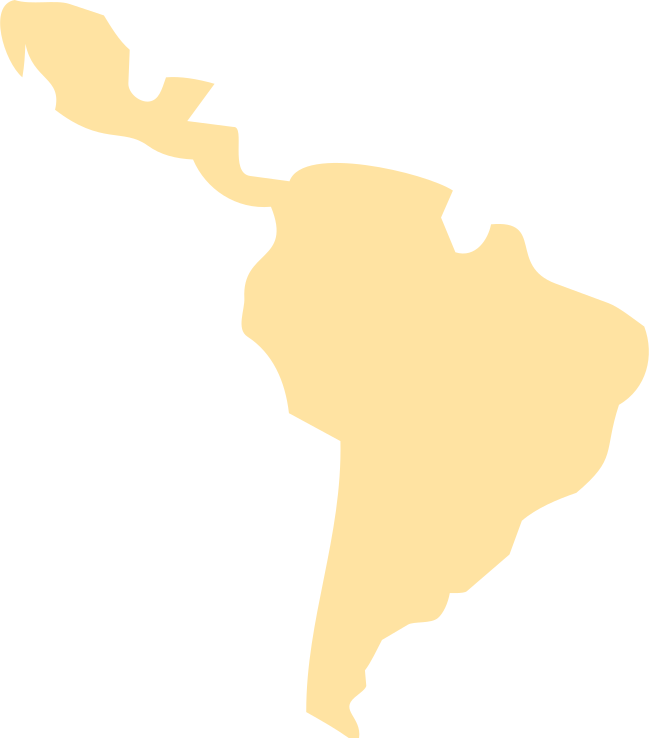
Hire Latin American Developers for Real-Time Collaboration and Fintech-Ready Delivery
Hiring Latin American developers works best when timezone overlap turns into actual collaboration, not just calendar alignment.
That difference shows up fast once standups start happening in real time and small decisions stop waiting until tomorrow.
Across the fintech companies we work with, one pattern shows up consistently: teams that hire developers in Latin America to sit close to their core roadmap, rather than treating nearshore talent as a side lane, tend to move faster and hit fewer compliance snags along the way.
We can help you find, vet, and onboard these developers correctly, so you don’t need to expend resources on this process, and can continue to use them elsewhere instead.
If you’re ready to hire developers today, request regional talent.
Key Takeaways
- Latin America’s tech talent pool runs to roughly 2 million professionals, with Mexico, Brazil, Colombia, and Argentina holding the deepest benches.
- Timezone overlap with the US ranges from close to zero difference (Mexico, Colombia) to one or two hours (Argentina, Chile), which tends to matter more day-to-day than raw hourly rate once you account for how much faster decisions move.
- Many teams that come to Trio are actively replacing an existing offshore setup, in areas like Manila or India, rather than hiring nearshore for the first time. The switch tends to be less about cost and more about retention, cultural alignment, and getting a team that behaves like an extension of the company rather than a separate vendor.
- A meaningful share of LATAM engineers carry direct experience in payments, lending, or banking systems, which shortens the ramp-up time for fintech teams specifically.
- Whether you’re adding one developer or building a full nearshore team, the model that tends to hold up over time is one where developers own outcomes.
Why Latin America Works for Nearshore Fintech Development
Latin America typically offers strong timezone overlap with the US, especially across Mexico, Colombia, Brazil, and Argentina.
Mexico and Colombia, in particular, sit close to zero hours apart from US Central and Eastern time for much of the year, with a roughly one-hour gap opening up during parts of the US daylight saving calendar since neither country shifts its own clocks.
Argentina and Chile generally run one to two hours ahead of US Eastern time instead. Either way, that’s a fraction of the gap you’d manage hiring out of most of Asia or Eastern Europe.
What often surprises teams new to LATAM hiring is how familiar the collaboration feels.
Many developers in the region already work inside US product environments, follow Agile delivery norms, and communicate clearly without over-explaining.
Over time, that familiarity tends to reduce friction more than most teams expect going in, and it shows up especially clearly in fintech work, where a developer who already understands why idempotency keys or KYC status logic matter needs a lot less hand-holding than one encountering those concepts for the first time.
What Roles Can You Hire in Latin America
When you hire developers in Latin America, you’re not limited to junior or narrow roles.
The region carries a deep pool of senior software engineers across frontend, backend, full-stack, QA, DevOps, and mobile development, alongside a growing number of specialists in payments infrastructure and financial data systems.
From what we have seen, a lot of companies usually start by hiring one or two developers to relieve pressure on an existing tech team.
As trust builds, those same teams often expand into a dedicated LATAM development team that owns features or services outright, sometimes an entire product line.
Hiring Latin American Developers vs Local Hiring or an Existing Offshore Team
Even a strong internal recruiting pipeline can struggle to keep pace once a roadmap shifts or funding accelerates.
A fair number of the teams we talk to already have an offshore setup, often built out in the Philippines or India years ago, and they’re not looking to add headcount so much as replace what they have.
The usual triggers we come across are turnover, engineers who ship code but never push back on a bad requirement, or a widening gap between how the offshore team works and how the US team actually operates day to day.
Hiring remotely in Latin America typically shortens the time to start while keeping collaboration genuinely intact, and it tends to solve the retention and ownership problems that drove the switch in the first place.
Teams gain the flexibility to scale without reopening a lengthy hiring cycle every time priorities shift, which matters most during growth phases or, just as often, during a deliberate transition away from an offshore model that stopped working.
How Remote Developers in Latin America Actually Integrate
Remote developers in Latin America usually work US-aligned hours and join the same daily rituals as your in-house engineers.
That includes standups, sprint planning, reviews, and the occasional pairing session when the work gets genuinely complex, not just when someone happens to be free.
What makes the real difference long-term is continuity.
Developers who stay embedded long enough start anticipating decisions, flagging risks early, and taking ownership beyond their assigned tickets.
That behavior rarely shows up in short-term or freelance arrangements, which is part of why a dedicated nearshore team tends to outperform a rotating cast of contractors on anything longer than a single sprint.
Top Countries in Latin America for Hiring Developers
Different countries across the region tend to excel in different ways, and there’s no single best one. Instead, it really depends on what the work actually needs.
- Mexico offers proximity and close overlap for US teams, plus one of the region’s largest talent pools.
- Argentina brings a strong base of senior software engineers along with some of the highest English proficiency scores in Latin America.
- Brazil provides scale and deep specialization, particularly in fintech and enterprise systems, backed by the largest developer population in the region.
- Colombia continues to grow as a reliable source of experienced, English-fluent developers, especially out of Bogotá and Medellín, and its financial services sector has produced engineers with genuine payments and lending experience.
Choosing the right country in Latin America usually depends on the type of work you need done, how closely developers will collaborate with your core team, and, for fintech specifically, whether local domain experience matters for the role.
Finding and Hiring Top Latin American Tech Talent
Technical ability alone rarely predicts success in a nearshore setup, and it predicts even less in a regulated fintech environment where a technically strong developer can still miss a compliance nuance.
Teams that succeed usually screen for communication habits, ownership mindset, and experience working inside shared delivery processes, on top of the technical bar.
A structured hiring process, one that checks for fintech domain exposure where relevant, surfaces those traits early, and reduces churn later.
Hire Latin American Developers With Long-Term Stability in Mind
Hiring Latin American developers works best when you plan for continuity.
With the right approach, nearshore developers become a stable extension of your team, and for fintech companies specifically, engineers who already understand payments and compliance work tend to stick around and keep contributing well past the initial ramp-up.
If you want developers who work in your timezone, integrate into your workflows, and stay accountable for delivery, Latin America remains one of the strongest regions to hire from today, whether you’re hiring for the first time or replacing a setup that’s stopped working.
Get in touch.