

Hiring full-time developers feels like the safest choice when you need to build software, but the process often slows teams down.
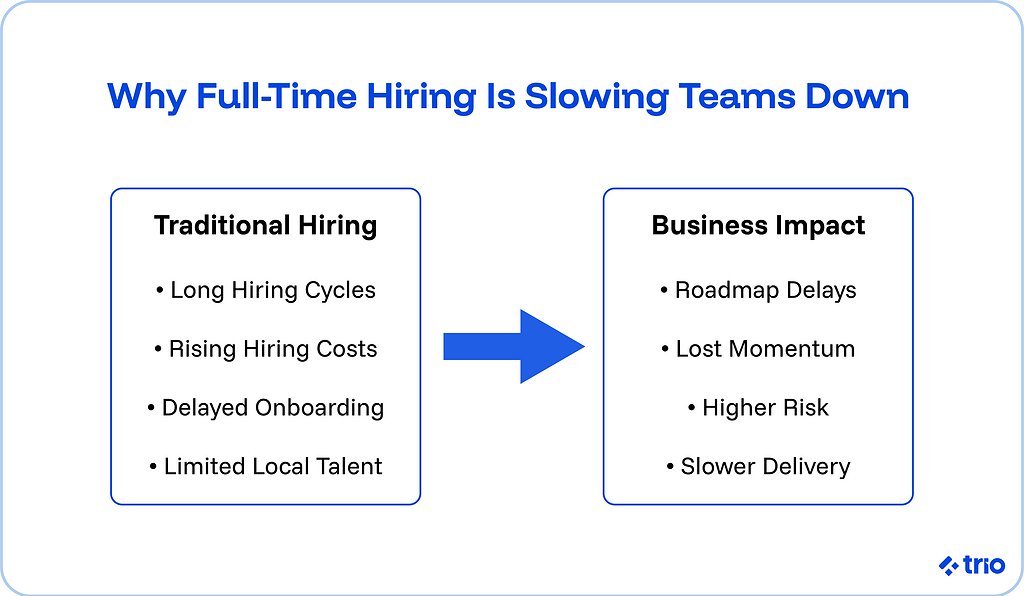
The hiring process typically takes months, hiring costs keep climbing, and it is tough to find developers who can start when you actually need them.
You may have a roadmap waiting for a single backend fix or mobile feature, yet recruiting stalls the entire release.
That slow crawl creates frustration. Product deadlines slip. Teams lose momentum. You may even feel like every hiring option carries its own risk, which makes the idea of adding more full-time developers even harder to justify.
There is a practical alternative to hiring today.
Instead of trying to force traditional hiring into a faster workflow, many companies now hire developers through flexible models like staff augmentation, vetted platforms, or even full remote teams.
The right hiring model can reduce hiring costs, increase predictability, and give you access to a global talent pool without waiting forever to onboard someone new.
This guide walks through the best alternatives to hiring full-time developers and gives you a clear way to choose what fits your situation.
And, if you decide that alternative hiring models like staff augmentation and outsourcing are the right fit for you, we can assist. Trio has been connecting companies with skilled developers since 2019. We may have the right people for you.
Why Teams Are Rethinking Full-Time Developer Hiring
Many tech companies are starting to accept that full-time developers are not always the automatic choice they used to be.
Markets shift, priorities change, and very few engineering teams enjoy perfectly stable workflows.
Hiring across regions adds complexity as employment regulations vary, and international hiring raises legal and payroll questions that smaller teams may not want to take on.
Some teams also realize that the pool of software developers they want is spread across multiple time zones.
That is not a bad thing, but managing remote hiring on your own may feel heavy unless you already have processes in place.
Developers worldwide do offer incredible skill and diversity of experience, yet finding qualified developers without losing months can feel unrealistic.
If you are looking to hire developers who match your pace and your roadmap, flexible hiring offers a way to move forward without taking on commitments your team may not be ready for.
What To Look For When You Compare Alternatives for Hiring Developers
It helps to know what separates a great hiring option from a risky one. Each model handles quality and workflow differently.
These points tend to matter most for companies looking to hire top developers or expand their tech talent pool without delay.
You may notice that the best alternative for hiring depends heavily on how your team prefers to work and how much involvement you want in management.
Vetting and Reliability
Some platforms, like Toptal and Trio, are known for strict screening.
Developers undergo multi-step tests, real-world assessments, and communication checks.
Others appear more open and leave the full vetting process to you.
If you have limited time to evaluate individual developers, choosing pre-vetted software developers typically reduces the stress.
Time to Start Working
Teams often underestimate how much this matters.
A developer who starts next week may save a product launch.
Many alternatives like Upwork or Fiverr allow incredibly fast freelance hires, but speed sometimes comes with tradeoffs in quality.
Managed platforms that focus on vetted developers usually offer a middle ground.
Cost and Commitment
Rates range dramatically. Marketplaces like Upwork provide low entry points, but the total cost can rise if you spend weeks guiding or correcting work. Platforms like Toptal for hiring tend to cost more as they promise access to the top talent in the market.
Staff augmentation services, including Trio, offer predictable pricing and long-term continuity without requiring full-time hiring.
Hiring Model Fit
Every option feels different in day-to-day use.
Some teams enjoy hiring individual developers and managing them directly. Others want a team that can move autonomously.
Your hiring model shapes everything from communication style to sprint planning.
Administrative Overhead
International hiring can create surprise paperwork.
A platform or company that handles payroll, compliance, or contracts removes most of that administrative load. That is one of the many reasons people like to hire developers from Latin America through Trio. We take care of everything.
Hiring pre-vetted developers often feels easier simply because someone else has already handled the boring parts.
Collaboration and Time Zone Fit
A strong time zone overlap avoids unnecessary delays.
Some teams prefer remote developers from Latin America. Others lean toward developers from Eastern Europe or developers from Africa for similar reasons.
Choosing the right time zone saves hours of back and forth during reviews and planning.
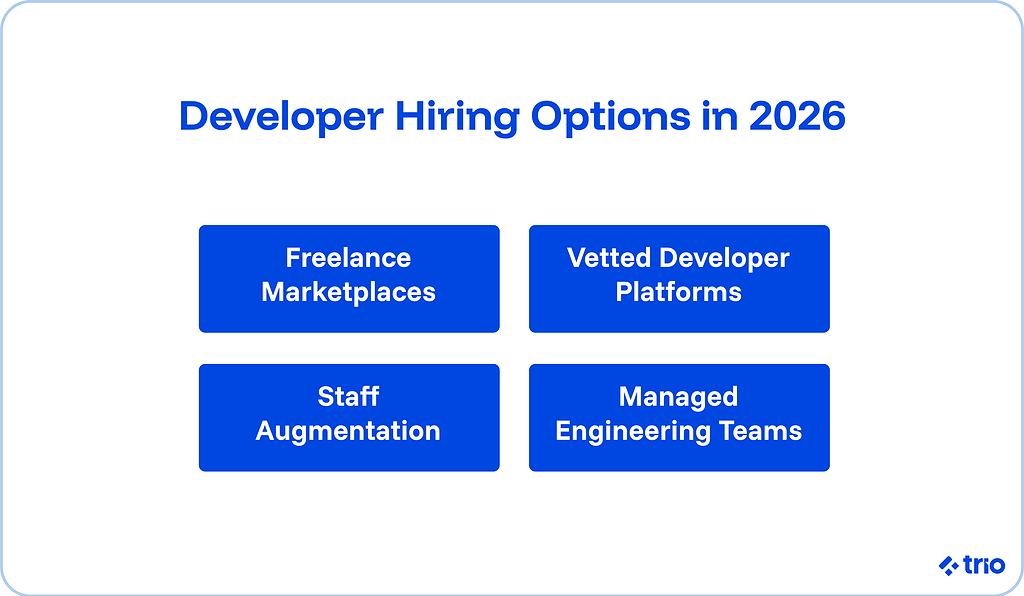
A Quick Look at the 5 Main Hiring Options
It is helpful to see the landscape before exploring each option in detail. Companies seeking developers now have several hiring options that suit different budgets and levels of management involvement.
You will notice there is no single best alternative. There are only options that match or mismatch your needs.
- Freelance marketplaces like Upwork or Fiverr
- Pre-vetted developer platforms
- Staff augmentation partners like Trio
- Managed engineering teams
- Hybrid remote hiring partners that support multiple roles
Deep Dive Into the Hiring Options That Matter Most
Each alternative offers something valuable and something limiting.
Understanding these nuances makes it easier to find the best fit for your product and your team.
1. Freelance Marketplaces Like Upwork or Fiverr
Freelance marketplaces offer one of the fastest ways to hire developers, but the range of skills can be unpredictable.
Upwork provides a huge talent pool, and you may find senior developers or junior specialists depending on your needs. It is best suited for tasks with tight scopes or single features you want to outsource.
The downside is that marketplaces like Upwork require you to manage everything. If the project changes halfway through, you may spend more time guiding work than you expected.
2. Pre-Vetted Developer Platforms
Platforms that vet developers, such as Toptal, Arc, Trio, or Lemon.io, help you skip the unpredictable part of hiring.
You get access to pre-vetted developers who have already passed technical screens and communication tests. It feels easier to hire top developers because the platform offers an initial filter.
There is a cost premium, but companies often justify it by the reduced hiring process and the lowered risk of misalignment.
Some teams treat these platforms as a top choice when launching a new feature set because they want reliability without full-time commitments.
3. Staff Augmentation for Long-Term Continuity
Staff augmentation offers a smoother daily workflow than freelancer-heavy setups.
You can hire top developers who join your team fully, follow your rituals, and commit to longer timelines.
This hiring model is likely to fit teams that want stability but do not want the overhead of expanding full-time headcount.
Trio largely operates in this category.
We make it easy to hire developers who integrate with your team from day one.
You work with experienced developers who understand remote collaboration, and you avoid the entire administrative side of international hiring.
4. Managed Engineering Teams
Hiring an entire team through a partner gives you execution without stretching your engineering lead thin.
Instead of hiring individual developers, you hire software engineers, QA, and sometimes developers and designers in a single package. The partner manages the process and handles delivery.
This is often helpful for companies that lack a technical lead or have a backlog that keeps restarting because developers aren’t available when needed.
5. Hybrid or Cross-Functional Partners
Some partners offer a blended option that appears to combine the best parts of staff augmentation and managed teams.
You can hire senior developers or remote developers who behave like long-term teammates, while also leaning on project support or roles like DevOps or data engineering.
This option works well for fast-moving teams that want one relationship to support multiple skills.
Comparing Popular Hiring Platforms and Providers
Below are the most commonly searched platforms in this category, along with honest context.
Upwork as a Starting Point
Upwork is the largest marketplace for freelance developers. It is flexible, and you can find developers worldwide with varied experience.
The platform offers quick access, although it leaves vetting to you. Teams looking to hire developers for small tasks often choose it because it feels approachable.
Arc.dev
Arc.dev focuses on connecting companies with vetted developers worldwide.
The platform offers developers across multiple tech stacks, and its matching process usually moves quickly.
It makes remote hiring feel more structured than marketplaces like Upwork, though availability may differ depending on niche roles.
Betternship
Betternship sources developers from Africa, offering access to skilled remote developers who understand distributed collaboration.
They may appeal to companies hiring across time zones or wanting lower costs without compromising quality.
Lemon.io
Lemon.io acts as an Upwork alternative for companies that want vetted developers without searching manually.
The platform offers curated matches and developers comfortable with startup environments. It works well for teams that need quick help but not an entire engineering department.
Toptal
Toptal is a premium platform with strict screening. Their pitch is easy to understand.
They offer access to the top-tier developers who have passed heavy technical vetting.
Toptal for hiring may be too expensive for some companies, but it is still one of the best Toptal alternatives for hiring complex or high-risk features.
Trio
Trio is a staff augmentation partner that helps companies hire senior developers who become part of their team.
We focus on vetted developers with strong communication skills and deep experience in remote work. You get long-term team members without the commitments of traditional hiring.
Companies looking to hire developers often choose Trio when they need reliability, continuity, and reduced hiring friction.
How To Choose the Best Alternative for Hiring Developers
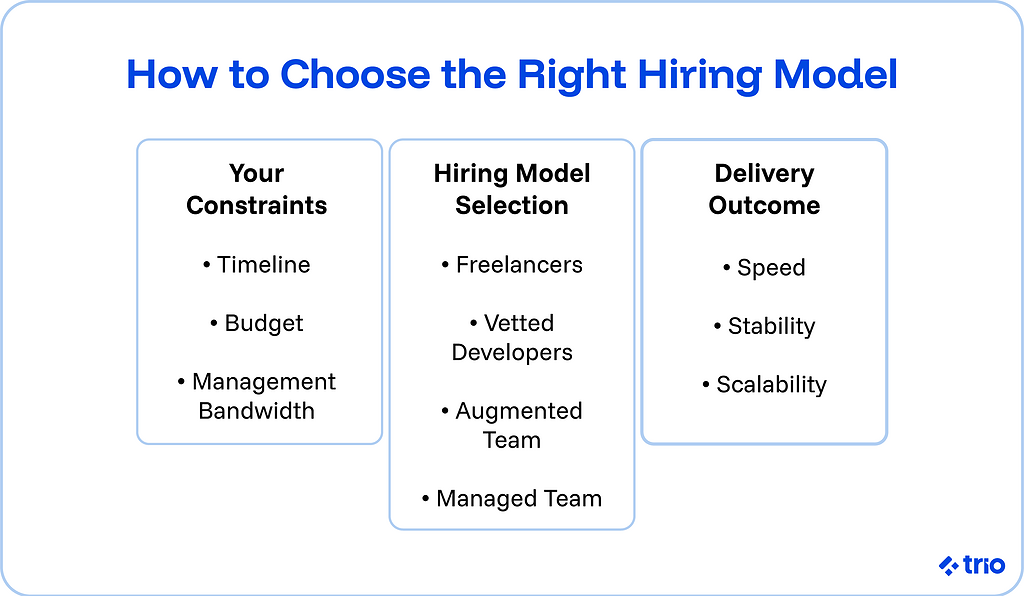
Choosing the best alternative depends on what is slowing you down. The answer usually becomes clear when you compare your internal capacity with your upcoming roadmap.
If you have a structured engineering team and only need one or two specialists, marketplaces like Upwork or vetted platforms appear to work well.
If you want steady velocity and consistent daily collaboration, staff augmentation often becomes the best alternative.
When you lack management bandwidth, a managed team can cover more of the execution and reduce the number of hiring options you need to evaluate.
Your decision also depends on whether you want long-term teammates or short-term freelance developers. The hiring process should feel lighter, not heavier.
Pitfalls Worth Keeping in Mind
It is easy to underestimate the amount of oversight required when you hire freelance developers. A small miscommunication or unclear spec can lead to delays.
You may also encounter freelancers who juggle several projects at once, which makes delivery less predictable.
International hiring can create compliance risks if you try to handle everything internally. This is one reason why companies often look for partners who cover payroll, legal paperwork, and long-term developer support.
There is also the temptation to choose the absolute lowest cost option.
While there are great global developers at every price point, quality and communication may vary if the rate is far below the market.
Key Trends in Hiring Developers
Many teams are embracing global developers because remote hiring is easier than ever.
Developers from Eastern Europe, Latin America, and Africa have become highly sought after for time zone compatibility and strong communication skills.
AI tooling is also reshaping day-to-day work. Developers make faster progress on repetitive tasks, which raises the bar for system design and architecture skills.
Platforms keep evolving. Some offer AI-assisted matching. Others focus on niche skills like machine learning or data engineering.
You are also likely to see more hybrid partners entering the market because companies want both skills and workflow support, not just individuals.
A Simple Hiring Framework To Find the Best Fit
You can quickly sort through hiring options if you look at your actual constraints.
If you are looking to hire developers for very specific and scoped tasks, an Upwork alternative is probably enough.
If you want continuity and predictability, hiring skilled remote developers through staff augmentation will probably fit better. If you need a complete team, managed engineering partners prevent bottlenecks.
There is no answer for everyone, but it becomes easier once you decide how much involvement you want, how much urgency you feel, and how long you plan to keep the developer within your team.
Final Thoughts
You are not limited to traditional hiring anymore.
Alternatives like Toptal, Upwork, vetted platforms, or staff augmentation through firms like Trio each offer a different way to hire developers without slowing down your roadmap.
The best option depends on how your team works and what type of support you need to keep shipping.
If you need long-term stability and senior developers who feel like true teammates, Trio may be a strong fit. We help teams hire developers who contribute from day one and lighten the operational load that usually slows hiring down.
Get in touch!
FAQs
What is the best alternative for hiring developers?
The best alternative for hiring developers depends on your priorities, but staff augmentation and vetted platforms are usually the most reliable choices for speed and quality.
Is hiring developers through Upwork a good idea?
Hiring developers through Upwork can work well for small, clearly scoped tasks, although the quality varies, and you may need to spend extra time managing the work.
What are the best Upwork alternatives for hiring developers?
The best Upwork alternatives include Toptal, Arc.dev, Lemon.io, and Trio, since each one provides more vetting and reduces the risk of misaligned hires.
How quickly can I hire developers without using a full-time model?
Hiring developers outside the full-time model is usually faster, and many teams start working with remote developers in a few days instead of a few months.
Are pre-vetted developers worth the higher rates?
Pre-vetted developers are often worth it because the screening reduces risk, shortens onboarding, and increases the chance that the work matches your expectations.
Can staff augmentation replace full-time developers?
Staff augmentation can replace full-time developers for long-term work when you prefer flexibility, although some companies still keep a core internal team.
How do I know which hiring option fits my project?
Choosing a hiring option depends on your timeline, management capacity, and scope, so shorter tasks fit freelancers, and longer projects usually fit dedicated remote developers.
Is international hiring risky for small teams?
International hiring can be risky for small teams if handled alone, but partners that manage compliance and payroll remove most of the complexity.
Are managed engineering teams a good choice for non-technical founders?
Managed engineering teams help non-technical founders because they handle execution, coordination, and delivery without requiring heavy internal oversight.