
All right. Let me tell you something I’ve been thinking about a lot lately.
For years, every company I worked with had the same problem. The backlog was huge. The product team had all these features designed, all the requirements ready, everything sitting in Jira or Notion waiting to be built. And the development team? Full. Working overtime. Still can’t keep up.
The bottleneck was always the developers. Always.
Not anymore.
I’m seeing something totally different now. The developers on my team are building so fast that the backlog is actually shrinking. Features that used to take three months? We’re shipping in weeks. Sometimes days. And I’m not exaggerating — like for example, we can literally build something like Trello in one afternoon now. One afternoon. And not sign up for Trello anymore.
So what happened? AI happened. But not in the way most people think.
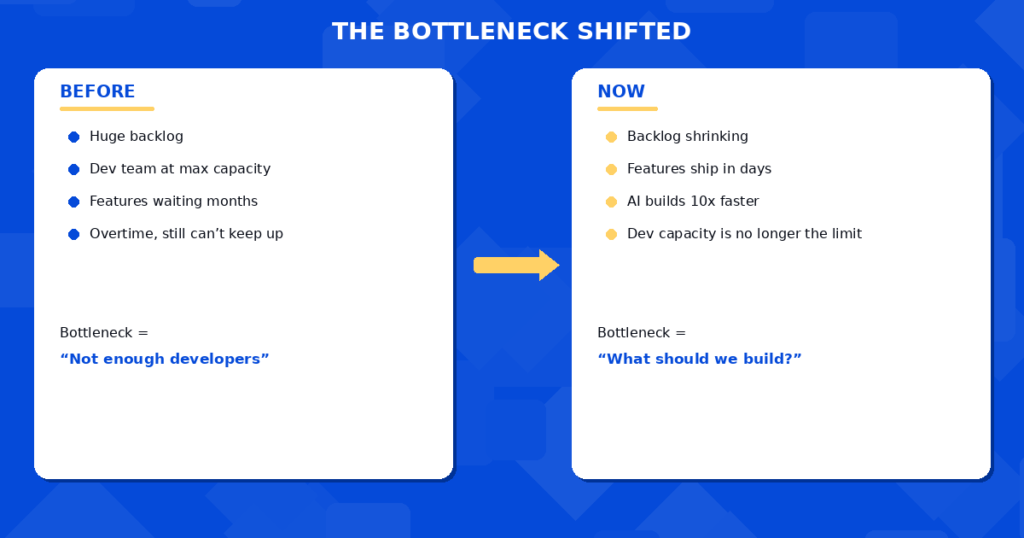
Here’s what I’m seeing: the bottleneck moved. It moved from “we don’t have enough developers to build this” to “what should we even build?” And that’s a product question. That’s not a code question.
The biggest skill shift I’ve ever seen
I think writing code was the biggest value a developer could bring to a company. Like for example, if you were really really good at React or Python or whatever, you were golden. Companies would fight over you. That was true until very recently.
But now? The most valuable thing an engineer can do is understand the problem. Not the code. The problem.
The best developers on my team don’t start by opening their editor. They start by asking questions. And not to the AI — to the product owner. To the customer. To themselves.
“What is the goal of this feature?”
“Who is this actually for?”
“Is this the right approach or is there a better one?”
And here’s the thing that really really gets me — most developers are doing it backwards. They open ChatGPT and say “build me this invoice app.” And AI says “sure” and builds it. No pushback. No questions. No challenge.
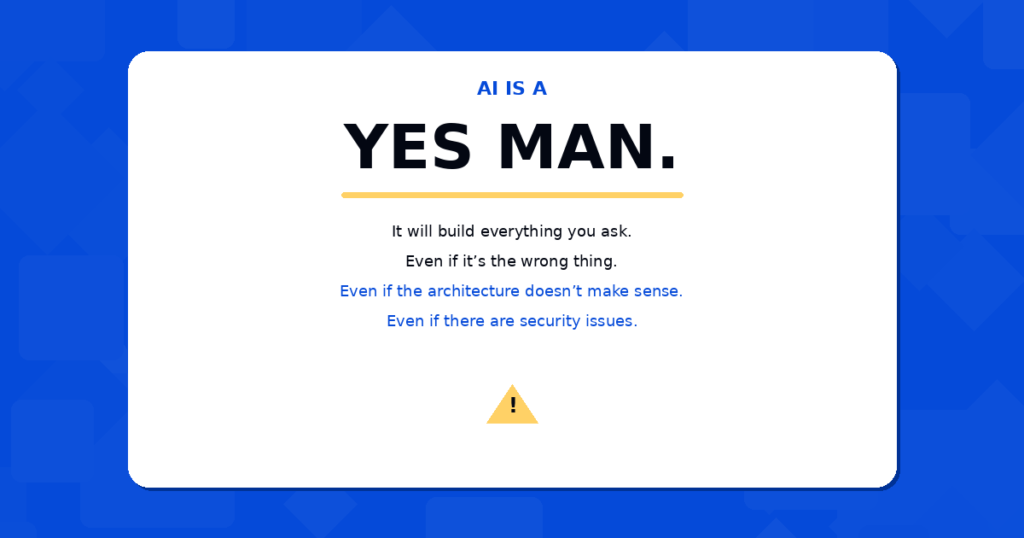
AI is a yes man.
It will build everything you ask. Even if it’s the wrong thing. Even if the architecture doesn’t make sense. Even if there are security issues you haven’t thought about. AI will just say “sure” and keep going. And stuff like that is exactly how you end up with software that breaks in production.
What the developer’s job actually looks like now
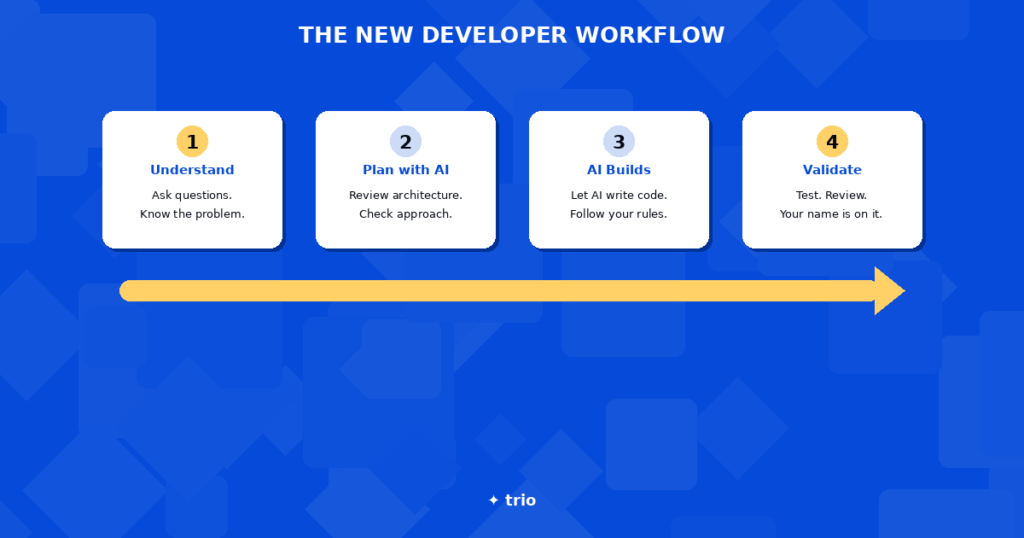
So if writing code isn’t the main job anymore, what is?
I think it’s this: you get a request, you make sure you understand it — really understand it, not just the surface level — then you go to AI and plan it together. AI tells you “okay I’m going to create this table, build this API, structure the files like this.” And then you review that plan. Does it make sense? Does it follow the architecture? Does it respect the security rules?
Then AI builds it. And after that, you validate. You test. You look at the code. You check if it respects all the rules you set up. You can even run another AI agent to review the first one’s work.
Does that make sense? The developer became the decision maker. Not the code writer.
Your name is on that code. Your name is on that feature. So you better make sure it’s right.
The security thing nobody talks about
And by the way — here’s something that really bothers me. A lot of people think they can just ask AI to “check for security vulnerabilities” and that’s it. Done. Safe.
No, no, no.
AI has limitations on what it responds. It will pick maybe five or ten vulnerabilities. But there are thousands of vulnerabilities you can have. If you don’t have experience — if you don’t know what to look for — you’re going to miss things. Like for example, prompt injection. AI won’t check for that unless you specifically tell it to.
That’s why experienced engineers are still so valuable. Not because they write better code than AI. But because they know what questions to ask. They know what to check for. They know where things break.
The part that surprised me the most
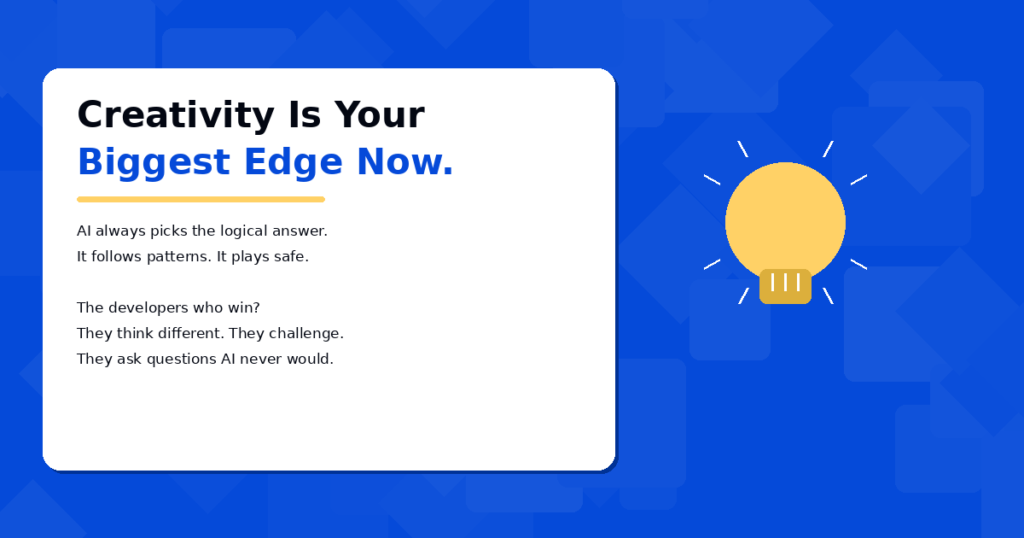
Here’s the thing I didn’t expect. Since AI always picks the most logical answer — the most obvious next step — everyone using AI kind of gets the same output. The same architecture. The same approach. The same solutions.
So what becomes really really valuable? Creativity.
If you can think differently. If you can come up with unconventional ways to solve problems. If you can connect ideas that don’t normally go together. That’s the edge that AI can’t replicate.
I think creative people are going to be more valuable than ever. Not less. And the people who can mix that creativity with technical knowledge? Those are the ones that are going to be very, very hard to compete with.
What I’m looking for when I hire engineers now
When I interview developers — and we hire developers all the time at Trio — I’m not looking for someone who can write a perfect React component. I’m looking for someone who asks great questions. Who understands the problem before they touch the keyboard. Who knows what AI is and what AI isn’t.
Like for example, I’ll ask them: “How does AI work? What happens when you type something into ChatGPT?” Not because I need a perfect answer. But because it tells me if they’re curious. If they took the time to understand the tool they’re using every single day.
The first company I was hired at in the US, the tech lead asked me: “How does the internet work? What happens when someone types www?” I never forgot that question. Never forgot that tech lead. His name was Alex. And I think now the equivalent question is about AI.
So what does all this mean?
I think the future belongs to developers who think like product owners. Who don’t just build what they’re told. Who challenge the brief. Who ask the uncomfortable questions. Who make the product owner think “oh wait, I haven’t thought about that.”
The tools changed. The speed changed. But the fundamentals? Still the same. Understand the problem. Ask the right questions. Build the right thing.
And one more thing — and this is something I really believe — in this world where everyone’s talking about AI AI AI, the companies that invest in culture are going to win. Because culture can’t be copied by AI. How you treat your people. How you make them feel seen. How you check in on them and ask “hey, how’s your family doing?” That’s what makes people want to stay. That’s what makes people do their best work.
AI is the tool. But people are still the whole point.
Let’s build.