

If you work in fintech long enough, you eventually hit a point where the engineering backlog feels like it grows faster than your team can keep up with.
You fix bugs, and more appear. You clear one cluster of technical debt, and a new round pops up a week later. It starts to affect releases, which affects customers, which affects every conversation you have with leadership.
Things get especially tense when the backlog starts to feel like a risk rather than a nuisance.
A delayed KYC integration may seem small until it holds up onboarding. A vulnerability that sits unresolved for months is enough to make anyone nervous.
And when the team keeps bouncing between urgent fires and slow-burning issues, the whole development process starts to feel inefficient.
The good news is that you are not stuck with this.
Fintech engineering teams can reduce technical debt, calm the noise, and get predictable again.
At Trio, we have seen companies turn years of backlog growth into a manageable workflow by improving how they categorize issues, how they prioritize, and how they allocate engineering time.
You can do the same even if your codebase feels messy or your development team is stretched thin.
Our expert fintech developers can be placed in as little as a few days, through flexible hiring models like staff augmentation and outsourcing.
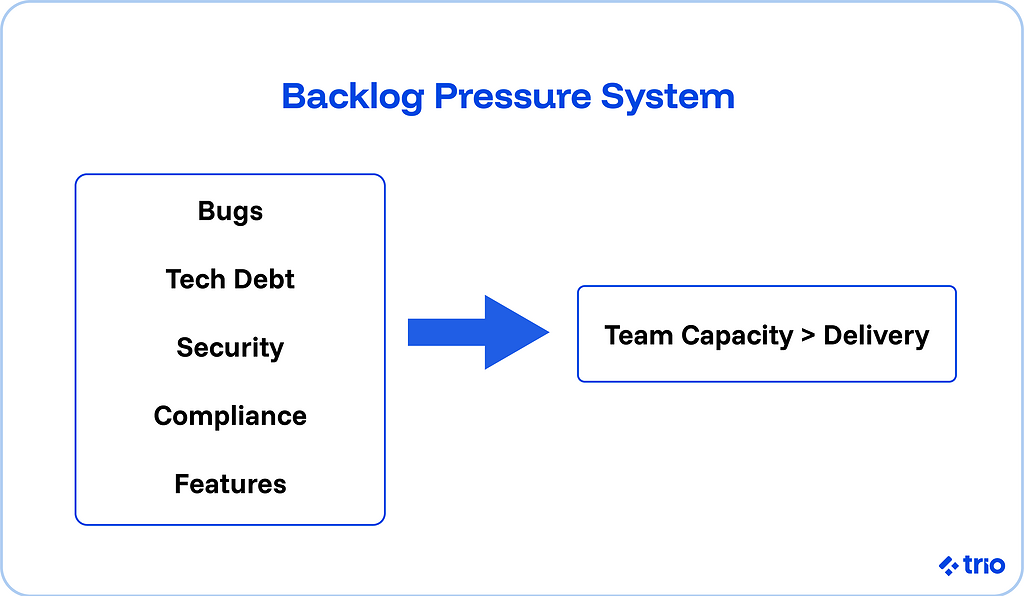
What Your Backlog Actually Represents Inside a Fintech Product
Your backlog is a reflection of how your product has evolved, where your tech stack has struggled, and how your team has responded to new demands.
In fintech, the stakes are higher because the amount of technical debt in your existing system often maps directly to things like financial data accuracy, compliance pressure, or customer trust.
Before you reduce technical debt, you need to understand what kind of debt you are dealing with.
The Types of Work That End Up in a Fintech Backlog
You may see a mix of feature requests, bug fixes, performance issues, security vulnerabilities, and compliance tasks.
Some items block releases. Others quietly create risk. A few may not matter right now, but will cause trouble later.
Treating all backlog items the same usually leads to more inefficiency than clarity.
Why Backlog Issues Carry More Weight in Fintech
Even a small payment-flow bug can create a bottleneck that affects customers in real time.
A missed dependency update might introduce a vulnerability that auditors will ask about later.
Technical debt is inevitable in fast-moving software engineering, but in financial services, the business impact is higher and more visible.
How to Diagnose Your Fintech Backlog Before You Touch Anything
You reduce technical debt faster when you start by mapping the problem.
That may mean revisiting your source of truth, cleaning up labels, or rebuilding your triage process. It sometimes feels tedious, but it always pays off.
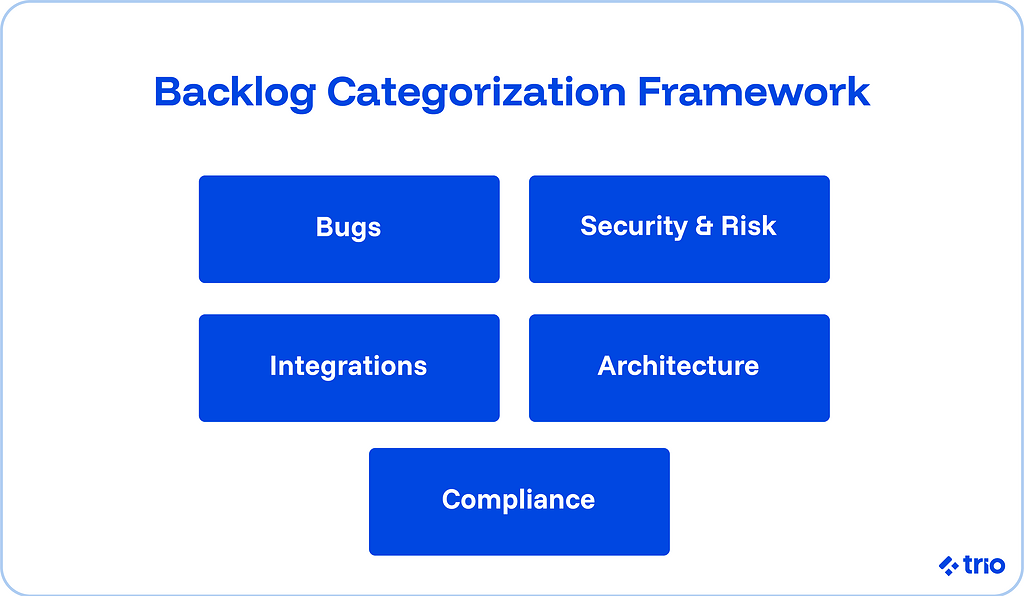
Categorize the Backlog Instead of Just Counting It
Try grouping each item by type of technical debt or work.
For example, label something as a bug, risk, integration issue, or architecture problem.
You get a clearer picture of where the real bottlenecks are instead of guessing.
Watch for Early Signs of Backlog Growth
If updates take longer than expected or if engineers avoid certain parts of the codebase, these may suggest deeper structural issues.
When teams repeatedly patch the same workflows, you often see hidden code debt or a fragile legacy system that needs attention.
Measure the Impact of What You Find
It helps to understand how much time and resources are spent on reactive work.
If your development cycles are dominated by breakage or unplanned fixes, your ability to identify areas for improvement gets sharper.
Some teams track a few simple metrics like backlog age or the number of bugs in high-impact areas. This gives you a baseline that helps with backlog reduction later.
Why Backlogs Grow in Fintech Products
There is rarely a single culprit. Most of the time, backlog accumulation happens because constraints pile up from several angles.
Business Pressure and Regulatory Timelines
You might have shipped a feature quickly to meet a business goal or compliance deadline. That shortcut becomes technical debt.
Over the next few years, the debt grows quietly until it starts getting in the way.
Complexity From Integrations and Dependencies
Fintech products rely on many integrations with external services.
Even something as simple as a KYC provider upgrade can snowball if your system was not built with scalability in mind.
When you multiply external APIs, SDKs, and outdated libraries, you end up with tech debt that is hard to unwind.
Team Habits and Workflow Gaps
If documentation is thin, QA is stretched, or your team does not have a consistent framework for managing technical debt, backlog growth appears almost automatically.
None of this is unique to fintech software development companies, but the impact is sharper when financial data is involved.
Bring Structure Back to Your Backlog
Once you have visibility, you need structure.
This is where many engineering teams see the first real improvement because unorganized backlog items create unnecessary noise.
Create One Clear Source of Truth
Put everything in one place instead of spreading issues across docs, Slack messages, or spreadsheets.
A single workflow with consistent labels gives engineering leaders and teams a shared understanding of the real business impact of what they are working on.
Build a Priority System That Fits Fintech
A payment-failure bug is not equal to a minor UI glitch.
A vulnerability in your card-issuing module has different consequences than a small reporting issue.
If you use a priority matrix that reflects both technical severity and financial risk, you stay closer to reality.
Treat Security and Compliance Items as First-Class Work
Some companies track vulnerabilities outside the core backlog. That often leads to delayed remediation.
It usually works better to include technical debt from security and compliance in the main queue so you can prioritize it alongside new features.
Prioritize Work by Risk Instead of Gut Feel
You make faster progress when you prioritize based on real business impact rather than loud requests or instinct.
This approach appears to create more focus and fewer surprises.
Start With Customer Impact and Regulatory Risk
A fix that restores reliable onboarding or reduces fraud exposure usually deserves attention before a new feature.
When you prioritize by impact, backlog growth slows down because you reduce the number of recurring issues.
Reserve Sprint Time for Debt Work
Many teams set aside part of every sprint for bug fixes, tech debt tasks, or legacy system improvements.
It prevents the accumulation of code debt over time and gives you room to breathe.
Make Trade-Offs Visible
If someone requests a new feature but your team is stuck refactoring a critical service, call that out.
Clear communication with teams and stakeholders prevents unrealistic timelines and reduces pressure on the development team.
Make Backlog Reduction Part of Your Routine
Backlog refinement only works when it becomes part of your ongoing workflow.
A one-time cleanup feels good, but the backlog usually returns unless you adjust your habits.
Hold Short Weekly Review Sessions
Even a quick check helps you identify and address new issues before they sink into the system.
You might find that some items are no longer relevant or that others need to be escalated.
Integrate Debt Work Into Normal Planning
Whether you run two-week sprints or something longer, bring technical debt into your planning conversations.
Some companies run cleanup sprints that focus just on stability or refactoring. Others prefer small, steady improvements.
Strengthen QA Collaboration
Better QA practices reduce backlog.
Improving test automation or involving QA earlier in development cycles can prevent issues before they reach production.
It is not glamorous, but it improves long-term scalability.
Reduce Alert Noise and Dependency Backlog
Security alerts tend to pile up quickly.
Not all of them are urgent, but enough are important that ignoring them can be risky.
Too Many Alerts Without Context Cause Inefficiency
If your team receives hundreds of warnings about outdated dependencies or potential vulnerabilities, it becomes hard to know which ones matter.
This overload often leads to missed high-impact items.
Learn From Teams That Have Cleaned Up Dependency Chaos
Some fintech companies rebuild their dependency graph and test updates in small chunks.
Others automate the upgrade workflow through CI.
These approaches work surprisingly well because they break the problem into smaller pieces that your team can manage.
Build a Practical Security Backlog Strategy
If you group vulnerabilities by severity and assign clear ownership, you remove a lot of uncertainty.
Automation helps too.
Tools that detect issues during development cycles catch problems before they become fires.
Reduce Technical Debt Without Rewriting Your Whole System
It is tempting to want to rewrite everything, especially if your legacy system feels fragile.
That said, a rewrite often slows you down unless the risk is extremely high.
Pick the Right Approach for Each Problem Area
Some parts of the codebase just need minor refactoring, while others may require modernization.
You do not have to fix everything at once. Documenting what you postpone helps repayment later.
Use Methods That Improve Stability Over Time
You might add coding standards, increase automated tests, or clean up key modules one at a time.
Small improvements add up and gradually reduce technical issues.
Prevent New Debt From Sneaking In
If you add a big feature, write down the trade-offs and how you will repay technical debt later.
This habit keeps the amount of technical debt from growing without anyone noticing.
When It Makes Sense to Bring in an Engineering Partner
Sometimes you need additional help, especially if your backlog has grown past what your internal team can realistically manage.
Why Partners Make a Difference in Fintech
A partner with experience in financial services, compliance, integrations, and system design can spot issues faster and streamline your development process.
They are often able to fix problems your team has been circling for months.
How to Choose a Partner You Can Trust
Look for a team that has done this before and can handle modernization, bug fixes, and backlog reduction with a systematic approach.
Communication style matters. You want people who keep you informed instead of leaving you guessing.
How to Work Together Smoothly
Some teams give external developers one part of the backlog while internal engineers focus on new features.
Others build mixed squads.
Both work as long as ownership is clear and priorities stay aligned.
A 90-Day Roadmap You Can Use to Reduce Technical Debt
You do not need a perfect plan. You just need one you can actually stick to.
Phase 1: Map and Triage
Start by organizing your backlog, labeling items, and identifying high-impact areas. This gives you a realistic picture of your technical debt.
Phase 2: Stabilize the Most Critical Items
Focus heavily on urgent bugs, integration breakage, and vulnerabilities. When you fix the biggest problems first, everything else moves faster.
Phase 3: Build Long-Term Backlog Habits
Introduce routines that prevent future backlog growth. Improve planning, automate tests where it makes sense, and refine your process for managing technical debt.
Metrics That Help You Track Backlog Reduction
You might not love metrics, but they help you measure the impact of your decisions.
Engineering and Product Signals
Deployment frequency, incident rate, and average backlog age show whether your backlog reduction efforts are working.
Financial and Risk Signals
Things like reduced support load or shorter vulnerability windows tell you whether your remediation approach is making a difference.
Team Health Signals
People feel the improvement quickly. If your onboarding becomes smoother and firefighting drops, it usually means the system is getting healthier.
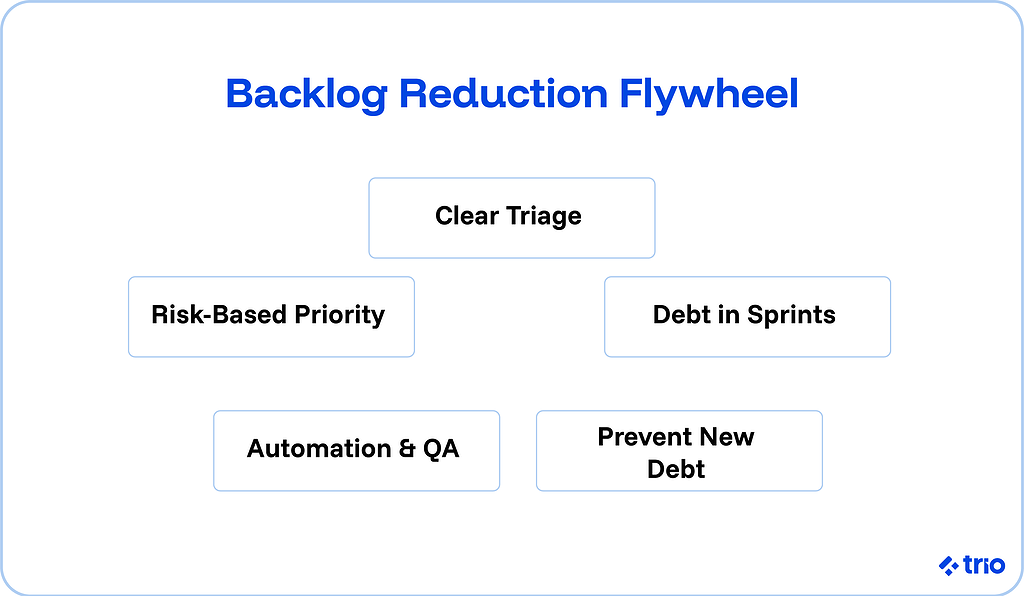
Final Thoughts
Backlog reduction is not about chasing perfection. It is about giving your engineering teams room to breathe and building a system that supports growth instead of blocking it.
When you understand your backlog, improve your framework for prioritizing work, and include technical debt in your planning, you protect your business needs and make the development process more predictable.
If you want help mapping your backlog, creating a roadmap, or modernizing your legacy system, Trio is always happy to talk through what you are up against. You do not have to solve it alone. Our experienced fintech developers are here to help.
Get in touch!
FAQs
How do you reduce engineering backlog in a fintech company?
Reducing engineering backlog in a fintech company means cutting down the backlog by prioritizing high-impact items and fixing the issues that slow your team down the most. You usually make the fastest progress by improving triage, cleaning up technical debt, and reserving sprint time for essential fixes.
What causes technical debt in fintech products?
Technical debt in fintech products usually appears when teams ship quickly to meet deadlines or integrate with complex financial systems. This type of technical debt grows when shortcuts stay in place too long or when legacy code is never revisited.
How can engineering teams prioritize backlog items effectively?
Prioritizing backlog items effectively means ranking work based on customer impact, risk, and business goals. Most teams do better when they categorize items, review them weekly, and make trade-offs visible to stakeholders.
What is the best way to manage technical debt while still shipping new features?
Managing technical debt while shipping new features means treating debt as part of the normal workflow instead of separate cleanup work. Many teams reserve a small part of each sprint for fixes so progress stays steady without slowing releases.
When should you bring in an external engineering partner to reduce backlog?
Bringing in an external partner makes sense when your backlog outpaces internal capacity or your team lacks specific fintech expertise. A partner can take ownership of technical debt, integrations, or modernization so your developers can focus on new features.
How do you decide which technical debt to fix first?
Deciding which technical debt to fix first usually comes down to risk and business impact. Start with issues that affect money movement, financial data accuracy, or security because those areas create the most exposure.
Is it possible to prevent future backlog growth?
Preventing future backlog growth means building habits that keep issues from piling up. Things like weekly reviews, better QA, and documenting trade-offs help teams proactively manage new debt.
How long does backlog reduction usually take?
Backlog reduction usually takes a few months, depending on backlog size and complexity. Most fintech teams see noticeable improvements in the first 60 to 90 days when they use a clear framework.