







Staff Augmentation for Fintech Teams
95%
developer retention rate
40+
product teams scaled across the U.S. & LATAM
5–10
days from request to kickoff
Trusted by FinTech innovators across the U.S. and LATAM
Hire by Expertise
Services
Hire by Location
Move faster without sacrificing quality
Add senior engineers who have industry experience to be able to contribute within the first sprint, not after weeks of ramp-up and learning. This allows you to reduce your backlog, hit deadlines, and ship production features with minimized risk.
Engineers Fluent in FinTech
We only have senior developers with real experience in financial technology, including security, sensitive data handling, and regulatory constraints. Our engineers come primarily from Brazil and across Latin America, working in US time zones, with guaranteed production work with other US-based fintechs.
Fast, Safe Hiring with Zero Guesswork
A shortlist of pre-vetted, fintech-ready candidates reaches you within 48-72 hours of your first call. All of the engineers are guaranteed to be the right fit; you just need to do the final interview. Risk is further minimized by the ability to replace a poor fit immediately, without you needing to restart the hiring process from scratch.
Cost-Effective. Outcome-Driven.
Hire senior fintech developers from LATAM, primarily Brazil, at 30-50% lower total cost than US-based equivalents. Careful vetting and time zone overlap mean you get the cost-effective talent, without the usual challenges and quality issues associated with traditional outsourcing.
Why Trio
Senior Engineers Only
Low churn, high continuity
Timezone-aligned collaboration
FinTech-Native Experience
- Time to find a developer
- Recruiting Fee
- Quality Guarantee
- Failure Rate
- Pre-Screened Candidates
- Deep Technical Validation
- Termination Costs
Internal Hiring
- 4–16 weeks
- 15%–40%
- Low
- Very high
Marketplace
- 4–16 weeks
- None
- High
- High
What Trio Engineers Deliver

- Stripe, Marqeta, Plaid, Unit, Lithic
- Checkout flows, payouts, refunds, and reconciliation
- Transaction handling, idempotency, and failure recovery
- Webhook reliability, retry logic, and asynchronous processing
- Real-time ledgers and audit-ready systems
- AML/KYC pipelines with provider integrations (Persona, Alloy, Onfido)
- Transaction monitoring
- Rules engines and behavioral anomaly detection
- Scoring and risk modeling
- Event-driven architectures
- Wallets, cards, onboarding flows
- Banking, lending, brokerage interfaces
- Identity-driven user journeys across web and mobile
- Secure session handling and permission-based access
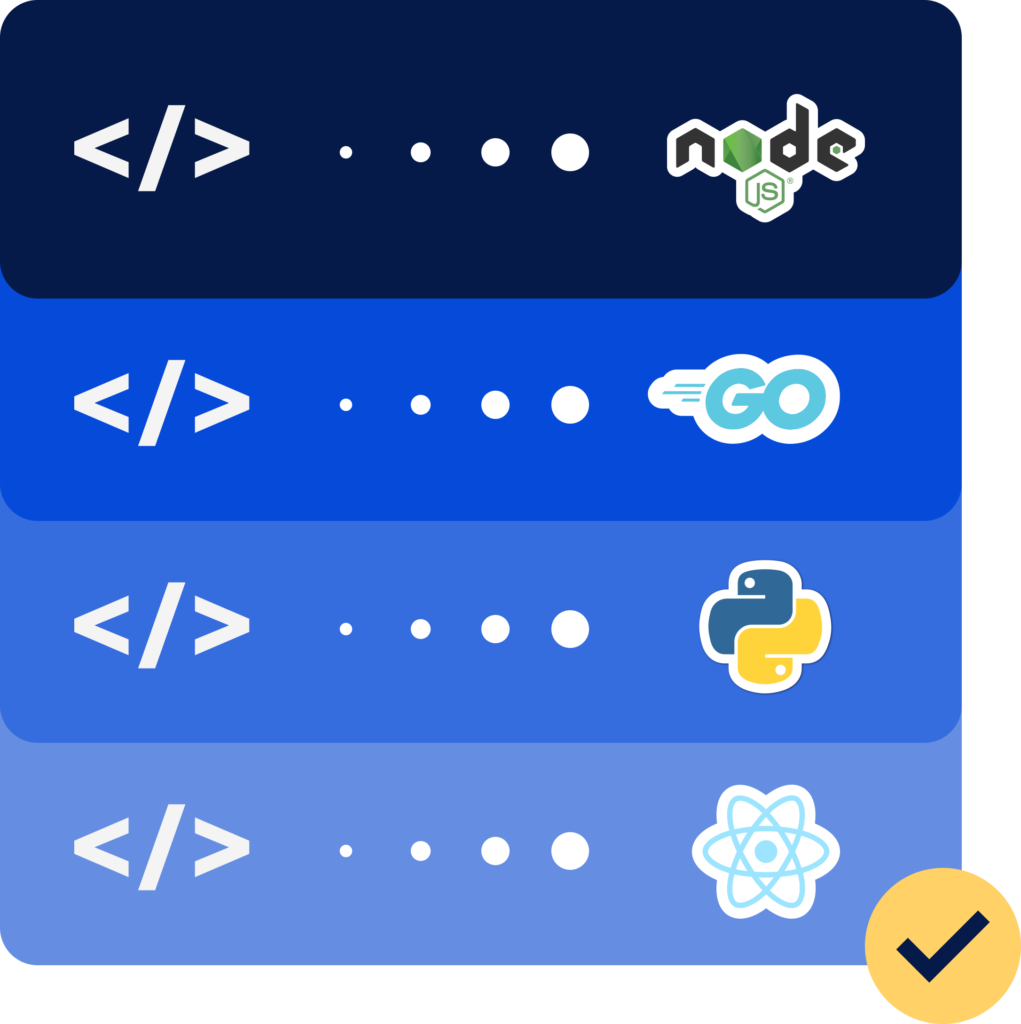
- Node.js, Go, Python
- React, React Native
- Kafka, Postgres, Redis
- AWS, GCP, Terraform
What Trio Engineers Deliver
- Stripe, Marqeta, Plaid, Unit, Lithic
- Checkout flows, payouts, refunds, and reconciliation
- Transaction handling, idempotency, and failure recovery
- Webhook reliability, retry logic, and asynchronous processing
- Real-time ledgers and audit-ready systems
- AML/KYC pipelines with provider integrations (Persona, Alloy, Onfido)
- Transaction monitoring
- Rules engines and behavioral anomaly detection
- Scoring and risk modeling
- Event-driven architectures
- Wallets, cards, onboarding flows
- Banking, lending, brokerage interfaces
- Identity-driven user journeys across web and mobile
- Secure session handling and permission-based access
- Node.js, Go, Python
- React, React Native
- Kafka, Postgres, Redis
- AWS, GCP, Terraform
Impact,
not Promises
Ready to scale your FinTech engineering team?
Case Studies
Results that Drive Growth for Fintech
FinTech founders and CTOs work with Trio’s engineers for one reason: confidence.
Seamless Scaling
Trio matched Cosomos with skilled engineers who seamlessly integrated into the project.
Expanding Talent Pool
Our access to the global talent pool ensured that Poloniex’s development needs were met.
How we work together
Step 1
Step 2
Step 3
Step 4
Step 5
Talk to a specialist
Trio engineers are highly skilled at their jobs, and fully vetted by the Trio team BEFORE their resumes got to my desk. Being able to see a video of a Trio engineer walking me, in English, through the sample project he developed for Trio was a real game-changer.
Mike Sachleben
VP, Engineering – Shift Media
When I started my new job last year, I specifically requested Trio and we have built up two teams of Trio developers. They are intelligent, ethical, hard-working, efficient, produce quality work and so kind and fun to work with. I can’t say enough good things about them… You can’t go wrong with Trio!
Marcie Fortun
Senior Project Manager, Studylog Systems
Trio was incredibly effective in determining our project’s needs and solving them with the right team. The engineering team had the exact expertise we needed, and provided proactive communication during development. The overall experience was clear and reliable.
Jashan Puniya
Founder & CEO, Spoilerproof
Contents
Share this article
Curated by
Expertise
- JavaScript
- NGX
- HTML
- Node.js
- Vue.js
Staff augmentation for fintech teams
Staff augmentation is one of the best hiring models to consider when your delivery demands start to outpace your ability to hire. It lets you add experienced engineers without restructuring your organization or committing to a headcount you might not need in six months.
For fintech teams in particular, staff augmentation is a great solution when speed, control, and risk all matter at the same time.
When you partner with the right firm, you keep ownership of the product and the roadmap while extending your team with developers who can contribute without a long adjustment period, and without the compliance exposure that comes from a poorly structured outsourcing arrangement.
It is not a one-size-fits-all approach, though. Some teams are going to benefit more from full outsourcing arrangements, and others need permanent hires.
If you think this might be the right fit for you, book a call.
What is staff augmentation, and when does it make sense?
Staff augmentation describes a team extension model where external engineers work directly inside your existing team.
While they are technically hired by another firm that you contract, these developers follow your processes, use your tools, and contribute to your codebase as if they were internal, without becoming permanent employees or requiring the overhead of a full-time hire.
This model tends to make sense when you already have technical leadership in place but need additional execution capacity.
In many of the cases that we have worked with, our developers are brought on to help a company launch a feature, integrate with a payments provider like Stripe or Plaid, or deal with a backlog and extensive tech debt.
It may also fit when you are facing a lot of uncertainty. This could be when you are relatively early in your project and think that your requirements might taper off after a launch or audit cycle.
Why fintech teams choose staff augmentation over full-time hiring
Full-time hiring makes sense in many contexts, but it can take a long time to find, vet, and sign on a suitable candidate. If you have made the wrong hiring choice, you need to restart that entire process from scratch.
However, you do get a developer’s full attention, and you have full control, which makes it ideal for a changing scope in ways that outsourcing just doesn’t hold up.
Staff augmentation changes the trade-off. Instead of optimizing for a long-term employment relationship, you optimize for near-term delivery. Senior engineers can join quickly, contribute within days, and help stabilize workloads during critical periods.
You might not have access to those people long-term, or you may have to deal with the fintech staff augmentation firm contracting them out to multiple clients at once, but sometimes that is worthwhile when in-house hiring won’t be provided on time.
In fintech, particularly, delays can compound very quickly.
Compliance deadlines, partner integrations, and customer commitments rarely wait for a perfect hire to clear a three-stage interview process. Staff augmentation gives teams a way to keep moving without lowering the technical bar.
Types of staff augmentation roles fintech teams scale
Most fintech teams starting with staff augmentation generally consider the hiring model for their software development roles.
Frontend developers may come in to support onboarding flows, dashboards, or customer-facing applications where UX and security intersect in ways that require real fintech experience.
Backend engineers often take on APIs, financial data validation, ledger logic, or payment workflow integrations.
As products mature, the emphasis typically shifts toward more senior profiles.
These developers tend to focus on your major architectural decisions, reliability patterns, and long-term maintainability to make sure that your product holds up in regulated systems.
Some teams also use staff augmentation to bring very targeted talent onto their teams.
Dedicated engineers may be assigned to a specific stream, such as KYC/AML pipeline development or risk scoring infrastructure, while internal teams stay focused on the core platform.
Staff augmentation vs dedicated teams and contractors
Staff augmentation is sometimes confused with hiring a dedicated team or working with independent contractors, but there are a couple of key differences here that directly affect delivery and risk.
Dedicated teams often act like a separate unit. They have their own processes and generally manage themselves.
That can work well for isolated, long-running projects, but it may reduce alignment if priorities shift or if the work requires deep integration with your existing codebase and people.
Independent contractors, on the other hand, offer incredible flexibility, but they also introduce continuity risk.
Your contractors might not be available in the future, or may leave suddenly, taking any institutional knowledge and the context around decisions with them.
This leads to major complications during regulatory audits.
Staff augmentation almost allows you to balance these trade-offs. Engineers integrate into your team, stay aligned with your roadmap, and can scale up or down as needs change.
Since your team manages day-to-day direction, you’re not dependent on a vendor’s prioritization decisions. If you work with a partner like Trio, you also increase the chances of having access to these developers again later.
Integration, onboarding, and ownership in staff augmentation
Integration is critical for ensuring that you can take advantage of the speed of hiring that staff augmentation provides.
They need to operate exactly the way your internal team does. They join your standups, follow your sprint cadence, use your tools, and adhere to your coding standards.
To do this effectively, you need to have onboarding processes in place so you can guarantee that they get introduced to your codebase, compliance constraints, and key stakeholders before they write a line of production code.
At Trio, we assist with this onboarding process, which, in combination with our focus on industry expertise, means developers can start being productive in days rather than weeks.
Ownership of everything stays with you throughout. Your team controls priorities and architecture decisions. Code and intellectual property remain yours.
Access controls also get defined upfront, and the principle of least privilege applies from day one.
Remote, nearshore, and offshore staff augmentation
Remote staff augmentation works best when the collaboration structure is in place to compensate for any potential issues that distance could create.
That means you need to decide on things like shared tooling and meaningful working hours overlap.
Nearshore staff augmentation, particularly from Brazil and across Latin America, where we source our developers, has become the default model for US fintech teams because the time zone overlap approaches real-time and the communication friction that plagues offshore arrangements largely disappears.
Offshore staff augmentation, where you might be dealing with vastly different time zones, can work for teams with mature async processes, but it tends to require a lot more coordination overhead.
Pricing, commitments, and engagement structure
Staff augmentation pricing at Trio works on a monthly basis.
All of our engineers have production experience that would put them at the senior level for fintech development. Depending on your specific requirements, their pricing could range between $45-$90.
This is the only cost you incur.
When working with other partners, what matters most is transparency: a clear understanding of what the rate covers, how adjustments get handled, and what the exit process looks like.
Compared to US-based hiring, engineers from Brazil and across LATAM typically cost 30-50% less in total, without the asynchronous communication overhead that offshore models introduce.
Getting started with staff augmentation at Trio
We don’t provide a one-size-fits-all solution, so every partnership starts with a complementary consultation where we find out more about your project and figure out what the best way forward is for you.
Once we have a better understanding of the hiring model and developers you require, we hand-pick them for you, getting you a handful of developers’ portfolios within as little as 48 hours. You just need to do the final interview.
If you think staff augmentation is the way forward for you, or you want to find out more about the fintech specialists we have on our team, schedule a consultation.
Frequently Asked Questions
After submitting a staff augmentation Get Started form with Trio, teams typically have a short discovery call. From there, timelines and options become clear.
Getting started with staff augmentation usually requires sharing your stack, goals, and timeline. That’s enough to outline the next steps.
When a staff augmentation engagement ends, access is revoked, and knowledge transfer is completed. The transition is planned and orderly.
Security and compliance in staff augmentation are handled through NDAs, access controls, and aligned policies. Engineers follow your regulatory requirements.
In staff augmentation, your company owns the code and intellectual property. Ownership mirrors that of internal development.
Staff augmentation offers more continuity and accountability than contract software developers. Contractors often rotate, while augmented engineers stay embedded.
Staff augmentation is often more cost-effective than full-time hiring for short or variable needs. You avoid recruiting fees and long-term headcount risk.
Remote staff augmentation works through structured communication and time zone overlap. Nearshore models are often used to support real-time collaboration.
If a staff augmentation developer isn’t a good fit, replacements or adjustments can be made. This reduces long-term hiring risk.
In a staff augmentation model, your team manages priorities and delivery. The provider supports staffing, alignment, and ongoing quality.
Staff augmentation developers integrate by joining your workflows, tools, and ceremonies. They work alongside your team rather than as an external unit.
Starting with staff augmentation services often takes a few weeks. Timelines depend on role requirements and developer availability.
Interviewing and approving developers before staff augmentation onboarding is standard practice. This ensures technical fit and team alignment before work begins.
Staff augmentation services can cover frontend, backend, full-stack, and fintech-specialized engineering roles. Seniority typically ranges from mid-level to senior developers.
Staff augmentation services are commonly used by startups, scaleups, and enterprises with active engineering teams. It suits organizations that want flexibility without losing control.
Staff augmentation is the right choice when fintech teams need engineers quickly or face uneven workloads. It works well when full-time hiring would slow progress.
Staff augmentation keeps engineers embedded in your team, while outsourcing shifts work to an external group. With staff augmentation, priorities and ownership stay internal.
Staff augmentation in software development means adding experienced engineers to your existing team without hiring full-time. You scale execution while keeping control of delivery.
Schedule a Call
Let’s Build Tomorrow’s FinTech, Today.
Whether you’re scaling your platform or launching something new, we’ll help you move fast, and build right.