

Hire by Technology
SERVICES


All right. Let me be real with you for a second.
I know it’s tough out there. I see it every day — junior developers sending out 200, 300 applications and hearing nothing back. And the data backs it up: entry-level developer job postings have dropped 73% in the last year. Google and Meta are hiring 50% fewer new grads than they did in 2021. In 2019, junior hires made up 32% of Big Tech’s workforce — in 2026, that number is 7%.
Seven percent. Let that sink in.
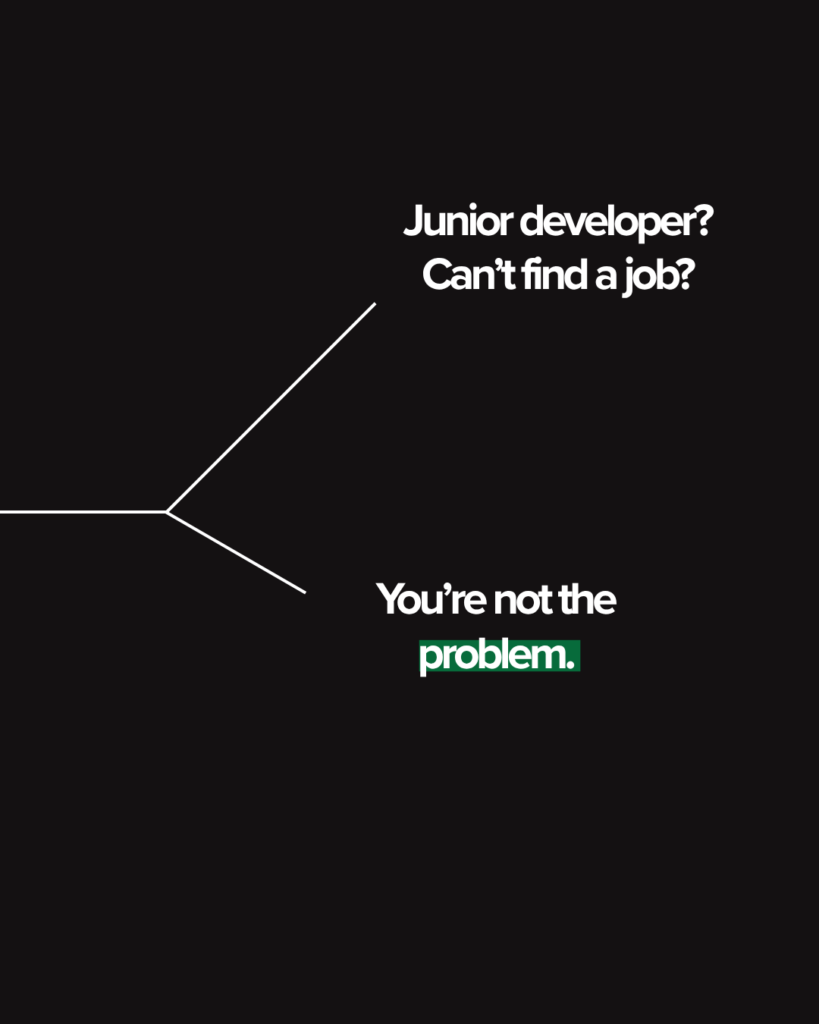
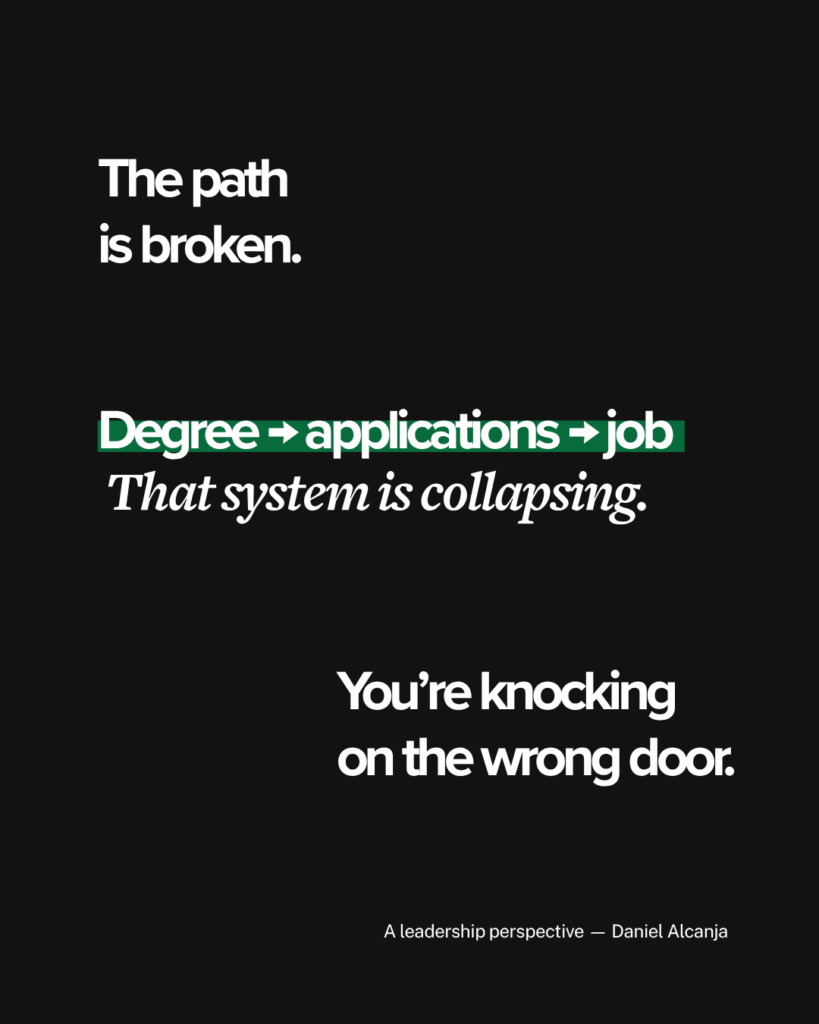
So yeah, I get it. If you’re a junior developer right now, it feels like the door is closed. And I’m not going to sugarcoat it — the traditional path of “get a CS degree, apply to 50 companies, land an entry-level role” is basically broken.
But here’s what I think. I think the door isn’t closed. You’re just knocking on the wrong one.
I’ve been building software for over 20 years, and the developers I want to hire right now? They’re not the ones with the prettiest resumes. They’re the ones who solved a real problem for a real person.
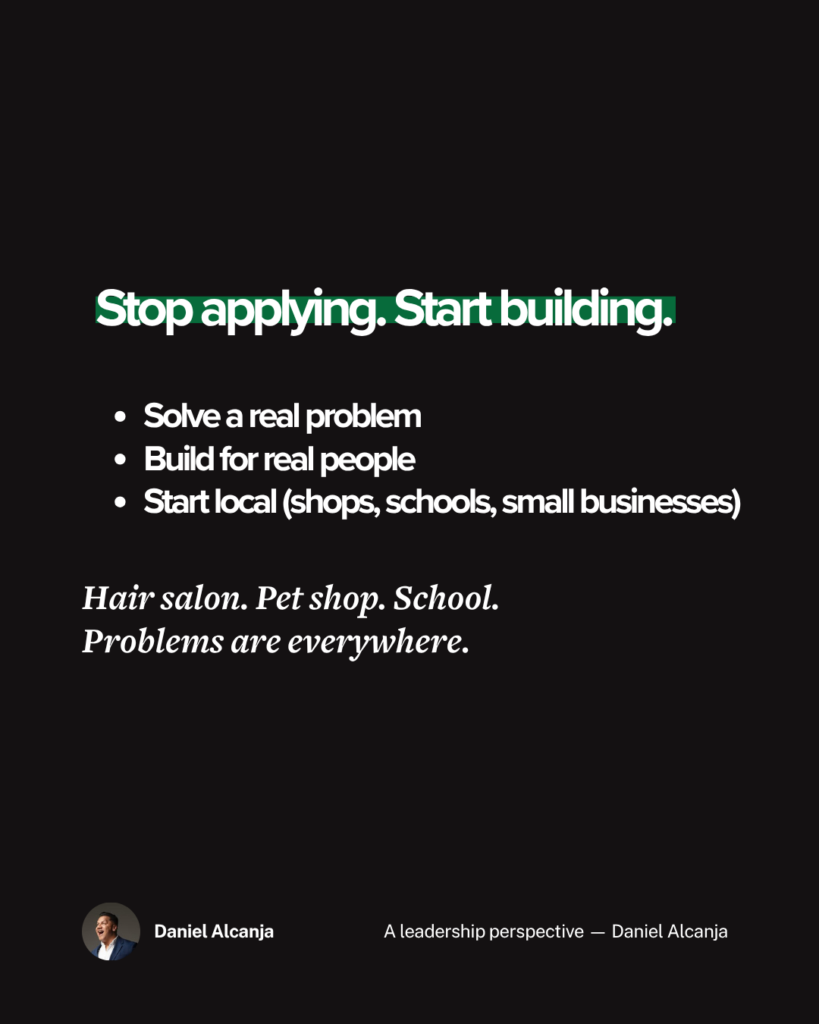
Here’s what I mean. I go to my wife’s hair salon, right? And I can see — just looking around — at least 10 problems that technology could solve. How do they follow up when a customer doesn’t pay on time? How do they manage appointments? And stuff like that.
Now multiply that by every pet shop, every cleaning business, every school in your neighborhood. There are problems everywhere. You just have to look.
If I were a junior developer right now, I would literally knock on the door of a local business and say, “Hey, what’s the biggest problem you have with technology right now?” And then I would build something to fix it.
You don’t need a job to start building. You need a problem to solve.
Here’s the thing. The internet gave us access to information, but it never really taught us why things work the way they do. You’d search for a tutorial, follow the steps, and maybe understand half of it.
AI is different. AI actually teaches you back. You can build something and then ask, “Why did you add two layers of security here?” And it will explain — “Because there’s a security challenge at this point in the application.” You’re learning while you’re building. That’s very, very powerful.
And I’m not talking about vibe coding a quick MVP and calling it a day. No, no, no. You can actually build real things with AI. Real applications. The software development process is still the same — you still need requirements, design, testing, review, deployment. AI didn’t change that. What it changed is speed. You don’t need to write every line of code yourself anymore. You can have an AI agent generate the code while you focus on understanding the problem and reviewing the output.
That’s the part companies haven’t figured out yet. They’re cutting junior roles because they think AI replaces you. But what AI actually does is make you 10x more capable — if you know how to use it.
So imagine you build an app for that hair salon. Or a mobile app where the teacher at your kid’s school can take a photo, and it automatically identifies the kids and sends the images to the right parents. Something like that.
You take that to the school and say, “Hey, I built this. Can you try it?” You get your first user. Then the next school. Then the next one.
That’s how you build a career right now. Not by waiting for someone to hire you — but by proving you can solve problems.
And here’s the thing — when you do walk into an interview, you’re not showing up with just a resume. You’re showing up with a product. You’re saying, “Here’s what I built using AI. Here’s the problem it solves. Here’s who’s using it.” That’s going to be worth a thousand words on any resume.
I want to be real with you. If you build something with AI and you don’t understand what the AI built, that’s a problem. You need to dig into the code. Ask the AI to explain it. Understand why decisions were made.
Because here’s the reality — the kind of mistake AI would make is about the same level of mistake a junior developer would make. That’s minimal risk for a business. But if you understand the problem, understand the customer, and understand the code? Now you’re not just a junior developer who can use AI. You’re someone who can actually build and ship products.
And that’s who companies want to hire.
This week, go find one problem in your community. A real one. Talk to a business owner, a teacher, a family member who runs a small operation. Ask them: “What’s the biggest headache you have with technology right now?”
Then build something to fix it.
You don’t need permission. You don’t need a job offer. You need to start.
Let’s do this.
If you’re a junior developer, I want to hear — what are you building right now? Drop it in the comments.
#SoftwareDevelopment #AI #JuniorDevelopers #BuildInPublic #TechCareers