
Pay by Bank: The Future of Instant Account-to-Account Payments
Pay by Bank is starting to feel like the next big shift in how we move money.
Essentially, it is an account-to-account (A2A) payment method that lets people make an instant payment straight from their bank account, sidestepping card networks entirely.
Merchants pay fewer fees, and customers get faster checkouts all at the same time, improving their perception of your services.
It’s not perfect yet, no financial technology ever is, but it’s changing how both sides of a transaction think about trust and control in the process of providing value.
Hiring fintech software developers familiar with these kinds of developments can help you get ahead in the highly competitive financial services industry. That’s where Trio’s expertise comes in.
Key Takeaways
- Pay by Bank moves money directly from a customer’s bank account to a merchant’s, bypassing card networks and the interchange fees that come with them.
- Open banking APIs are what make this work at scale, as they allow licensed third parties to initiate payments securely. Customers don’t even need to share their bank credentials.
- Real-time rails like FedNow, RTP, and SEPA Instant are what give Pay by Bank its speed advantage over traditional ACH.
- The biggest implementation challenges are going to be connecting to the right rails as well as managing compliance and security.
Understanding Pay by Bank
To see where Pay by Bank fits into the broader payments space, it helps to understand how it actually works and what makes it different from the card system that most U.S. customers are used to.
What Is Pay by Bank?
As already mentioned, Pay by Bank is a digital payment method that moves money directly from one bank account to another.
It uses open banking APIs to connect the customer’s bank with the merchant’s system.
Doing this means that traditional cards can be avoided entirely, along with the costs and delays in settlement times associated with them.
Instead of typing in numbers or waiting for third-party verification, the customer simply authorizes the payment inside their own banking app.
The goal is to make the transaction feel a lot like an instant bank transfer, but with the speed and polish of an online payment solution.
Outside of merchant benefits, it also offers transparency and control for users. There is no card data to store, and no middlemen to approve each step.
Related Reading: Innovations Shaping the Future of Mobile Banking

How Pay by Bank Works
Paying by bank account is straightforward from the user’s point of view.
At checkout, they select Pay by Bank, choose their bank from a short list, and confirm the payment in their usual banking app.
If the technical rails have been integrated correctly, the transfer should happen almost instantly, and the funds will arrive in merchant accounts within seconds.
Behind the scenes, Payment Initiation Service Providers (PISPs) handle the connection between the two banks.
In the EU, this process is built under the Payment Services Directive (PSD2), and uses open banking APIs to initiate and confirm each payment.
Because authentication happens within the customer’s bank, the risk of fraud or chargebacks drops sharply compared with traditional card payments.
The Role of Open Banking APIs
APIs are the connective tissue of the Pay by Bank model.
They define how banks expose secure payment and account data endpoints to licensed third parties.
Within Europe, these standards are now pretty similar across various countries. The issue lies outside the EU, where some markets rely on upgraded ACH rails, and others use local real-time systems.
Despite these variations, open banking payments appear to be the clearest path toward truly global account-to-account transactions.
Why Pay by Bank Is Rising Now
The recent wave of Pay by Bank reflects a wider frustration with slow and expensive payment systems, and a growing expectation that money should move as quickly as a message, with total transparency to all parties involved.
There are some technologies that have been in the works for a while, which are also making these kinds of account-to-account payments more possible.
Real-Time Payment Rails and Market Growth
Real-time payment networks have set the stage for Pay by Bank to work at scale.
At a glance, SEPA Instant in Europe, Faster Payments in the UK, RTP in the U.S., and Pix in Brazil are all examples of rails that settle transactions within seconds.
These networks make it practical for merchants to accept A2A payments without worrying about delays.
EU regulators have pushed hard for instant payment regulations, requiring banks to make real-time transfers widely available.
The result is a financial environment where Pay by Bank can finally compete with card payments on both speed and reliability, something that they have never been able to do before.
Consumer Demand for Instant, Low-Fee Transactions
People expect instant everything: messages, streaming, delivery, and now also payments.
On top of that, a focus on convenience and decreased friction is also common. Many people now prefer using their own bank’s app rather than entering card details or trusting a third-party wallet.
This is quickly becoming a consumer habit.
Today, roughly 11% of U.S. adults have used an open banking payment, but willingness is significantly higher among Gen Z (72%) and millennials (66%), suggesting the adoption curve is just beginning.
Merchant Push for Lower Payment Costs
Merchants have their own motivation to adopt pay-by-bank solutions.
Estimates vary, but from what we have been able to see, Pay by Bank could reduce payment acceptance costs by 40 to 85 percent compared to credit cards, depending on transaction volume and the provider’s fee structure.
Rising card fees and complex rules around disputes all drive up costs. It just isn’t worth it when you consider that cards are quickly becoming the slower option, too.
Pay by Bank offers a simpler route: lower costs, faster cash flow, and fewer intermediaries compared to traditional card processing fees.
Along with a potential increase in checkout conversions, it is a good idea for most merchants to at least evaluate the potential ROI.
Global Adoption and Key Markets
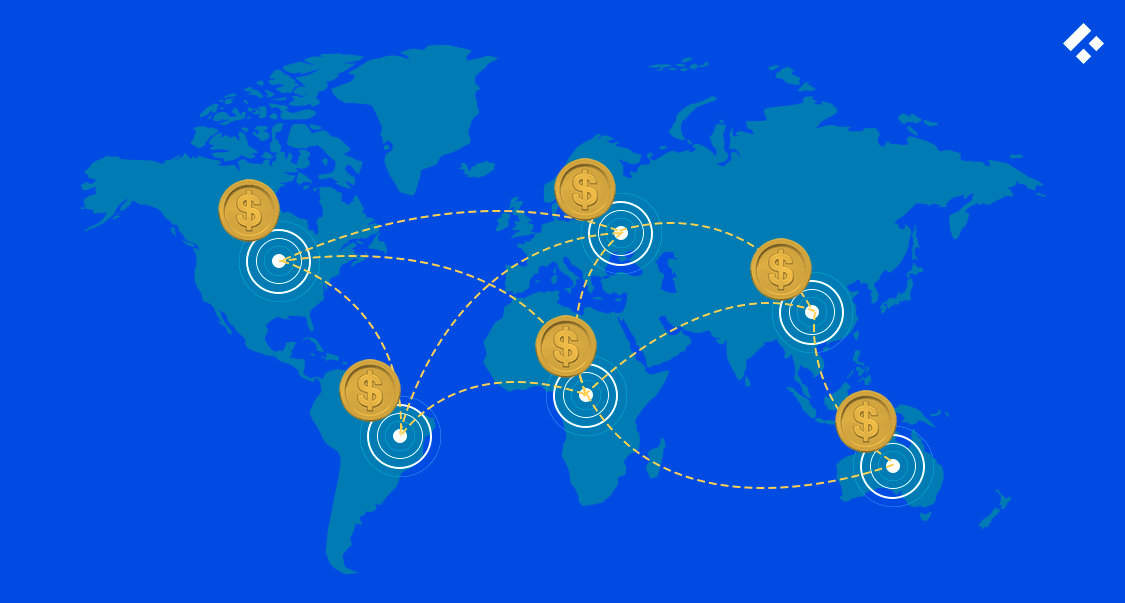
The movement started in Europe, but the appeal of Pay by Bank is definitely spreading quickly through other regions experimenting with open banking and instant transfers.
Europe and the UK: Leading the Way
The UK and Europe are still ahead, largely because open banking regulation gave them a head start.
In markets like the Netherlands and Sweden, where online banking was already a habit, Pay by Bank payments have blended smoothly into e-commerce.
In the UK, major banks are legally required to comply with requests from regulated third-party PISPs, and some large retailers already rank Pay by Bank among their top three payment methods for cost savings.
The U.S., LATAM, and APAC: Building Momentum
Outside of the EU, we are definitely seeing things picking up for the pay-by-bank movement.
The U.S. is modernizing its Automated Clearing House (ACH) system through networks like RTP and FedNow.
Brazil’s Pix has turned real-time payments into a national utility.
India’s UPI is now processing billions of transactions per month.
Across Asia and Latin America, bank-led innovation, along with a lower existing infrastructure that supports card payments anyway, is making Pay by Bank adoption the logical next step for many.
Benefits of Pay by Bank
The benefits touch nearly every part of the payments chain, though not always in the same way. We have already touched on many of these as we have gone through the mechanisms of Pay by Bank, but let’s cover them in more detail.
For Businesses
Merchants often notice the financial upside first and are the ones who are responsible for integrating the new payment method.
Lower processing fees and faster settlements help stabilize their cash flow.
A direct A2A payment cuts out card networks and reduces administrative overhead tied to refunds or reconciliation.
Some businesses also find that customers who use Pay by Bank are less likely to abandon their checkout midway, making this payment solution increasingly popular if their primary income is based on sales.
For Consumers
Consumers gain a sense of transparency and control, which seems to be an increased desire as more consumers become educated on financial technology and the risks of neglecting data privacy.
When it comes to Pay by Bank, there’s no need to hand over card details to unfamiliar sites or juggle different wallets.
Payments also happen directly within their bank’s app, using the same security methods they already trust.
On top of the increased security, users are already familiar with their own banking UI, which makes the checkout process more comfortable for them.
When the payment experience feels native rather than bolted on, particularly with pay-by-bank solutions, users feel more confident with transactions.
For Financial Institutions and PSPs
Banks and payment service providers also stand to gain from all of this.
Many see Pay by Bank as a chance to reclaim part of the digital payment flow they lost to card brands and fintech intermediaries, especially in light of rising card processing fees.
By offering open banking payment APIs, they can build new revenue lines, like variable recurring payments, invoice payment tools, and smarter fraud protection services.
Challenges to Overcome
Unfortunately, even with strong momentum and a host of potential benefits, Pay by Bank still faces barriers that could slow its global rollout if left unresolved.
Regulatory Fragmentation and PSD3 Transition
PSD2 established the groundwork for open banking, but national differences in interpretation have created inconsistencies.
The upcoming PSD3 framework aims to fix that, at least in European markets, but we’ll have to wait and see how uniformly it will be enforced.
Other regions, especially the U.S., still rely on voluntary standards rather than regulation, which can make interoperability tricky.
Interoperability and Global Standards (ISO 20022, Open Banking Profiles)
Interoperability is at the heart of global payments. Without shared data formats like ISO 20022, an A2A payment in one country can’t easily travel across borders.
Efforts to standardize open banking profiles are helping, but progress is quite slow and incredibly uneven across regions.
For Pay by Bank to scale globally, banks and regulators will have to agree on how transaction data and authentication protocols align.
Considering that we don’t even have uniform protocols on a state level, this is likely going to be challenging.
Technical and Legacy Integration Barriers
Adopting a new payment method that depends on newer technologies often causes issues with old systems. Many merchants still rely on gateways built around card logic, not API calls.
In these cases, integrating Pay by Bank will require rewriting parts of checkout flows and reconciling payments differently.
Some PISPs are solving this by offering “drop-in” SDKs, but for legacy merchants, the change can still feel daunting.
If you are in this situation, specialists, like the kind we offer at Trio, can help you assess your existing technology and come up with a roadmap to prepare you for the future.
Consumer Awareness and Trust
Finally, awareness, or rather the lack thereof, could be a problem.
While many European consumers already use open banking features daily, others remain skeptical of anything that they are not familiar with.
Pay by Bank may look unfamiliar compared to credit or debit cards, and habits take time to shift.
Education around security and data privacy will likely play a big role in mainstream adoption.
The Future of Pay by Bank and Open Banking
The future of Pay by Bank appears to be tied to how far open banking and digital identity frameworks evolve.
Variable Recurring Payments and Subscription Models
Variable Recurring Payments (VRPs) are one of the clearest signs of progress.
They allow users to authorize flexible subscription-style payments directly through their bank, skipping traditional direct debits.
You get to modernize billing while giving customers more control over limits and cancellations.
The problem is, once again, that there are massive differences in infrastructure available between regions. In most cases, the cleaner route for development teams is going to be to work through an aggregator that already has the bank connections built.
Request-to-Pay and Smart Invoice Innovations
Another trend worth watching is request-to-pay. It lets a merchant or service provider send a payment request straight into a customer’s banking app.
The customer reviews it, approves, and the money moves instantly.
It’s particularly useful for invoice payments and small business collections that currently rely on clunky manual transfers.
AI in Fraud Detection and Payment Routing
As transaction volumes grow, AI tools are being used to detect suspicious behavior and route payments more intelligently because they can assess massive amounts of data at once.
Rather than just flagging anomalies, these systems can learn which rails (SEPA Instant, RTP, or others) offer the best balance between cost and speed for every transaction, individually.
On top of this, they can assess system capabilities to limit issues like downtime if there are sudden payment spikes.
Related Reading: Intelligent Payment Routing
Toward Cross-Border Instant Payments and Digital Identity
In the long run, Pay by Bank could merge with digital identity infrastructure to enable secure, cross-border instant payments.
If implemented correctly, the process of sending money internationally could be just as seamless as any other payment.
How Businesses Can Offer Pay by Bank
If you are wondering whether or not you can offer Pay by Bank, we’re pleased to note that the setup is getting simpler each year, thanks to better tooling and API providers.
Partnering With PISPs and API Providers
Most merchants don’t deal directly with hundreds of banks.
If this is you, then a good option might be to work through a PISP or aggregator that handles compliance, connectivity, and reporting.
Choosing a reputable partner with good API uptime and transparent pricing can make or break the experience, so be careful when you choose your vendor.
Integrating Pay by Bank Into Web and Mobile Checkout
To add Pay by Bank, you are probably going to need to embed a button or redirect flow at checkout. When the customer selects it, they’re guided to their bank’s interface to confirm the payment.
The merchant receives instant confirmation once the transaction clears.
Some merchants experiment with showing expected processing times or loyalty perks to encourage adoption.
Ensuring Compliance and Data Security
Compliance and security are always non-negotiable when you are dealing with someone’s money.
The responsibility falls on your shoulders to verify that providers follow PSD2 and data protection laws, apply strong customer authentication, and handle account data responsibly.
It’s worth investing in transparent consent screens and clear refund policies to reassure customers trying the method for the first time.
Conclusion
Pay by Bank could easily become a mainstream part of digital commerce. Connecting directly to the payer’s bank account through open banking APIs makes online payment faster, cheaper, and often safer.
There are still gaps to close, especially when it comes to differences in regulations.
But the momentum feels real as pay-by-bank solutions gain traction in the market.
Given how quickly the payments industry evolves, it wouldn’t be surprising if Pay by Bank quietly became the default way to pay within the decade.
Having the right people on your team to prepare for and execute integration can make all the difference. If you are interested in getting Trio’s fintech experts on your team, request a consultation!
FAQs
What is Pay by Bank?
Pay by Bank is a payment method that lets users send money directly from their bank account via open banking APIs instead of using credit cards. Differences in regulations and infrastructure mean it isn’t mainstream yet, but thanks to increased speed and security, it could be in the near future.
Is Pay by Bank cheaper than card payments?
Yes, usually Pay by Bank is cheaper than card payments. Since there are no traditional card networks or interchange fees involved, transaction costs tend to be lower for merchants. This may not lead to decreased costs on the user’s side, though.
How secure is Pay by Bank?
Pay by Bank is highly secure because payments are verified by the customer’s own bank using strong authentication methods under PSD2, which helps to authenticate the transaction. However, if a merchant uses a PISP or aggregator, they need to do their homework.
Can Pay by Bank support recurring or subscription payments?
Yes, Pay by Bank can support recurring or subscription payments. Variable Recurring Payments (VRP) enable subscription-style models without the limitations of traditional direct debit systems.
Which payment rails support instant Pay by Bank in the U.S.?
The two main instant payment rails that support Pay by Bank in the U.S. are RTP, operated by The Clearing House, and FedNow, operated by the Federal Reserve. Both settle transactions in seconds.