

Hire by Technology
SERVICES


Thriving in the FinTech industry is largely about building strong partnerships.
If you're running a successful financial services business, FinTech startup, payment platform, or digital banking company, then integrating the latest technology is crucial, but if you don’t have previous experience, then doing so on your own can be overwhelming.
Unfortunately, finding a development partner with the right mix of technical expertise, financial industry knowledge, security capabilities, and compliance experience can be just as challenging as building the product itself.
That's where a trusted FinTech development partner comes in.
The right partner can help you navigate technical and regulatory challenges, accelerate development, reduce risk, and support your long-term growth objectives.
Let’s explore how to identify a reliable FinTech development partner, the qualities and expertise to look for, the benefits of a strong technology partnership, and the common mistakes to avoid during the selection process.
At Trio, we specialize in financial application development, and we evaluate all of our developers to ensure they have the production experience that you require.
Choosing the right partner is one of the most important decisions a FinTech company can make.
The right provider can help accelerate growth, improve security, and ensure compliance while supporting innovation, but the wrong one can create compliance gaps and a poor user experience that leads to a loss of reputation.
Since product knowledge plays such a critical role, commitment is arguably just as important as skill.
Look at their track record. Have they delivered successful FinTech projects such as payment platforms, digital banking solutions, lending applications, wealth management tools, or embedded finance products?
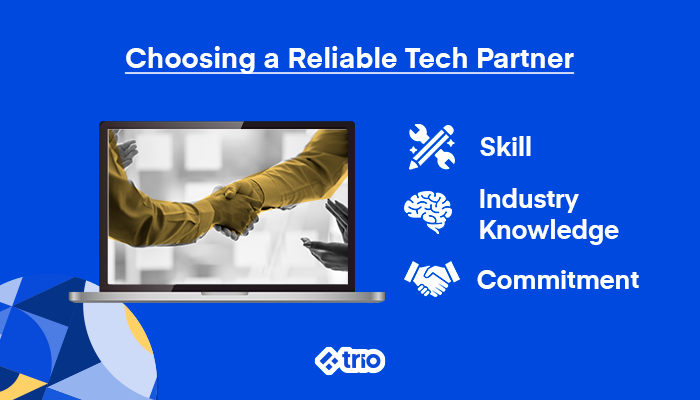
As we have already mentioned, when evaluating potential partners, it's important to look beyond technical skills and assess their ability to support the unique demands of financial technology projects.
A great tech partner should also align with your company's culture and values, and prioritize this alignment to create solutions that resonate with your team and customers.
They should also offer end-to-end development services, handling everything from strategy to implementation, so you don't have to juggle multiple vendors if you need someone for another role later.
Another thing to note is that reliable communication is key, and for FinTech organizations, proactive communication becomes even more important when managing security requirements, regulatory expectations, and complex integrations.
Technical expertise should be evaluated through both past performance and industry-specific experience.
Expertise goes beyond knowing the latest technologies; it's about solving real problems.
You should look at your potential tech partner's portfolio. See what cutting-edge solutions they have created, but also where they have proven themselves competent in dealing with issues.
In the FinTech sector, this may include experience integrating payment gateways, banking APIs, fraud prevention systems, digital wallets, or compliance-focused workflows.
You can also consult with their previous clients who have firsthand experience with the way the company deals with troubleshooting to create a high-quality and cost-effective solution.
A strong partner should be proactive in anticipating challenges and finding innovative solutions.
Financial technology companies operate in one of the most highly regulated industries in the world. To prevent mistakes that could lead to massive fines and a loss of user trust later, any partner needs to understand the security and compliance requirements that apply to your product and target market.
Depending on your business model, this may include experience with KYC, AML, PCI DSS, GDPR, SOC 2, Open Banking standards, and local financial regulations.
A partner with compliance expertise can help reduce risk, streamline audits, and ensure security considerations are built into the development process from day one, which not only makes your current application compliant but also makes it easier to scale later.
Related Reading: SOC 2 Compliance Engineering Support
Trust becomes especially important when sensitive financial data and critical business operations are involved.
A trustworthy partner should be reliable and transparent. They should be upfront about challenges and work with you to navigate them, ensuring a collaborative effort toward your success.
Related Reading: Fintech Hiring Slowdown
A strong technology partnership can create advantages that extend well beyond software development.
It often means gaining access to specialized financial technology knowledge without the cost and complexity of building an entire in-house team.
By outsourcing your tech needs, you can focus on growing your business without the overhead of maintaining an in-house team.
A strong technology provider starts by understanding your current processes and then identifying areas where technology can make a difference.
By streamlining operations, they free up your resources, allowing you to focus on your core business.
In FinTech environments, this could include automating customer onboarding, improving payment processing workflows, enhancing fraud detection capabilities, or simplifying compliance reporting.
The best partners offer solutions tailored to both business goals and industry requirements.
Technology providers can offer a comprehensive range of solutions designed to meet the specific needs of your business.
Their services may include custom software development built from the ground up to match your unique business processes.
They may also specialize in cloud integration, helping your business transition smoothly to cloud environments that enhance flexibility, scalability, and accessibility.
Data management is another core offering, where they focus on organizing, analyzing, and securing your data so you can make informed decisions that drive growth.
Finally, cybersecurity solutions are designed to protect your business from potential threats, keeping your operations safe and secure.
All of this would be tailored to your specific audience and the regulatory requirements you are subject to or may be subject to in the future.
Every technology partner will have strengths and weaknesses.
It's essential to find a partner who understands your business goals and is transparent and proactive.
For FinTech businesses, this also means finding a partner capable of balancing innovation with regulatory compliance, security, and scalability.
Technology investments should support measurable business outcomes. It should either be the product you offer or some strategic enabler that drives your business forward.
A good partner takes the time to understand your long-term objectives and tailor solutions to support those goals.
Whether you're looking to enter new markets, improve customer experience, or scale your operations, the partner will need to understand what is required of them.
Transparency helps prevent costly misunderstandings and project delays.
This means being upfront about timelines, costs, and potential challenges so you're never left in the dark.
Being open like this builds trust, and when both parties are clear about expectations and progress, it leads to smoother project execution and stronger collaboration.
Modern financial technology companies must continuously evaluate new technologies to remain competitive.
A strong partner works closely with you to identify which cutting-edge technologies can provide the most value to your business.
Whether it's adopting AI-driven solutions, migrating to the cloud, implementing advanced analytics, or exploring innovations such as embedded finance, real-time payments, open banking, and intelligent fraud detection, the goal should always be to support your business objectives.
The best partners combine financial industry knowledge, security best practices, regulatory understanding, and a commitment to long-term collaboration.
By evaluating experience, communication, compliance capabilities, and scalability, businesses can build partnerships that support innovation, reduce risk, and drive sustainable growth in an increasingly competitive financial services landscape.
At Trio, we focus strictly on fintech. Our pre-vetted developer pool is made up of senior fintech developers who are not only skilled at coding but can also advise you long-term based on their real production experience.
Since our developers have already been assessed, they only need to be selected based on your requirements, and can be placed in as little as 3-5 days.