

If you have ever tried to hire a senior engineer, you already know that the timeline rarely feels predictable.
Most teams start with a clean plan, but the time it takes to hire a software engineer usually stretches as the interview process grows, the recruiter pipeline wobbles, or candidates juggle several offers at once.
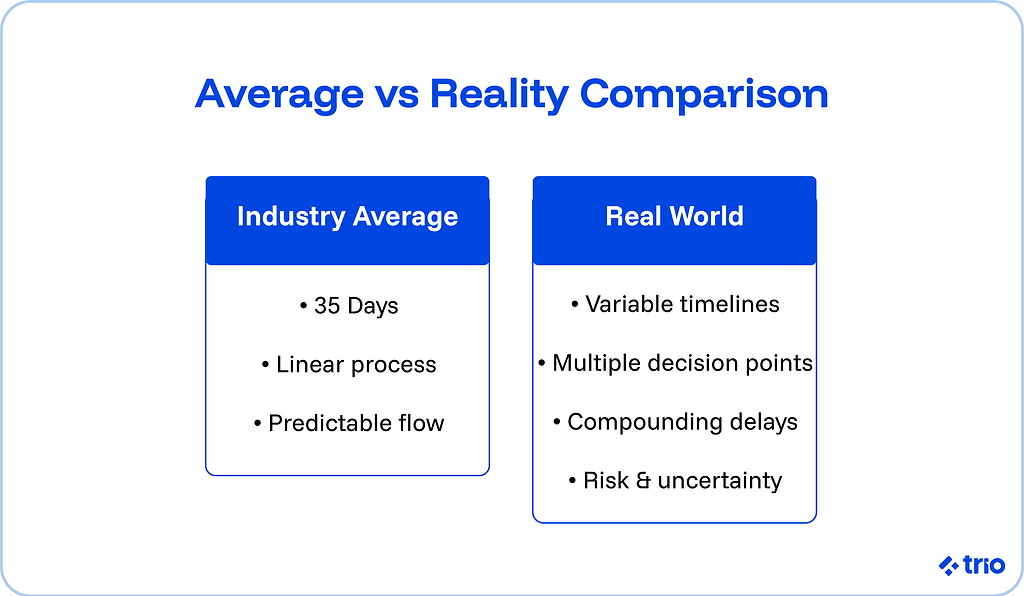
Some averages suggest around 35 days for technical roles, yet teams that need deep domain experience often wait far longer.
For tech companies, especially fintech teams, the hiring process becomes a mix of sourcing, screening, technical assessments, and figuring out whether someone can actually take on new responsibilities inside a regulated environment.
That mix slows everything down. The average time to hire fluctuates so much that relying on a simple benchmark may give you a false sense of certainty.
Below is a more grounded look at the hiring timeline, the factors that influence it, and what teams can do when the time it takes to hire software talent starts to threaten product goals.
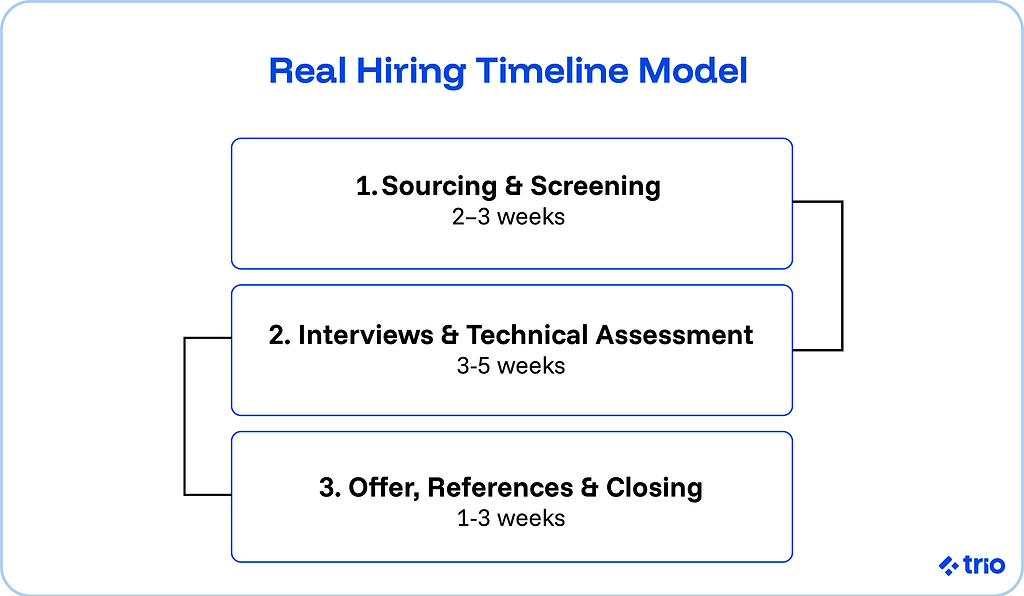
Typical Timeframes When You Need to Hire a Software Engineer
When people talk about the average time to hire software engineers, the most common window is between six and ten weeks.
You might see something shorter for a junior software role, but a senior engineer or senior software engineer usually takes longer because these roles require broader problem-solving ability and a stronger track record.
A rough breakdown often looks like this:
- Two to three weeks to source and screen the first shortlist
- Another three to five weeks for interviews, technical interviews, and decision-making
- One to three weeks for references, background checks, and final job offer steps
The hiring timeline can expand quickly if you need a very specific engineering role or expect expertise with your particular tech stack.
What Slows Down the Hiring Process for Developers
Several parts of the recruitment process consistently delay hiring software engineers. Some teams underestimate how each step compounds.
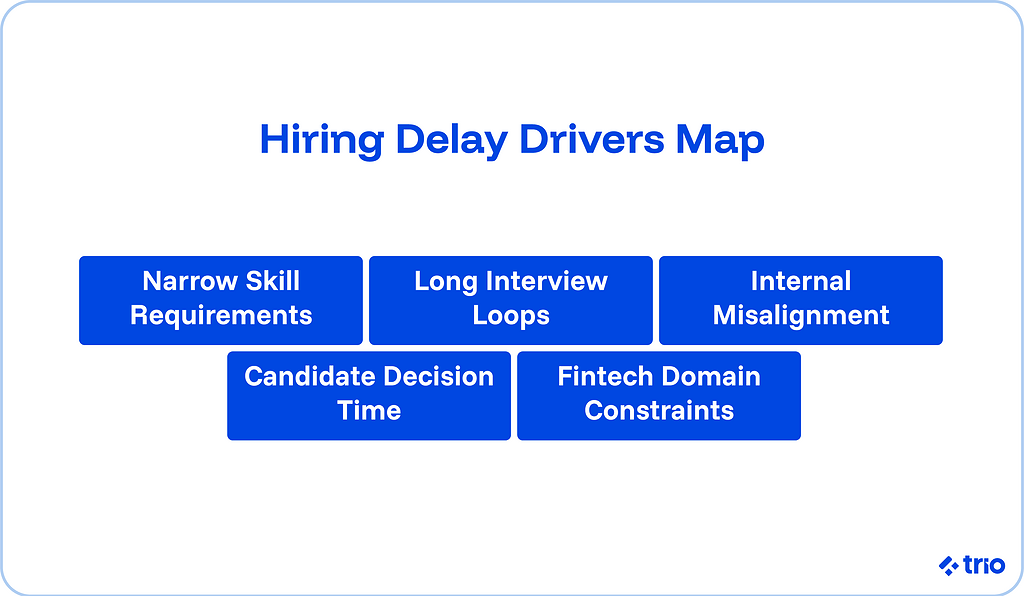
Narrow or highly specific requirements
If you are looking to hire a software engineer with knowledge of compliance workflows, financial data flows, or a full-stack background in a particular software development environment, you are dealing with a tiny pool.
That alone slows the time to hire software engineers.
A long interview process
It is easy to add more checks, but each extra round increases the hiring cycle.
Seniority level often means more conversations, not fewer.
Internal misalignment
If leaders disagree on the scope of the engineering position or the ideal candidate, the whole process drifts.
Job titles get rewritten, expectations shift, and timing slips.
Candidate-driven delays
Senior engineers often pause to compare offers, run their own back-channel checks, or wait for the right moment.
That slows things down whether you want it to or not.
Fintech-specific complexity
Teams building payments, identity, or lending products usually need engineers fluent in regulated systems.
That need increases the difficulty of hiring technical talent because the candidate must be productive quickly and work with tools and processes specific to financial systems.
Why the Average Time to Hire Is Misleading
Many guides treat the time it takes to hire as something predictable. In reality, you are dealing with a probability puzzle that changes based on a dozen factors.
The average hiring timeline does not capture the hidden costs, like the hours your engineering team spends reviewing take-home coding tasks or the time recruiters spend recalibrating after candidates decline.
Teams working in software development, especially in high-trust environments, care deeply about candidate quality. That makes the hiring process more thorough.
And because hiring the wrong person is expensive, most companies would rather slow down than restart the entire process for a software engineering role.
What Faster Teams Do Differently
Some companies improve their time-to-hire by cutting out redundant steps, automating early screens, or tightening the interview scoring.
Others reduce the time it takes by building a sharper job posting that attracts the right developer earlier or by removing technical tests that do not reflect real work.
Teams under pressure often do something else.
They partner with a specialized group that can provide vetted engineers while they continue their own recruitment process. This lets them keep the engineering team moving without rushing hiring decisions.
That is one of the reasons fintech teams work with Trio. Because Trio focuses on engineers who already understand financial data, compliance, and risk, you avoid the slowest part of hiring software engineers: validating domain expertise.
The developers who join you arrive ready to get up to speed quickly, which keeps product timelines intact.
When You Cannot Wait Two Months for a New Developer
Sometimes the question is not “How long does it take to hire a software engineer?” but “How long can your roadmap tolerate the delay?”
If you have an audit approaching, a payment rebuild underway, or a lending engine behind schedule, the longer it takes to hire a senior engineer can derail everything.
Teams in that situation often combine internal hiring with fast integration support from external engineers.
A partner like Trio helps reduce the time it takes by adding senior engineering capacity without a lengthy onboarding cycle. For software companies trying to keep momentum, this blended approach becomes the safest path.
Trio exists to help fintech teams maintain stability while navigating the shifting job market and the realities of hiring software developers with domain knowledge.
That blend of speed, clarity, and context often makes the biggest difference when deadlines are tight.
A More Realistic Way to Think About the Hiring Timeline
Instead of anchoring on the average time, it helps to look at two variables:
- How specific and complex the engineering role is
- How much delivery risk can you absorb if the search takes longer than expected
If your requirements are narrow and the engineering team is already overloaded, the time it takes to hire increases dramatically. If you have flexibility and clear alignment, the process shortens.
And when you need the certainty that comes with senior engineers who can work inside regulated systems, Trio can help you hire the right talent faster.
The team specializes in engineers who know fintech from day one and can become productive quickly without slowing your roadmap.
If you need senior developers who already understand the financial ecosystem and can support your product goals without long delays, get in touch.
FAQ
How long does it usually take to hire a senior engineer?
Hiring a senior engineer typically takes six to ten weeks, and that timeframe comes from the sourcing, interviews, and offer stages all stacking together. Many teams see delays when candidates juggle multiple opportunities.
Why does the hiring process for senior engineers take so long?
The process takes a long time because senior engineers are vetted for both technical depth and team fit. That combination often means several interview rounds and slower candidate decision cycles.
Can the timeline be shortened without lowering the hiring bar?
Shortening the timeline without lowering standards happens when sourcing, vetting, and alignment are handled upfront. Clear expectations and fewer redundant interview steps help, too.
Does hiring in fintech take even longer?
Hiring in fintech tends to take longer because senior engineers need domain experience in compliance, risk, or financial data flows. That requirement narrows the talent pool.
What’s the biggest bottleneck when hiring senior engineers?
The biggest bottleneck is usually sourcing senior candidates with the exact skills required. Interview loops sometimes add more friction if they involve unnecessary rounds.
How do teams speed up hiring when they can’t wait two months?
Teams speed up hiring by supplementing with pre-vetted external engineers while continuing internal recruiting. This approach keeps product timelines on track.
Is it normal for senior candidates to slow down the process?
It’s normal for senior candidates to slow things down because they compare offers carefully. They often take extra time to validate the role’s impact and long-term potential.
What’s the fastest realistic timeframe to hire a strong senior engineer?
The fastest realistic timeframe is about four to five weeks when everything aligns. That requires fast scheduling, decisive interview feedback, and a streamlined offer process.